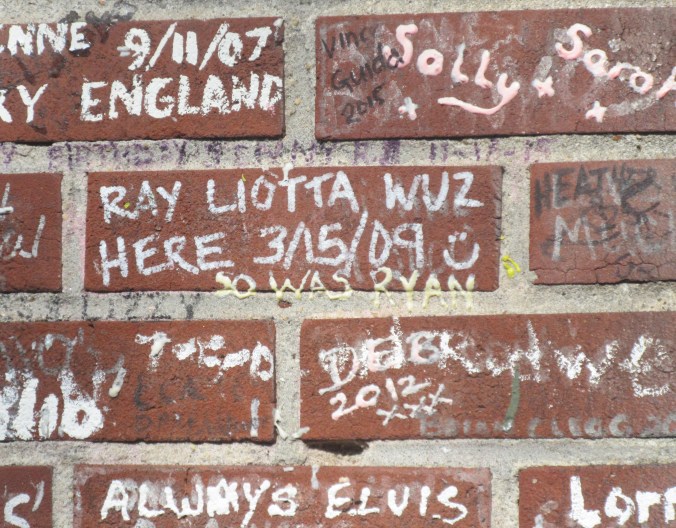
On the Hunt for Dirty Harry


IMG_4753 (2)

The wild beauty of the Pacific Coastline between Monterey and Big Sur

You know the drought you’re always hearing about in California, the one that will eventually lead to an invasion of Canada and the draining of our lakes and diversion of rivers to supply the thirsty south (Note to self, stop reading conspiracy theory websites. That means you treehugger.com). Apparently parts of California didn’t get the memo cuz baby it’s green in the central coast. Luxuriously green after a month in the desert.

Okay, Oprah didn’t have time to see us during our brief Santa Barbara stopover and with Pismo Beach in the rear-view mirror we are headed north to see Clint Eastwood in Carmel-by-the-Sea, or simply Carmel as it’s known to locals without a lot of time to talk.

Our base will be Monterey, or so the campground claims. The marketers cleverly named it the Santa Cruz/Monterey Bay KOA but in reality the location is about 25 minutes drive from either city. KOA employs this trick often (talking to you KOA Montreal).

Monterey, Carmel and Big Sur are an awesome trio of travel delights with one thing in common, location, location, location. And money. Lots of money. Okay, that’s two things. The Pacific Ocean is the backdrop, with its crashing waves, long stretches of pristine beach, and the smell of sea.

The wind blows hard off the Pacific on the 45-minute drive from Monterey to Big Sur. As George Constanza would say, “the sea was angry that day my friend, like an old man trying to send soup back at a deli”. The view is everything the brochures say—turquoise-blue ocean spewing massive columns of white foamed fury, roadside cliff faces shaped by the winds into crenelated red castles, bridges spanning green chasms.

The Dude, who ran the Big Sur Marathon in his younger slimmer life, says the area was a hippie mecca in the sixties. Writer Henry Miller (Tropic of Cancer, Tropic of Capricorn, among others) kept a place here and poet Allen Ginsburg and beat writer Jack Kerouac were frequent visitors. The non-profit Miller museum in a modest cabin off the road, with its incense infused book shop, provides a flashback to the time when long-haired freaky people migrated here to commune with nature, discover the meaning of life in EST’s It, smoke weed, play guitar and get naked. Apparently they all got jobs, bought land and put on clothes, because the place feels like a well-heeled vacation mecca these days.

Big Sur is less a town than a conglomeration of lodges, inns and restaurants strung along the highway between sea and mountains. The biggest cluster has a pub and general store where hikers gather to pick up supplies. In its mountain setting, with the smell of pine in the air, it feels like old time Whistler without the snow.

We decide on lunch at Nepenthe, an iconic eatery a few miles south. Built on a cliff face with multiple stairs, patios and levels, Nepenthe is the ultimate destination restaurant. It has the requisite gift shop with pricey artisan objets de arte for your collection and an outdoor café on its roof with stunning views of waves breaking on the distant coast far below. The main restaurant sports west coast log cabin décor, with a soaring trussed ceiling and massive windows overlooking the raging Pacific. Prices are stunning as well.  Ten bucks buys an al a carte  basket of fries to go with your burger, a steal at $17 US (add $1.50 with cheese). Despite the stiff prices and accompanying wind, the place is packed on a stormy Tuesday in March. But it’s memories of the drive not the overpriced hamburger that I’ll take away from Big Sur.

IMG_4744

The Dude enjoys the view but not the prices at Nepenthe restaurant in Big Sur

With our pricey midday repast digesting, we head back to visit Clint’s bar, the Hogs Breath Inn, in the town that seems much too twee for its macho, squinty-eyed former mayor. Remember Palm Springs and its art galleries and money smell. Take that and times it by ten and you have a picture of Carmel-By-The-Sea. The town is ritzy California culture on steroids. Art galleries line the streets, and lovely streets they are, filled with freshly tended flower beds sprinkled with gold dust every morning to encourage growth. Given the recent rainfall, the local ladies who lunch have opted for brightly painted wellies from Abercrombie & Fitch, or as we call them at home, rubber boots, to stroll the shops.

Clint’s restaurant is off the street, down a narrow passageway that opens onto a brick courtyard. The nondescript building that fronts it is simply and appropriately called the Eastwood Building. Unfortunately, Clint isn’t there and hasn’t left a message for us, so we are left to stroll the streets and gaze in awe at the sculptures, blown glass and paintings with heavenly price tags in the windows of cottages with fairy-tale rounded roofs. The smell of marijuana wafts from a small street-side park. Clearly, Dirty Harry is no longer in charge.

We choose the scenic route back to Monterey on what is unpretentiously called The 17-mile Drive, its name being the only unpretentious thing about it. It costs 10 bucks just to navigate the route, which rangers in Smokey the Bear hats collect at various entry gates. When we ask for the nearest gas station, the ranger advises us to backtrack to a station outside the gates. “Everything costs more inside.” he cautions.

Leaving Carmel, The Drive meanders along tree-lined lanes with massive stone gates that front even more massive estates. Think Marine Drive in South Vancouver then add a few zeroes onto the net worth of the inhabitants. Incomes along this stretch are measured not in tens of millions but in hundreds of millions. The gawking factor is worth the price of admission and that’s before we arrive at Pebble Beach Golf Course with the spectacular ocean-side setting familiar to everyone who likes a little celebrity mixed with their TV golf.

The course famously hosts the Pebble Beach AT&T Pro Am, first held when Bing Crosby invited a few friends to his home course for a clam bake and charitable game of golf. Pebble Beach is so sure of its stature as a premier public golf course visitors are hard-pressed to find a sign indicating they have arrived or directions to the club house. It is assumed if you are here you know the drill.

Our stroll around the putting green, surrounded on one side by a collection of sports clothing and high-end golf paraphernalia stores and on the other by ‘The Lodge’, finished with a bit of a gargle overlooking the 18th, as one does. The Dude, who many of you know is a world class speed  guzzler, not a sipper, slowly savors his 10 buck U.S. a pint beer, perhaps reflecting  on the misspent youth that prevented him from making the financial cut at Pebble Beach. Although it is a public course, play is limited to those who can afford the cost of two nights at the Lodge, which qualifies them to book and pay for a tee time.

Pretending to be a member of the bourgeois proves exhausting s0 we bid adieu to Pebble Beach and wind our way along the remaining 17-Mile Drive, passing ocean side mansions and favored foursomes playing out their day to the tune of crashing surf on the three other golf courses strung out along the roiling Pacific. Our route takes us to aptly named Lovers Point, jutting into the sea on Monterey’s western edge, distinctively fringed with ice plants, through Steinbeck’s famed (or infamous) Cannery Row to the Aquarium that set the benchmark for zoos of the sea, out past the tidal flats and outlying marinas, by the farmland and  roadside fruit and vegetable stands, to the Grey Ghost, the home that grounds us, for a decidedly plebeian dinner of burgers and two buck chuck from Trader Joe’s. Yes that’s right, respectable tasting white or red wine at $2.49 a bottle. Even with the exchange it’s enough to make a Canadian weep.

I think Mr. Eastwood would approve.

Next…The rainy streets of San Francisco
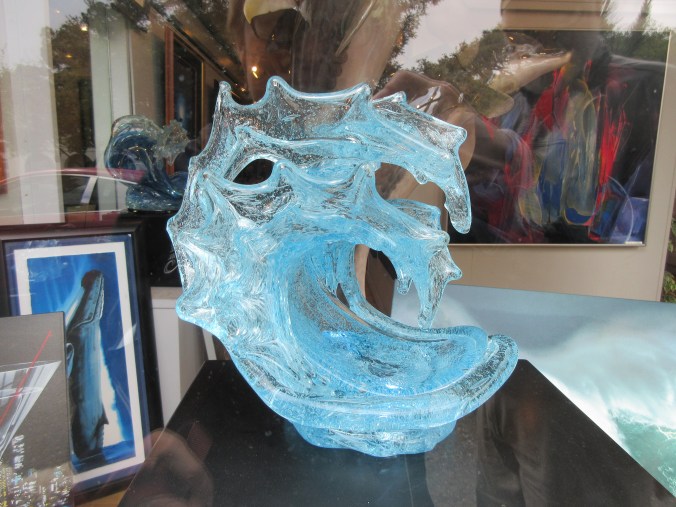
IMG_4774

One of the lovely pieces found in Carmel, got a big wad of thousand dollar bills burning a hole in your pocket, this little glass piece could be yours

IMG_4814 (4)

The Dame’s hands are very excited to see the Pebble Beach sign
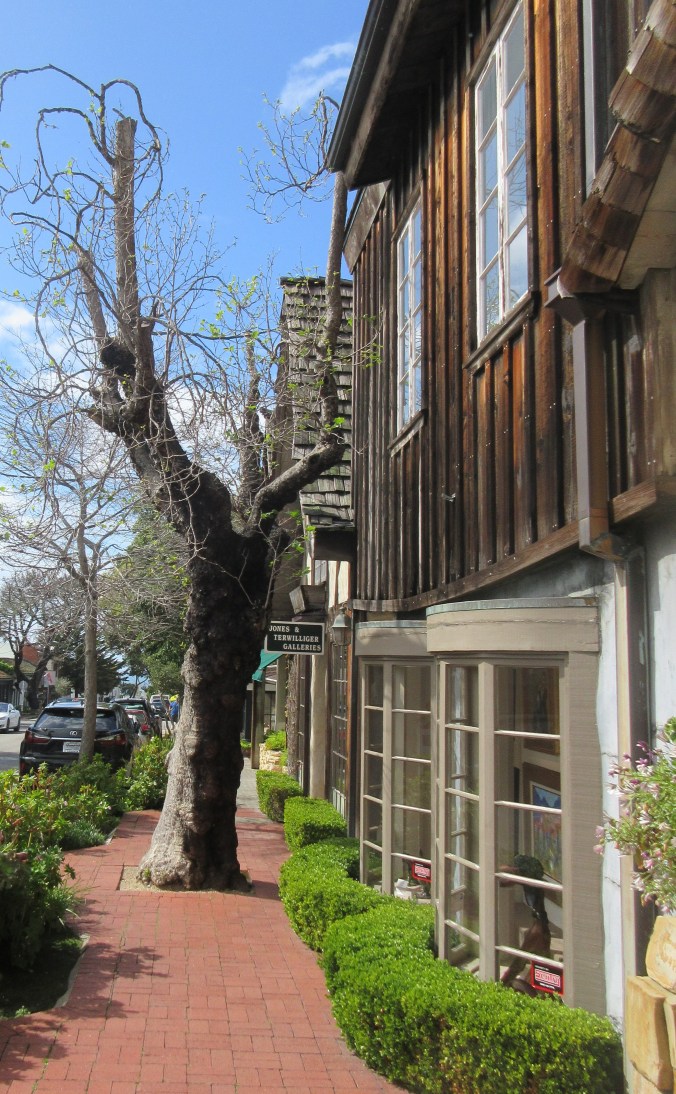
IMG_4762 (2)

A stroll through the streets of Carmel, on the hunt for Dirty Harry

IMG_4782 (2)

Okay, we’ve found Clint’s place but apparently like Oprah, he isn’t available, ever.
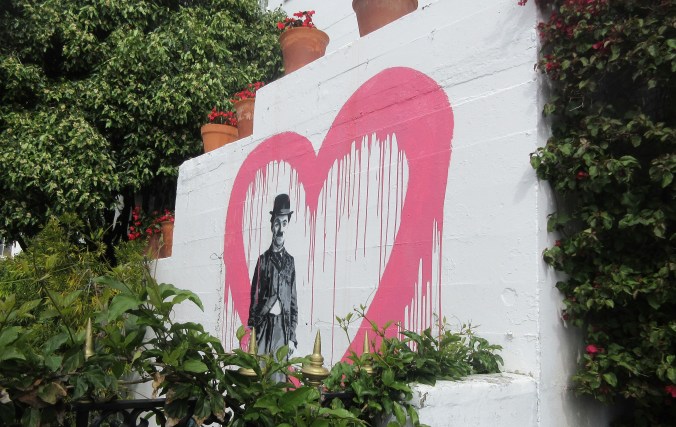
IMG_4767 (2)

High-end graffiti found outside the Cypress Inn in Carmel which is, fun fact, partly owned by America’s former sweetheart Doris Day
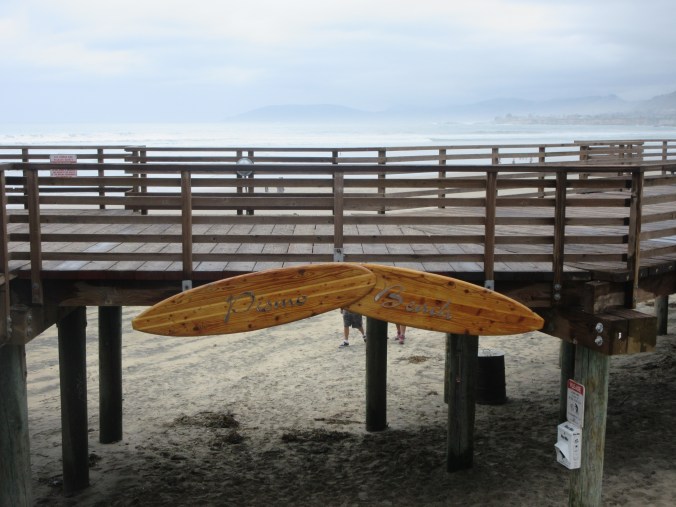
 

Finding our Pismo

IMG_4694

Pismo Beach where surfing is the reason for the season

The short run up 101 from Santa Barbara to Pismo Beach is like driving from Oprah-land into a Beach Boys album. While still technically a freeway, the highway cuts a divided two-lane inland route through green hills and valley farms and pasture land, affording an occasional glimpse of the far-off coast.
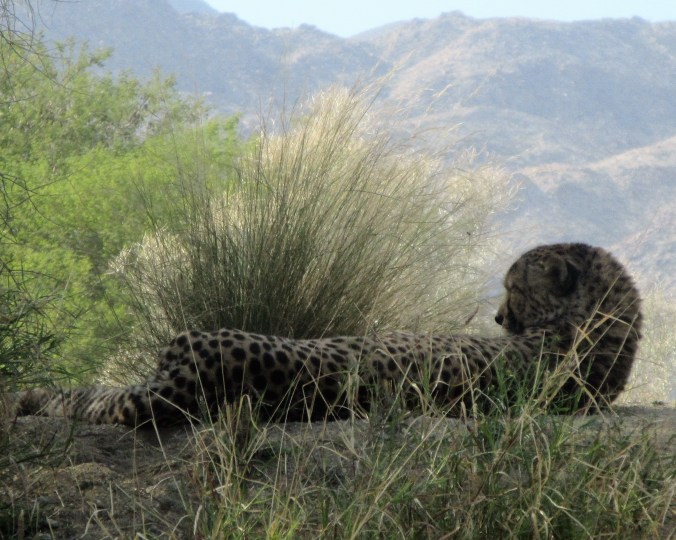
Traffic thins out north of Santa Barbara and freeway frenzy is replaced with the somnolence of driving on an uncrowded road through bucolic countryside, where people still work the fields and cattle and horses graze placidly in lush meadows.  The rounded hills and palm trees dotting the landscape give off a vibe that is more laid back Maui than Surfin’ U.S.A., but that changes the moment we turn off the freeway at the city that bills itself as the Clam Capital of the World.

Pismo Beach is located on the Pacific Ocean in the heart of what is known as the Five Cities Area, a cluster of small communities strung out along the coast a few miles south of San Luis Obispo. The Pismo Village Resort, located on the beach a 10-minute walk from the giant clam sculpture that marks the edge of downtown, is a considerable upgrade from our unpleasant experience in Santa Barbara.

The park has a pool, a general store and a restaurant with nightly specials served on the outdoor patio with an impressive selection of draft beer and wine. The sites are spacious and easy to get into and the West Side of the park is fronted not by a concrete wall but instead by a berm that protects campers from the surging ocean. There are no pissed-off parakeets, only wild birds that swoop and shriek from a respectful distance. Best of all, it’s 20 bucks cheaper.

Pismo Beach is Beach Boys country. Its compact downtown area is sprinkled with board shops and unpretentious bars and eating establishments with prices tailored to a young surfer’s budget. Nearby San Luis Obispo is a college town, home to Cal Poly State. Its downtown streets bustle with the energy of the young and hopeful beneath an umbrella-like canopy of hundred-year-old shade trees. A refreshing contrast to the sequestered geezers guarding their privacy and possessions in the walled cities of the Coachella valley.

Up the road a stretch, in the beach-side town of Morro Bay, down main street to the waterfront, past a conglomeration of seaside eateries, bars, small hotels and board and beach shops, hard by a fenced-in power plant with nuclear-like concrete smoke stacks, to a parking lot at the end of the road, serious surfers don wet-suits and paddle into chilly 10-foot waves beneath towering rock faces dotted with the droppings of thousands of sea birds. Seals surface in the shelter of the bay, competing with the gulls and herons for the bounty of the sea, oblivious to the humans in the water and those who line the shore aiming telephoto lenses at the action.

Just another winter day in California.

But wait. A black stretch limo joins the fray, slowly cruising the gravel parking lot, its occupants concealed behind tinted windows. In another beach-side setting, say on the East Coast or the Gulf, the limo might look out of place among the surfers’ SUVs and pickup trucks but this is southern California. Maybe Dennis Wilson has risen from his bed in search of material for another Beach Old Boys tour. Could it be Oprah, chauffeured up from Santa Barbara for a picnic by the sea with Stand-in or, more likely, Gail?

As it nears the water’s edge, a tinted back window lowers to reveal a white man training an expensive camera with a long lens at the ocean scene. Is Mathew McConaughy reverting back to his shirtless surfing persona. No. He’d be in a Lincoln with his dogs. A woman in a facing seat takes a quick peak at the water before retreating back into the darkness within. Too young for Dennis Wilson, too white for Oprah and Stand-in. Maybe someone motored up from the country club in Palm Springs for a breath of ocean air.

IMG_4653 (2)

It’s not art until you put a little crap on the rock

Always with the sharks, bringing back those childhood nightmares!
IMG_4681 (2)

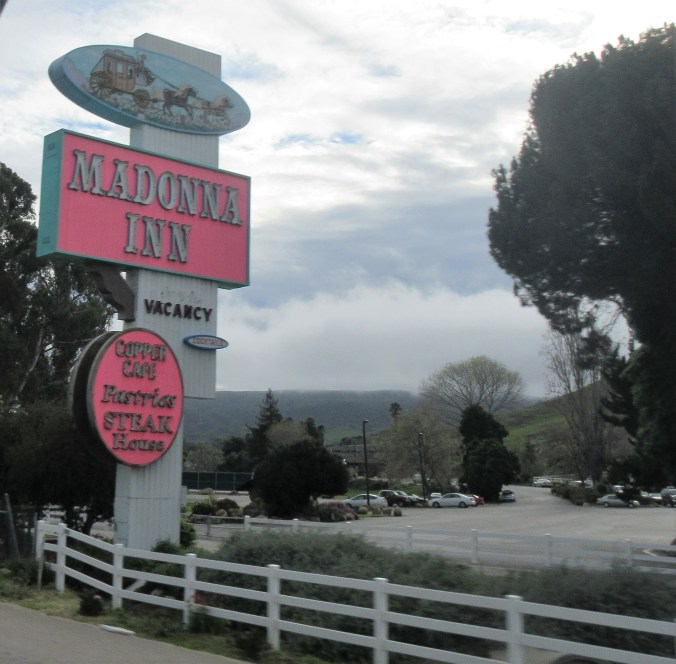
When the singing diva thing ends Madonna has a back-up plan down here

IMG_4677 (2)

For those of you who wondered where David Lee Roth ended up after Van Halen….

IMG_4670 (2)

“Can you believe this guy, he still thinks we’re in the water”…

IMG_4616 (2)

After a tough day at the beach, a little downward dog to get your muscles loosened up

IMG_4617 (2)

Or, there’s the beer option….

IMG_4608 (2)

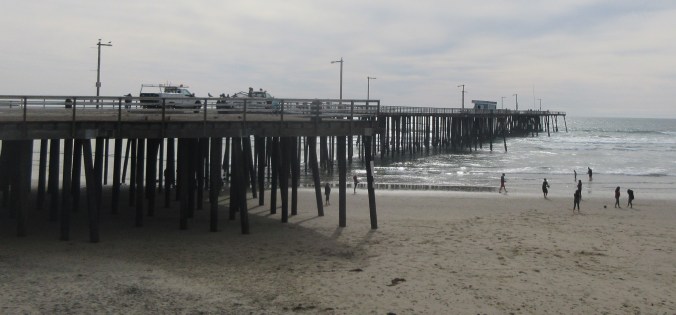
The Pier at Pismo Beach or as locals call it “The Pis” (I totally made that up)

IMG_4611 (2)

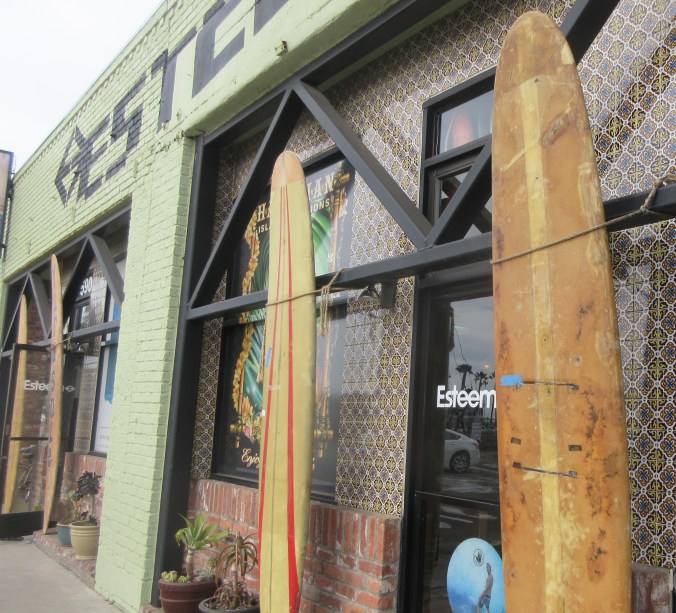
Need a surfboard or your self-esteem jacked up, this store can help

Riding through the Republic

IMG_4684 (2)

California – land of oranges, palm trees and plastic surgery, has chosen a bear as their state symbol. The Dog was digging the pom pom on his California Republic touque

Like most of life’s journeys, driving from the land of plenty in the desert to the plentiful land on southern California’s Pacific Coast, involves a few bumps in the road.

Traversing Highway 101, which cuts a pitted and patched-asphalt swath through the urban sprawl along the northern fringe of the City of Angels (and demons), is enough to jiggle the neck wattles of white-knuckled seniors, who it is said relieve freeway stress by pleasuring themselves with the motion of their large vibrating vehicles.

Distasteful as that imagery may be, driving the heavily travelled corridor through San Bernardino and surrounding environs, famous of late as the scene of another mass shooting, conjures even darker thoughts. It goes without saying that most of your fellow freeway drivers are packing and inadvertently cutting someone off will likely end with a fuselage of bullets.

Approaching the City of Angels (and demons) brings to an idle but well-vibrated mind the image of Joe Btfsplk, who readers of a certain age may recall as the character in Al Capp’s Li’l Abner comic strip, a man who lives his perpetually jinxed life under a black cloud. The toxic haze hovering above the L.A. basin, albeit more greyish-yellow than black, casts a symbolic shadow that can be seen on the horizon from 50 miles out, seemingly sent from the heavens as a reminder to man of the consequence of short-sighted human endeavor.

Much has been written about paradise-gone-bad and the transformation of the Los Angeles region from a sleepy, pre-First World War agricultural community where farmers and orchardists lived idyllically amidst palm trees at the country’s western edge, to the concrete explosion of the 20th Century that spawned a mega-metropolis of 17.8 million people (as noted in a 2010 census), all of whom seem to be commuting at once. But as the poet said, even a thousand words could not adequately capture the urban chaos like the pictures formed by journeying through the fringe of the heart of darkness. Suffice to say, Hollywood, Venice Beach, Rodeo Drive, et al, held no allure for these passing, well-vibrated, RV tourists.

Freeways are an environment unto themselves. They don’t so much pass through landscapes as take them over as their own. Especially near big American cities, where they crisscross, eight or ten lanes wide in each direction, like a tangle of concrete vines, interconnecting so frequently it’s impossible to know at any one time which direction you’re heading. All semblances of human activity are hidden behind concrete walls, erected to mitigate sound and the devastating affect on property values. Drivers are left with the soul-less ambience of towering billboards, multi-story factories and office buildings in suburban towns identifiable only by the signs on freeway ramps. Negotiating Southern California’s freeways without the calm guidance of GPS Gertrude is unthinkable.

IMG_4571 (2)

It’s not enough to have five or six lanes of traffic, let’s make them horizontal and perpendicular to really confuse things

IMG_4576 (2)

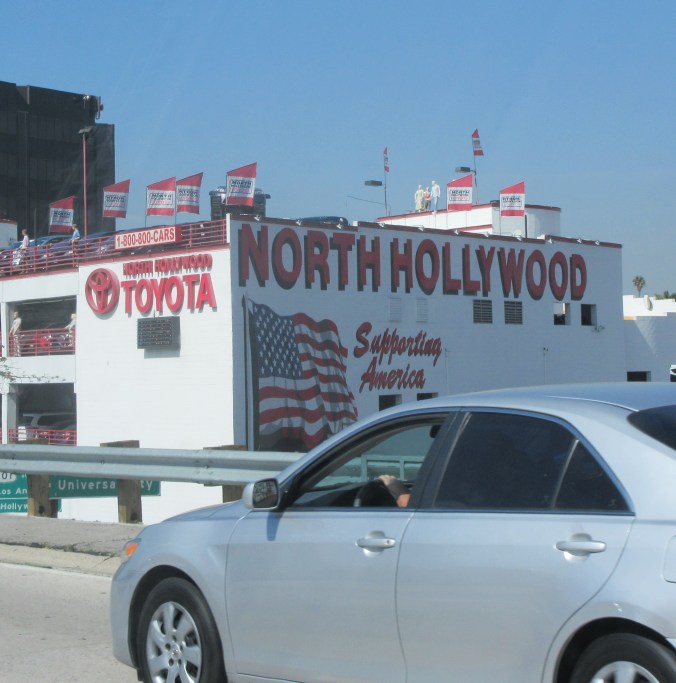
Not quite what I expected Hollywood to be

IMG_4575 (2)

That grey haze you see is so thick it blots out the horizon

IMG_4563 (2)

This little fellow was on his way to the Piggly Wiggly but got stuck in traffic

IMG_4569 (3)

Sign’s sign’s everywhere a sign

IMG_4824 (2)

Graffiti is everywhere, if you stop for a moment they’ll tag your car (kidding..:)

Gertie had her sights uncompromisingly set on the genteel seaside city of Santa Barbara, where entertainment swells and industry captains keep second homes on ocean-side estates with sweeping views of the forever rolling Pacific surf.

Oprah has a 50-million-dollar summer home in Santa Barbara, complete with English gardens that rival the grandest estates of old money. According to local lore, the once-Queen of daytime TV and self-proclaimed woman of the people, visits frequently but has never once been spotted out and about mixing with the regular folks. That is left to Stand-in… er… Steadman, who at 6’5” is a highly visible black man in a town that, like Palm Springs, is white with walnut-coloured Hispanic flavouring. It’s said the summer home contains a master bedroom-size closet for Stand-in’s custom-tailored suits. No word on the guest quarters for Gail.

Santa Barbara’s red brick-tiled roofs and lush vegetation are a welcome sight to freeway-weary travellers. As if to signify the transition from the land of plenty to the plentiful land is complete, the pinkish freeway walls are draped with Bougainvillea and hanging vines that seem to flourish in the toxic fumes.

A later drive through the city reveals exotic flowering birds of paradise rising to greet visitors from street-side planters. The low-slung downtown is a melange of outdoor patios, coffee shops, art galleries, antique stores and trendy clothing boutiques with historic Spanish facades. Nearby, the Pacific Ocean rolls onto classic California beaches split by a giant pier that juts out into the surf, a perfect place to stroll and do lunch at one of the seafood eateries perched above the ocean at its end.

IMG_4602 (2)

Santa Barbara land of tiled courtyards, birds of paradise, endless stretches of beaches, piers jutting out into the pacific, shop til you drop and oh yah, Oprah lives here.

Relentless in her mission, Gertie guides the Grey Ghost to a freeway exit that will take us to Sunrise RV Park, noted for its proximity to downtown Santa Barbara, and absolutely nothing else. The park is located at the end of an exit ramp on an L-shaped gravel parking lot between the brick wall that fronts the freeway and a six-foot dilapidated brown fence that separates the surrounding neighbours from visiting RVers. Initially, it remains unclear who is most put off by the close living arrangements.

Short electrical posts protrude from the gravel, indicating the narrow slots to park rigs. We pull in beside a 40-foot coach and after much tension-filled maneuvering manage to position the Grey Ghost so as to have enough room to put our slides out with inches to spare. We squeeze two lawn chairs onto the gravel between coach and trailer and grab a beer to wind down from the day’s travels. Noise from the freeway drowns out all attempts at conversation but does not overpower the shrieks of a caged parakeet hanging just over the fence in a cage attached to the back wall of a neighbouring house. After five minutes it becomes clear the parakeet is more put off than we are, and that’s saying something.

At 70 U.S. dollars a night, the Sunrise is the most expensive RV park of our continent-spanning trip. Unlike other snow geezer parks we’ve experienced in the higher price range, it does not try to ease visitors’ sticker shock with unnecessary frills. There is no swimming pool to recline by, no ballroom for dance parties, no horseshoe pits or bocce courts, no putting greens or fitness rooms. No courtyards with music and five dollar pitchers of beer. Only a forlorn laundry room that is under repair and a shower that is hot-water challenged. And, of course, an indignant parakeet.

With nothing to do but watch the parakeet shriek, we commiserate with the occupants of the coach, whose lawn chairs rest on the gravel only a few feet away, shouting to make our gripes heard above the noise of the traffic.

“It’s Santa Barbara,” says our close neighbour, with a pragmatic shrug.

Enough said.

IMG_4574 (2)

Okay now I get it, the bear IS the mascot of California

Palm Springs – The Real Story

IMG_4305 (3)

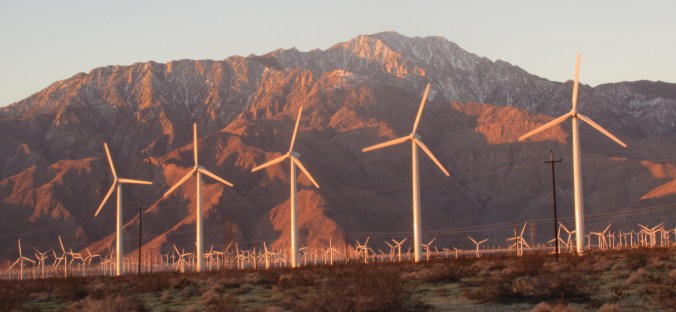
Sunrise lights up the wind turbines with beautiful colours

When we decided to include a blog as part of our travel experience it seemed like a great way to share the trials (more funny now in hindsight) and tribulations (blood pressure begins to rise) of life on the road for almost a year. The Dude, being a professional writer and world class procrastinator, warned me, and warned me again. “Writing is hard work,” he said. “If you make a commitment, waiting for inspiration isn’t an option.”

Sigh… he was right. (Note from the Dude. You are my witnesses.)

After leaving the warmth of the Florida beaches for the honky-tonks of Memphis, the Dude became inspired and I was tired. His creative juices began flowing and the blogs have been a wonderful mix of travelogue and The Dude’s uniquely humorous view of the world. (You guys got that, right.)

IMG_4429 (2)

The Dude realizing his days as a Reggae drummer were numbered returned to his first love, writing

But after his latest take-down of the Palm Springs area and it’s wizened….er… carefully preserved denizens, I felt a need to tell the real story of Palm Springs. The best thing it had to offer was friends from home, familiar faces that after a long time on the road were a godsend. I love the Dude and Dog to bits, but conversationalists they’re not, and it was good to have some girl talk with one of my besties from home.

We had dinner with friends, L & D, at their beautiful home in one of the gated communities the Dude took delight in putting down. The place was a throwback to the sixties, with perfectly maintained architecture surrounded by lawns with towering palms and ringed by orange and lemon trees. I want in!

Palm Springs is cultured decadence with a sprinkle of funkiness thrown in.

It’s creamy date shakes that must be tried to be believed.

It’s hour-long pedicures at ridiculously low prices with a leg massage thrown in.

It’s watching the sun rise and suffuse the massive wind towers with a silky orange glow.

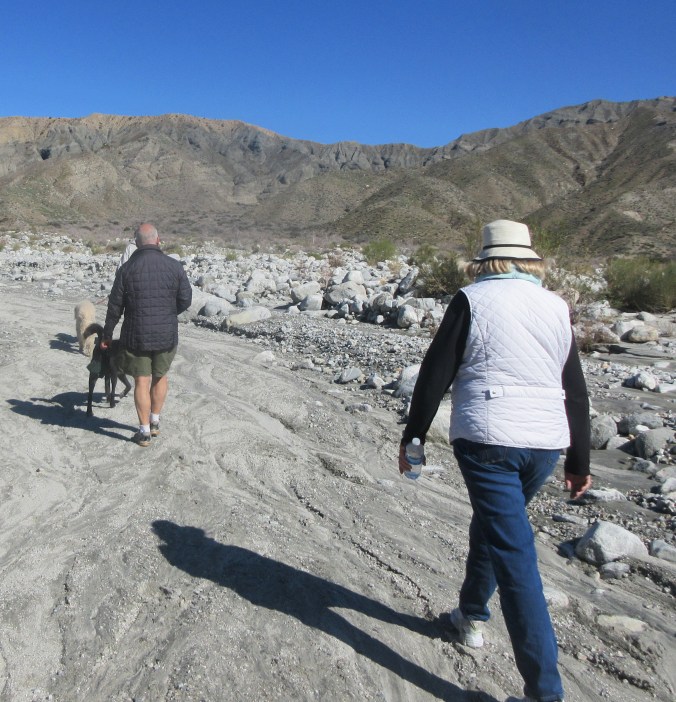
It’s hikes in the desert with homies Bruce, Linda and their dog Oliver, through flowering cactus and bone dry river beds.

It’s happy hour with friends at trendy Palm Springs restaurants, where the food is good, the booze is better and the laughs are plentiful.

It’s quirky consignment stores filled with the detritus of former lives–oversized furniture, strange brick-a-brac and movie memorabilia like the fifteen-foot room divider with Frank Sinatra’s face silk screened on it.

It’s day trips driving through arid countryside, past massive ranches and tiny mobile homes squatting in the scrub off dirt roads with nary a tree in sight.

It’s the night and weekend markets throughout the valley, where vendors offer everything you don’t need but buy anyway.

It’s golfing in February in your shorts surrounded by Palm Trees with a cheap beer and burger at a roadside joint after.

It’s the road-side fruit vendors on a random country corner selling massive bags of fresh oranges for a fraction of the price at the supermarket. It’s all these things and did I mention the date shakes!

IMG_4251 (2)

One of the things to love about Palm Springs are the great hiking opportunities everywhere made even better with some pals from the ‘Hood. 

Date night in Palm Springs

IMG_4525 (2)

This impressive 43 foot fellow graces the Cabot pueblo museum in Desert Hot Springs. One giant sequoia tree did the job. Oh and in his spare time the artist did another 73, using power tools.

“It never rains in southern California,
But girl don’t they warn ya, it blows. It really blows”

It’s only about 50 miles from the boulevards of broken dreams in Bombay Beach on the desecrated Salton Sea to the country clubs and gated communities of the Coachella Valley, where North America’s well-aged wealthy congregate to play out act three of their privileged lives on manicured golf courses, irresponsibly lush and green under the desert sun in the midst of a prolonged and much-publicized drought.

Approaching the valley from the south through its industrial edge, past ramshackle double-wides and squat bungalows fighting losing battles against the drifting desert detritus, eases the transition from poverty to the riches of the walled cities strung out along Highway 111 all the way to the valley’s north end.

Indio. Indian Wells. Palm Desert. Rancho Mirage. Cathedral City. Palm Springs.

The toney towns blend into each other, connected by a series of desert-coloured strip malls offering up all the good life has to offer, from the big box bargains of Walmart and Costco to high end consignment boutiques, pricey retail chains and Mercedes dealerships. Clearly, the good burghers of the valley bought into George W.’s advice in late 2008 when America teetered on the precipice of financial collapse.

As you may recall, the Great Decider displayed the kind of leadership in crisis that would mark his presidency by staging a photo op in a big box store at which he famously advised the jittery populace to keep America strong by “Going shopping.”

Indeed.

IMG_4298 (2)

Dates – the frisky fruit

IMG_4377 (2)

It should have been our first clue that it may get a tad windy in the Palm Springs area

IMG_4325 (2)

Not exactly Palm Springs type shopping but a day trip to the hippyish Idyllwild mountain town had it’s own sombrero deals to be had

IMG_4562 (3)

Palm trees, check. Mercedes, check. Gate surrounding us from the plebes, check. The sun sets on another day in the  sun valley

IMG_4475 (2)

Wow it appears the denizens of the valley like to get their hootchy on once in a while

IMG_4452 (2)

Not to be outdone, the Pope had a competing booth across the road

All that shopping builds the appetite and the Coachella Valley is flush with opportunities to do lunch. At first glance it seems unlikely that the shopped-out parade of matrons and old swells in Mercedes and Range Rovers could eat enough to make all the restaurants profitable. It seems the establishments on Palm Canyon Drive in the heart of downtown Palm Springs, six or seven per block, could by themselves satiate all the Valley’s permanent seniors in two sittings.

Clearly, restaurateurs rely heavily on the cut-above snow geezers who disdain the proletariat RV parks of Arizona for the pricier concrete pads in Palm Springs. Like the gated communities that surround them, the valley’s most expensive RV parks revel in their exclusivity, limiting their clientele to motor coaches, and even then only those of a certain late model vintage.

Manitoba farmers, rich with the American dollars they collect for crops grown in Canadian currency, have no desire to mix with the riff raff who pull dilapidated trailers or wheeze their way south in 20-year-old converted school buses. The motor-coach-only sites, with their outdoor kitchens complete with wet bar, fridge, stove, granite counters, dishwasher, barbecue, double sinks, covered seating area, overhead heat lamps, propane camp fires and view of the man-made lake, exude the values of the discerning camper.

Once inside the secured gates, the owners of half-million dollar coaches can feel comfortable leaving their toads (RV-speak for towed cars) unattended next to customized four-seater golf carts in front of expansive outdoor entertaining areas and schlep to the pool in their flip flops to wile away the days drinking cocktails and reading trashy novels in their cushioned loungers, comfortable that their upper crust status will not be blemished by rubes in noisy pick-up trucks pulling sub-par fifth wheels or trailers. When they tire of the poolside repartee (how much can you say about the price of canola), they get behind the wheels of pricey toads and cruise past the country clubs in search of diversion, inevitably shopping or a suitable place to eat.

As if to ensure the mirage of wealth and fame continues outside the gates, city fathers named main thoroughfares after presidents and movie stars. A mundane trip to Walmart might involve driving along Bob Hope Drive and then turning on to streets named after Dinah Shore or Gerald Ford before motoring down Frank Sinatra Drive, past pink-walled estates and the wrought-iron gates of country clubs called Sunnyland and Desert Palms Oasis.

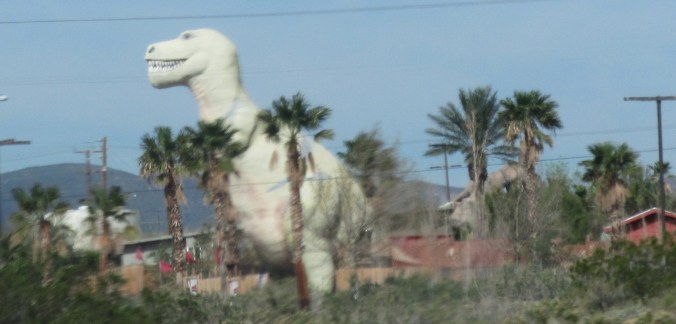
Approaching from the north, drivers arriving for the weekend from Los Angeles pass the Cabazon Outlet Mall, a string of name brand stores stretching five or six football fields along the I-10. Codgers and the infirm can traverse its length aboard shuttles that carry them from sale to breathtaking sale beneath cloudless skies. For unknown reasons, it’s the only place in the valley one sees large congregations of ethnic people, as if all the Asians from miles around are drawn together in a cultural search for that perfect deal. Those with any money left can gamble it away at Morongo Casino, a multi-storied monolith that towers above the desert scrub at the Mall’s southern end, luring gamblers for miles in every direction.

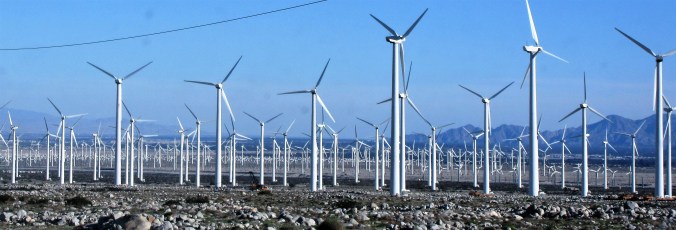
Like the rest of southern California, Palm Springs is all about blue sky and winter sun. The temperature during our February stay hovered in the 80s. What the brochures fail to mention is the wind. The first clues that something might be amiss in paradise (weather-wise, that is), are the wind farms on both sides of the freeway. Towering machines dot the horizon, gleaming white against a dull backdrop of desert and mountains like a flock of giant three-pronged flamingos feeding on the breeze.
The wind blows hard in the high desert north of Palm Springs. Like giant waves building momentum, gusts can be heard gaining power in the far-off scrub-land before they sweep through the snow geezer parks, bending palm trees, overturning lawn chairs and rocking rickety trailers and formidable motor coaches with a furious God-given equanimity that rattles the dentures of the oldsters huddled inside, at least one of whom is writing the lyrics of a country song.

If the trailer’s rockin’, don’t bother knockin’ on the manager’s door. Turn up the tube and keep on gawkin’, no use in squawkin’. No refunds. He’s heard it all before.

Area entrepreneurs’ penchant for unimaginative but evocative names can cause confusion in the mouldering brains of elderly RVers who can be heard querying their spouses in Walmart parking lots.

“What’s the name of our park again Marsha?”

“I think it was Two Palms Hot Pools outside Desert Hot Springs.”

“You sure it wasn’t Two Hot Springs in Palm Desert?”

“Coulda’ been Twin Palms Hot Pools in Palm Springs.”

“Sounds familiar but I can’t be sure.”

“Maybe it was Desert Oasis Palms Pools near Two Palms Desert Hot Springs Resort.”

“That seems close. You sure it was Two Palms not Two Hot Springs?”

“I told you to write it down, Fred. You never listen. How many times have we been lost on this trip?”

Yada, yada, yada.

Net up a trip through America’s heart of darkness.

IMG_4481 (2)

She told me I’d be going on a big trip soon…I didn’t have the heart to tell her

IMG_4548 (2)

The heck with fancy schmanzy restaurants in Palm Springs, this little dive in the Joshua Tree park area got the thumbs up from Anthony Bourdain

IMG_4438 (2)

A day at the Living Desert museum included a few of these long-necked beauties

IMG_4427 (2)

A languid stretch and a panoramic view

IMG_4412 (2)

Okay did you just go awww. I know I did about fifty times when we spotted this little guy

IMG_4520 (2)

At the front door of the Cabot Pueblo museum. He constructed by hand, almost the entire 35-room structure. Oh and it’s almost entirely made out of recycled products from the area.

IMG_4517 (2)

The Pueblo is a mish-mash of different roof lines, odd sized windows, strange doors. Oh and the guy was an artist as well.

IMG_4465 (2)

We went to the Thursday night market in Palm Springs three times and I still don’t know what these things are, and frankly was afraid to ask.

The Town Where Hope Came to Die

IMG_4200 (2)

Hope lived here at one time but left for Palm Springs just up the road

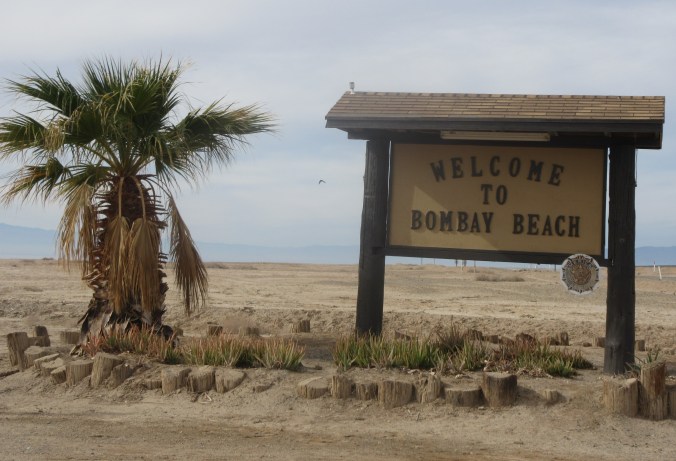
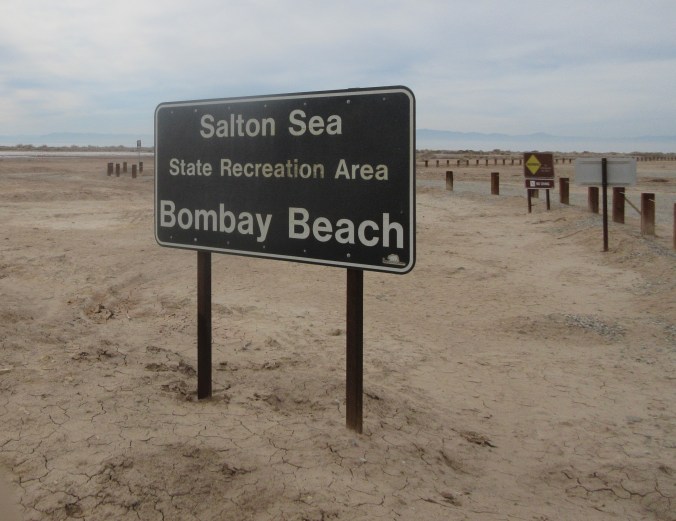
The good burghers of this southern California town could not have foreseen its future when they planted the palm tree and erected the sign informing drivers on Highway 111 of their arrival at Bombay Beach, then a small fishing village on the Salton Sea.

To say the town has seen better days is like noting that Chernobyl has fallen off a bit since the nuclear meltdown. The Salton Sea, beside which Bombay Beach now rests almost in peace, is itself a result of man meddling with nature. The desert valley was known as the Salton Sink before the Colorado River breached its levees in 1905 filling it with water for two years while engineers worked to staunch the flow. It became California’s largest lake at 15 miles wide by 35 miles long, depending on when the measurements took place. It’s been shrinking for decades.

Things looked rosy in the aftermath of the big flood as birds flocked to the life sustaining waters and fish flourished in the former desert. By the 1950s, tourists joined the wildlife, recognizing the man-made lake as a great spot to fish, swim, moor their boats and golf at the Bombay Beach Marina and Country Club. The town had five eating and drinking establishments. Life at the lake in the desert was good.

IMG_4069 (2)

A fun day at the beach if you don’t mind the dead fish everywhere

IMG_4094 (3)

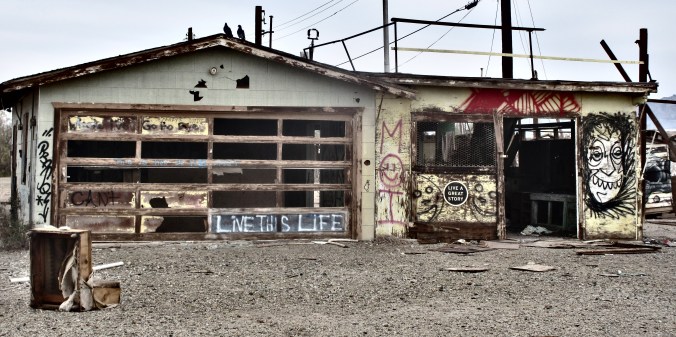
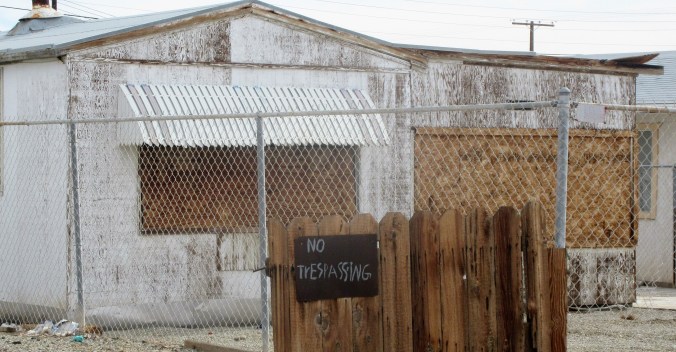
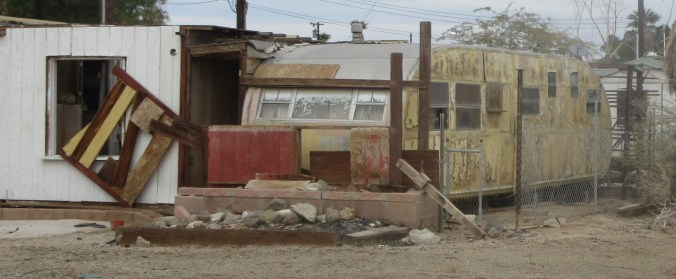
They take trespassing very seriously around here, there’s apparently a large market for rotting boards and broken windows on the black market

IMG_4098 (2)

Even the pianos have given up here

IMG_4087 (2)

You can always count on the mail

IMG_4102 (3)

Petrified fish litter the beach here due to the incredibly high salinity of the water

Fast forward to 2016. With no outlet to purge its water, almost zero local rainfall to freshen things up and continuing waste water runoff from nearby agricultural land, the lake has festered into an ecological disaster with higher salinity than the ocean. Too high to support most marine life. To avoid possible lawsuits, agricultural interests bought the marinas and closed them down. Unable to survive in the toxic salty mix, the fish died; their rotting bodies and sun-bleached skeletons line the cracked mud shoreline, adding a pungent aroma to the apocalyptic landscape.

Rising lake levels in the 70s and 80s caused by excessive runoff from Imperial Valley farms combined with higher than normal seasonal storm runoffs to flood the below-sea-level town site. Tourists stopped coming and the restaurants closed, leaving only a small convenience store, a forlorn legion and the Ski Inn bar to service those brave souls who stuck it out behind newly erected berms. Interspersed amongst the rusting hulks, broken windows and burned out ruins of vacation dreams gone bad, are well-kept double wide’s with carefully tended yards and a sprinkling of modern RVs parked behind chain link fences on gravel lots. Remaining residents commute around town on golf carts while dogs of varying sizes and breeds run free in the streets.

Local residents Wendall and Jane Southland interrupted their retirement to take over the Ski Inn in 1994 after an investment meant to help out friends went south. The bar is for sale but to date there have been no takers. The weathered sign out front proclaims it to be the lowest elevation drinking establishment (227 feet below sea level) in the Western Hemisphere. Now in his eighties, Wendall works the bar 9 hours a day, seven days a week while his wife prepares and serves home-cooked meals to a steady stream of young curiosity seekers and snowbirds, many of whom venture in from nearby RV spa resorts positioned on mineral springs far enough away from the Salton Sea to avoid its odoriferous ambiance. Wendall happily keeps the beer flowing until 2 a.m. on nights when the trade warrants.

Despite its dreary surroundings among the streets of broken dreams, the atmosphere in the Ski Inn is not downtrodden. On the occasion of the Meandering Maloney’s Saturday afternoon visit, three different groups of 20-somethings stop in for a beer and a bite. The bar’s walls and ceiling are papered with signed and dated dollar bills from visitors who arrive at Bombay Beach from all points on the globe.

Wendall explains the tradition started in 2000 when a young visitor from Newport Beach, in town to look over his ramshackle inheritance, asked to put up a signed dollar bill behind the bar. Like monetary moss, the bills have spread to the walls, door and ceilings, even up the sides of the juke box, which offers a selection of suitably soulful road songs at three for a dollar. The bar is a favourite of Hollywood directors, and on one recent occasion three film crews shot footage on the same day. Wendell informs us there was a crew shooting the day before we arrive.

He is pragmatic when it comes to the future of Bombay Beach. He confides that a new marina in the works at the Salton State Recreation Area could be the first step to rejuvenating the area. The couple bought their first small trailer here in the 70s as a vacation home. After they moved permanently to the Salton Sea in the summer of 1990, the temperature hovered at 127 degrees Fahrenheit for the first four days, and he admits to thinking about heading right back to the relative coolness of Riverside, California. He recalls happier times when retirees in town roamed the surrounding desert in convoys of 20 ATVs.

The Bombay Beach population was pegged at 295 in the 2010 census, down from 366 in 2000. Wendall reckons there are 176 residents today, then perhaps remembering some recent passing’s, he reconsiders and downsizes his estimate to the low 170s.

IMG_4126 (3)

It’s the lowest bar in the hemisphere and it’s all yours, if the price is right

IMG_4193 (3)

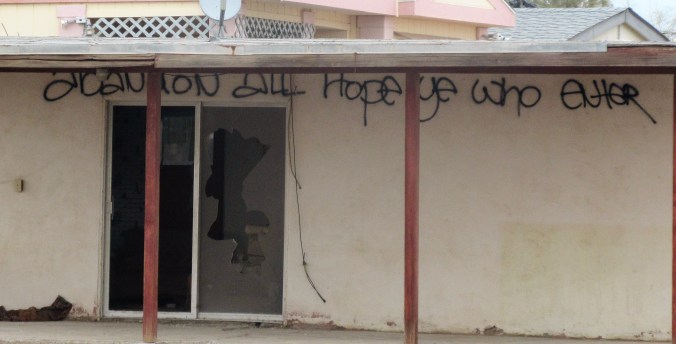
Somebody’s been reading Dante

IMG_4165 (2)

You’ve got to admire the optimism of this little party oasis in the middle of town, note the crocodile sentries guarding the signs

IMG_4084 (2)

A place like this will have an occupied home next door, and you thought you had bad neighbours

IMG_4088 (2)

There’s been recent talk about the State building a couple piers and boat launches at Salton, gotta love the government for their optimism

IMG_4153 (3)

Millennials love this place, cheap food and drink and countless selfie opportunities

IMG_4134 (2)

Wendall behind the bar surrounded by the thousands of signed dollar bills visitors have left behind

Hey Hey Geezers

IMG_20160103_150950 (2)

Winter-time in Arizona minus the annoying snow

Hey, hey, my, my
Rock and roll will never die

They bring in the New Year at 10 p.m. in the snow geezer parks in Mesa, coinciding with the dropping of the disco ball in Times Square two time zones to the east. Most of the elderly celebrants are played out by then, having danced the early evening hours away to tunes from the 50s, 60s and 70s played by balding, grey-haired rockers who rest their guitars on their expanded midsections between songs to take the strain off aging shoulders.

This is not to say the musicianship is subpar. Most of the players have been at it for 50, even 60 years, many having played in bands in their youth before the responsibilities of growing families cut their musical careers short. Lack of practice time together is offset by the joy the players take in their second chance in the rock and roll limelight and the enthusiasm of an audience whose hearing aids lack the fine tuning to pick up the occasional off key notes.

Familiar tunes from eras long past set toes tapping in even the crustiest boomers (the Dude excepted) and the dance floor fills up as the first notes of old standbys are instantly recognized. Nothing gets the juices flowing through collapsed veins like Neil Diamond’s Sweet Caroline. “So good. So good.” But the night’s most memorable moments play out during the ballads, when couples embrace the passage of time with practised formality, gliding in perfect step to the Carpenters, syncopated testimony to their love having endured all the trials and tribulations life could throw their way. It’s enough to bring a tear to even the most cynical eye and the Dude leaves a chili dip trail on his cheek as he dabs away with the napkin he used to wipe his moustache only moments before.

IMG_20160101_200341 (2)

The disco ball remains from the night before at the Speakeasy 

IMG_3942 (2)

The Organ Stop, a hot spot in Mesa combining the thrill of a Wurlitzer and pizza

IMG_20160116_141016 (2)

A non-geezer activity as it requires exercise while you drink

IMG_20160116_141041 (2)

A great geezer activity as it allows you to mow down other geezers and their walkers

Life in the snow geezer parks is all about having fun. And staying active. All the park signs say it’s so. Desert Palms, a Community for Active Seniors. Desert Sands, a 55-plus Community for Active Adults. Desert Swingers, a Gated Community for the Sexually Active.

Okay, just kidding about the last one but you get the picture. The bigger parks like the one we’re at have club houses with ballrooms for dancing, card rooms with crib and bridge tournaments, horseshoe pitching pits (who knew there were so many old farriers still around), bocce ball and shuffleboard courts, pool tables, fitness centres, two or three swimming pools, hot tubs, tennis courts, mini golf and putting greens, dog parks, wood working shops and craft rooms. There are tap and line dancing classes, language lessons, wood carving workshops and quilting circles, golf and desert excursions, shuttle buses to the casinos.

Whew. The Dame, who some may recall is the Queen of small talk, is in her social glory but the Dude gets exhausted just reading the list.

IMG_20160116_144630 (2)

This cowboy’s been here so long he’s turned to metal

IMG_20160101_163607 (2)

Geezer gang members patrol the grounds

IMG_20160101_163341 (2)

Ahhh, Easy Street, that is until you calculate the US exchange rate

The snow geezer parks put a premium on conviviality, which is important when a bunch of crotchety oldsters are living in confined spaces and reduced circumstances with neighbours on either side only a foot or two away. Your business is their business, and vice versa. It is not uncommon to wake up hearing voices and imagine dementia is setting in only to discover your neighbour and his or her codger pals are planning their active day over coffee or a shot of whiskey on the patio at 6 a.m.

Party animals commute from libation to libation along Easy Street and Paradise Alley on golf carts and bicycles in search of fun times. Good times trailers sport little flags with fluttering cocktail glasses proclaiming it to be Five O’clock Somewhere. Diehards know there will be music in the courtyard every day at lunch and in late afternoon with five dollar pitchers of beer on tap.

With so much going on throughout the day it’s not surprising the snow geezers turn in early. The daily courtyard festivities wind down with the setting sun and those who haven’t eaten at the popular four -o’clock courtyard sitting return to their trailers for a late five p.m. repast before watching the news and pulling on their sleep masks to gain strength for another active day.

Five a.m. comes early when they have to put the coffee on for their patio guests.

IMG_20160101_170329 (2)

What’s Arizona without a gratuitous cactus shot, especially when they all have go-cups

Mr. Black Hat and the Aliens


IMG_3791

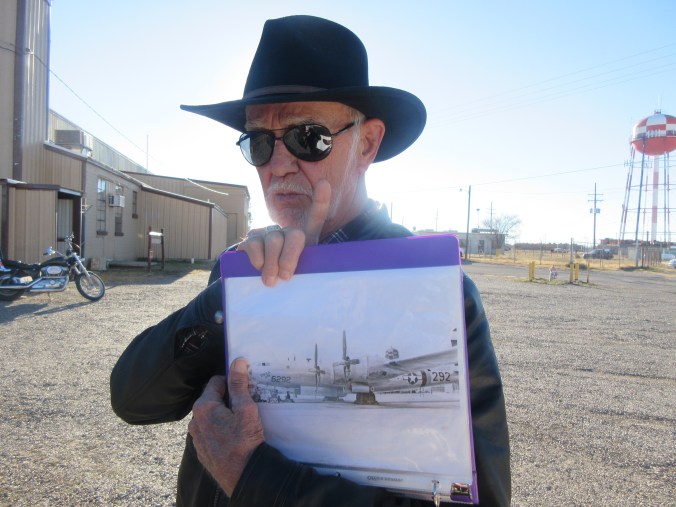
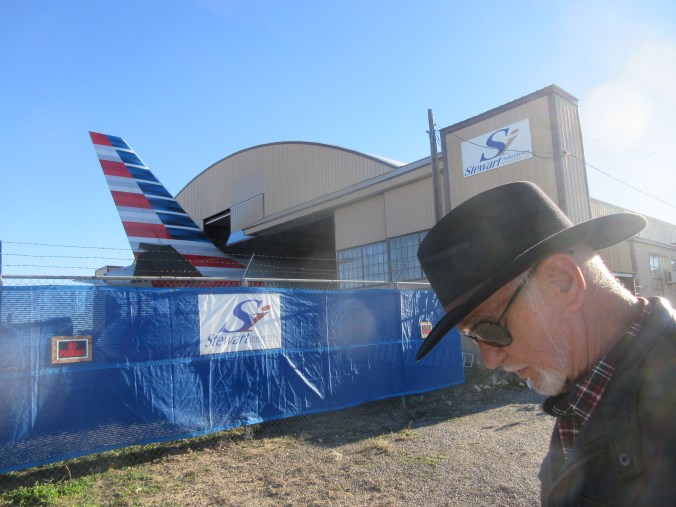
The man in the black hat in front of the famous hangar in Roswell where the mysterious crash remains were brought to in 1947

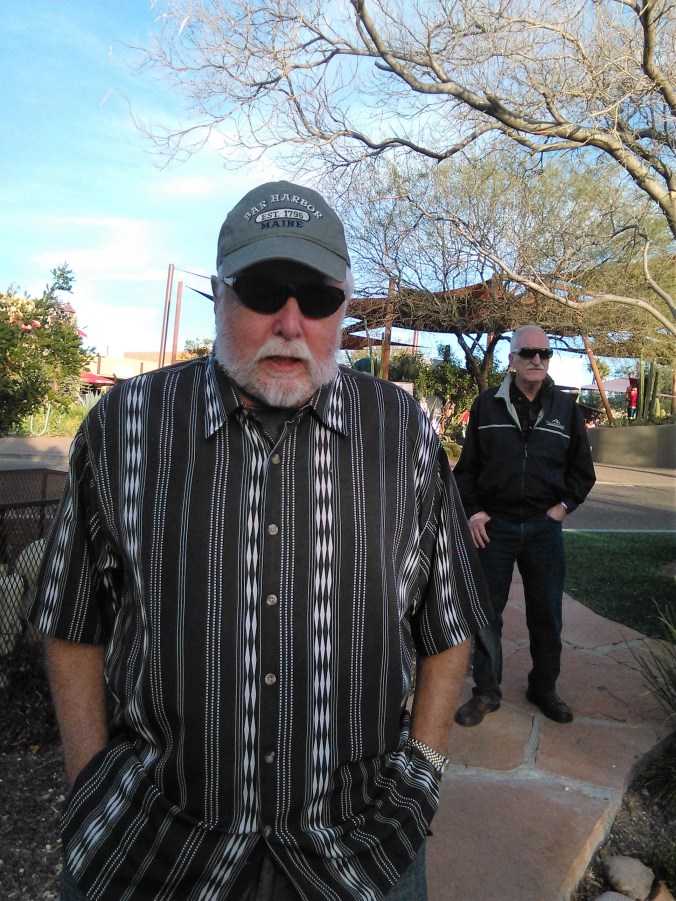
Truth seeker Dennis Balthaser looks like the villain in a modern day western soap opera when we meet up in a near-deserted parking lot in the dusty desert town of Roswell, New Mexico. He’s standing next to a white SUV wearing a black cowboy hat, aviator shades, a stylish black leather jacket, and the slim-fitting Wrangler jeans that real cowboys wear bunched up over their boots.

Balthaser, who grew up on the east coast, served three years in a U.S. Army Engineering Battalion before settling in West Texas, where he worked for the Texas Highway Department for 33 years. Now 74, he retired to Roswell in 1996 to pursue his life passion, Ufology.

In his years in Roswell, the white-whiskered retiree has made it his business, literally, to get to the bottom of the 1947 Roswell Incident in which an alien space ship was reported to have crashed on remote ranch land killing its occupants, whose bodies were said to be spirited from the nearby air force base, then home to the U.S. atomic bomb squadron, in hermetically sealed child coffins.

To that end he served on the board of the International UFO Museum, becoming its main investigator. He has recorded interviews with everyone he could find connected to what he views as a massive government cover-up, including the funeral home employee asked by the military about the availability of youth-sized coffins in the immediate aftermath of the crash, and the son of the air force officer who as a 12-year-old child played on the kitchen table with the strange material his officer father brought home from the crash site before the higher-ups got involved.

“One thing they all have in common,” notes the intrepid researcher, “is that nobody wants to talk about it.”

IMG_3715

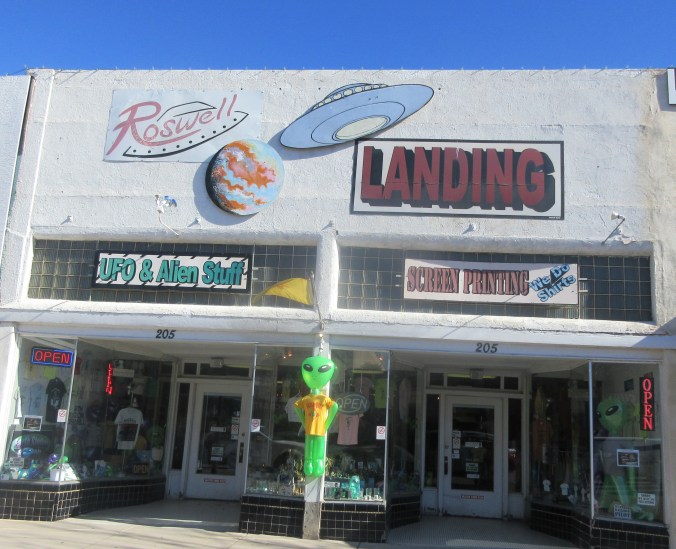
Stores in Roswell know what the tourists come to see

IMG_3741 (2)

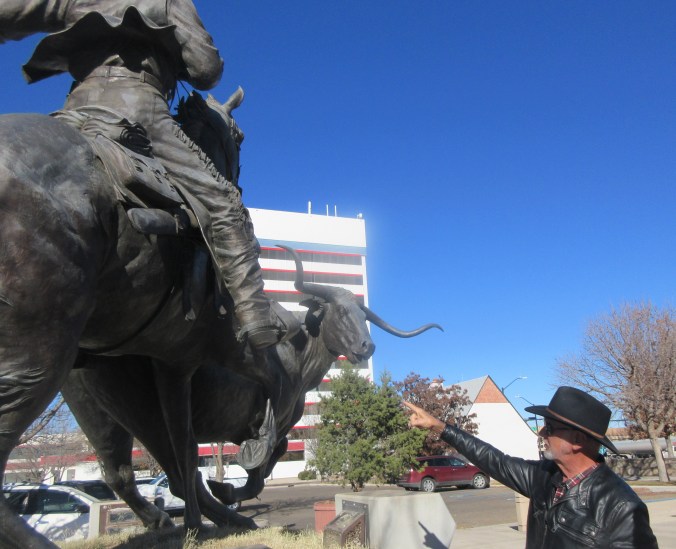
Dennis points out the hidden engravings on the bronze Chisum statue

IMG_3744 (2)

Even the light posts get in on the act here

We have commissioned Balthaser for a private tour of Roswell after noting his five-star rating on TripAdvisor. He begins by handing us a three ring binder crammed with newspaper reports of the crash and subsequent backpedaling by government officials after the information moved up the chain of command. The folder contains photos of all the major players, including the base commander who sped through the ranks to become a four-star general, suspiciously quickly in Balthaser’s mind.

Pulling out of the parking lot, Balthaser gives us the basics–how the spread-out wreckage was found by a salt-of-the-earth rancher who was subsequently held incommunicado by authorities for five days after reporting the find; how a military nurse who reportedly saw the bodies was transferred the next day, disappearing into the military bureaucracy never to be located and interviewed by the press; how the local radio station was threatened with a shutdown if it broadcast reports of the crash; how the military publicist, a bombardier navigator at Roswell Army Air Filed who provided the original alien story to the media, was ordered to write a report saying the crash was a weather balloon.

“I don’t try to convince anyone of anything,” he says during our drive from the once-threatened radio station to the various Roswell houses where major players lived with their families. “I provide information and let people draw their own conclusions.”

At each stop he advises us to open the three -ring binder to view pictures of the participants, including the original photo of the air force publicist, Lt. Walter G. Haut, posing for the camera with what Balthaser claims is bogus weather balloon debris provided by the military. He builds his conspiracy case with interesting tidbits, pointing out a tear in the knee of the officer’s uniform and his stressed countenance as evidence of the hastily organized press conference to change his original story.

“I was in the military,” he says with conviction. “You don’t have your picture taken with a tear in your pants unless you’re under duress. All that for a weather balloon,” he scoffs.
But his five-star TripAdvisor tour rating was not earned on conspiracy theories alone. The man under the black hat is a font of information on everything Roswell. He veers away from the ‘Incident’ part of the tour to show us a little known local landmark, an Iron Cross built into the rocky bank of a flood control levy by German prisoners captured in North Africa and shipped to Roswell for internment during WWII.

He takes us to the magnificently detailed bronze statue of old west cattle baron John Chisum, looming large and amazingly lifelike astride his horse, and points out spots where the sculptor included hidden references to bible verses. He shows us another piece by the same sculptor, this time a likeness of legendary lawman Pat Garrett loading a bullet into his six shooter before setting out to kill Billy the Kid.

He brings his attentive tourists back to the ‘Incident’ by pointing out the name of the rancher who eventually shot and killed Garrett, a man named Brazel, who was a relative of the rancher of the same name who discovered the UFO wreckage. He points out the place across the street behind the imposing stone courthouse where the sheriff who was muzzled at the time of the ‘Incident’ lived with his family below the jail.

“They tore it down,” he laments of the sheriff’s office and old jail. “It’s as if they want to get rid of anything connected.”

Our tour takes us past the New Mexico Military Institute’s rambling campus. Established in 1892, its motto—Duty, Honor, Achievement–remains relevant with 21st century parents who send their children to Roswell from around the world to prepare for college through its highly regimented academic curriculum. Noted alumni include NFL quarterback Roger Staubach, television newsman Sam Donaldson, actor Owen Wilson and hotel magnate Conrad Hilton.

Balthaser reels off an impressive list of celebrities associated with this small town in the middle of a big desert. Demi Moore was born here, as was singer John Denver. Dan Blocker (Hoss on Bonanza) taught school in nearby Carlsbad and Roy Rogers met his second wife while performing on a local Roswell radio station. Pretty Boy Floyd hid out in the desert on the town’s outskirts and Nancy Lopez learned to play golf here.

IMG_3816 (2).JPG

Nothing to see here folks, just a large group of camouflaged men out for a walk

IMG_3828 (2)

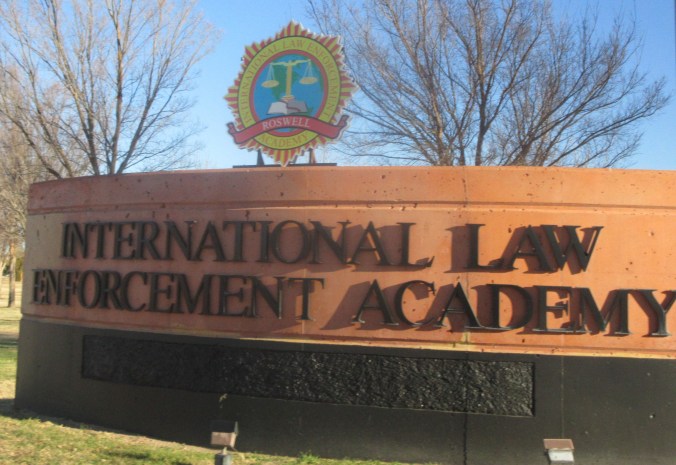
Hmm, an International training facility out in the middle of New Mexico, makes sense

IMG_3718.JPG

Hard to see but an Iron Cross is engraved in the wall, reminder of the large German prisoner of war contingent that was here during World War II, or Vas It?

IMG_3756

Anyone who’s seen the X Files knows what this is

IMG_3735 (3).JPG

Even the Graffiti artists are in on the Alien theme

The truth seeker who has done more than 350 radio and TV interviews, including national shows like Dateline, Nightline and newscasts on CNN, NBC and ABC, is warming up for the piece de resistance, a tour of the atomic bomb squadron’s air force base outside town that housed 15,000 military personnel and their families in the post-WWII nuclear bomb testing era. The Enola Gay flew out of the base before departing east to drop its nuclear payload on Hiroshima. He explains that prior to the ’Incident’ the air force dropped an atomic bomb in the desert at White Sands less than 100 miles from the base. It is left to the listeners to wonder if all that nuclear action could have attracted the interest of aliens.

When asked if his investigations have ever drawn negative attention from the government he pulls the vehicle over to a dusty shoulder to relate a mysterious call he received from someone claiming to have a piece of the space ship. He travelled to another state to investigate the claim only to be approached in his hotel room by two men purporting to be government officials. They discussed his research at length before strongly advising him to forget about pursuing the material, which is regarded as the holy grail of the Roswell incident. While not discounting that the entire incident might have been an elaborate hoax, he was shaken by the encounter and now travels to all such meetings armed.

On the way to the base he points out the Saputo cheese plant looming white in the distant scrub-land, the largest cheese processing facility in North America. The air force base, long decommissioned as a military facility, is now a residential suburb of Roswell and home to a huge airplane decommissioning facility. The former base’s main runway, still in use to land airliners converging on the base from around the world on their final flights, is long enough to launch the space shuttle, though Balthaser points out that humans have never used the base for space exploration. The other runways are eerily cluttered with the skeletons of airliners on their way to the scrap metal heap after being stripped of everything that is salvageable. The sprawling complex even includes a supersize airplane paint shop, where jetliners go for name and colour changes after airline mergers.

But the highlight to Balthaser’s way of thinking is the hanger where the youth-sized alien bodies were briefly housed before being shipped out to parts unknown. Gazing at the hangar, which looks much the same as it did in 1947 except for a section cut out above the door to accommodate the tails of today’s huge jetliners, one can’t help but muse about what went on inside its cavernous interior on that much-speculated about night.

On the way out of the base we pass a complex with an imposing sign in front mysteriously proclaiming it to be an International Training Centre for Law Enforcement. Despite Balthaser’s encyclopedic knowledge of Roswell and environs he cannot provide a shred of information on the centre and we are left to speculate about what kind of training might take place behind its closed doors and blank facade.

Balthaser’s website http://www.truthseekeratroswell.com has had more than five million visits. Whether you believe in aliens or not, the man under the black hat’s three-hour plus trip back in time lived up to its five-star rating.

IMG_3836 (2)

I always knew Budweiser was of alien origin

IMG_3790.JPG

The infamous hangar – now a place to get your plane detailed – or so they say…

All my Exes live in Texas


Texas sign

          In a state where carrying a weapon on your hip is legal, you best be driving friendly

“All my exes live in Texas”

Not being a huge fan of country music, it is doubly annoying when a catchy song snippet keeps twanging in my brain. It’s the only lyric I can access from the ditty by George Strait, an endless, “all my exes live in Texas” tape playing over and over as we meander through the vast landscape of the Lone Star State.

Leaving the gambling halls of Tunica, Mississippi behind, we have one destination in mind, San Antonio, home of the Alamo, where two hundred brave frontiersmen, including Davey Crockett (“king of the wild frontier”) and Jim Bowie (namesake of the large, lethal knife) died defending the old mission against thousands of Mexican soldiers.

Alamo hotdog stand

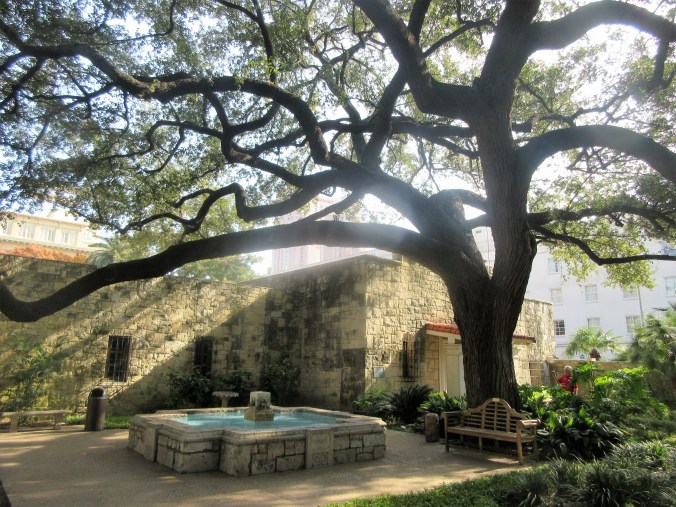
The Alamo, a place for quiet reflection and a fully-loaded bratwurst

Interior alamo

This is more like it, inside the walls of the Alamo

Most people know the story. The vastly outnumbered, out-gunned Texas settlers fought to the last man in an epic 13-day battle that spawned countless movies, TV shows and popularized the strangely appealing coonskin hat, which the Dude cannot resist trying on in every tourist shop. Strange how men relive their boyhoods by dangling a rodent’s rear end down the back of their necks. Maybe this explains the popularity of the male menopause ponytail.

Like most larger than life legends, the Alamo disappoints on first sighting. It’s hard to picture murderous Mexicans swarming over the walls in its downtown San Antonio setting, across the street from t-shirt shops and amusement arcades. Gone are the battle-scarred fields and trenches ingrained in the imagination of a generation of young boys by Walt Disney’s depiction of the west’s most famous underdog fight. It would take more than the heroics of Crockett, Bowie and Colonel Travis to hold back progress.

The Alamo is more memorial garden than museum. Strolling past dedicated fountains in the surprisingly compact walled compound, beneath a canopy of giant shade trees that must have witnessed the long ago slaughter, affords a sobering respite from the hustle and bustle of the city that grew from “the blood of heroes.”

While the Alamo played a central role in wresting Texas from the villainous President Antonio Lopez de Santa Anna’s grip, the full story is not quite as heroic as the battle itself. The road from Mexican territory to statehood was travelled by a cast that wouldn’t be unfamiliar in modern times, which is to say bickering politicians, greedy opportunists and inept military brass.

The Alamo might well have been saved had the provisional government answered Colonel Travis’s calls for reinforcements. Indeed, a force of 400 men under the command of Colonel James Fannin set out for the besieged mission but turned back and sat out the battle a couple of days’ march away. Despite Travis’ many entreaties, the provisional government, under Sam Houston, plagued by a shortage of funds and infighting among the ruling council members, failed to recognize the direness of the threat.

The famous call to battle–“Remember the Alamo–should serve as a reminder to soldiers the world over not to count on politicians or military brass when the bullets start flying.

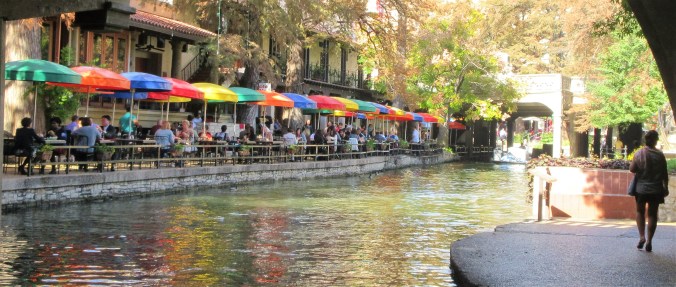
While the Alamo is worth a look, the most surprising and wonderful thing about San Antonio is the Riverwalk. Picture Venice… good…now take away the sinking buildings, expensive food, pigeon droppings and historical context and you’ve got the San Antonio Riverwalk.

Gondolas

Gondolas, Texas-style

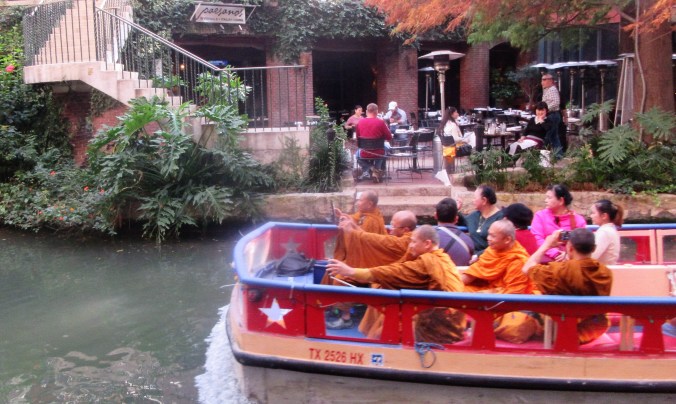
Monks on a boat

A new reality show, “Monks Gone Wild” was filming while we were there

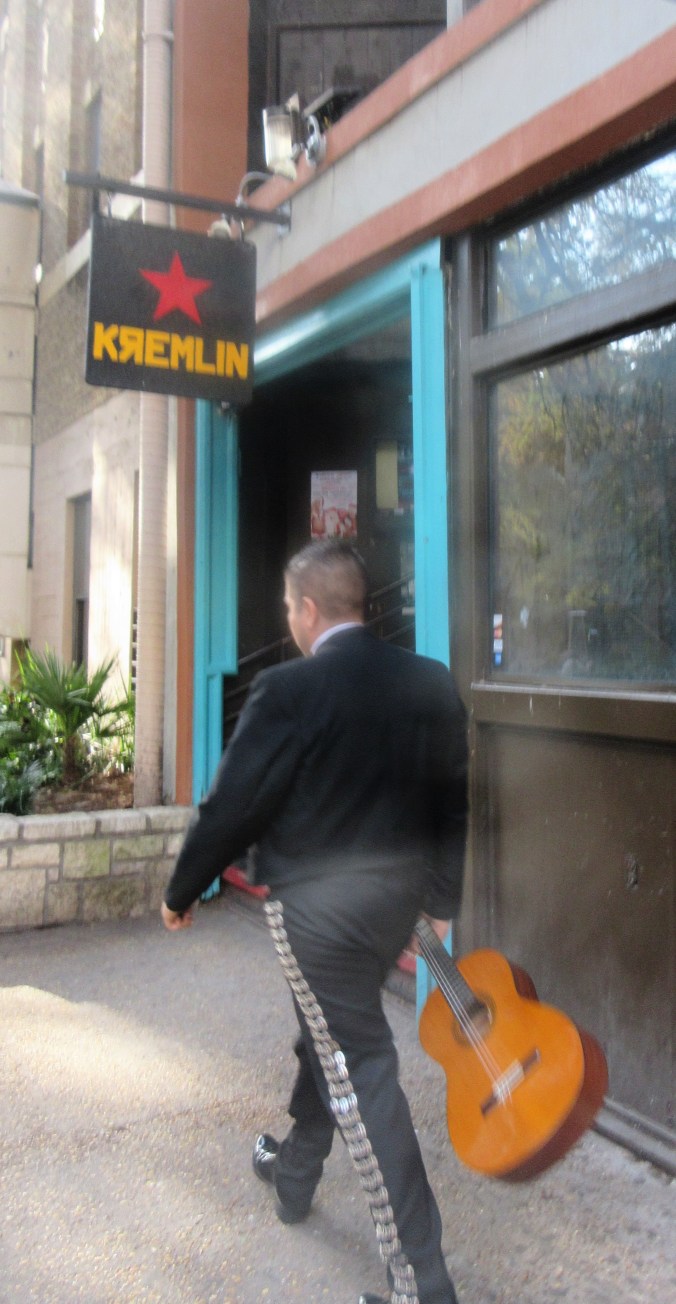
Guitar player

On his way to Mariachi practice Pedro stopped off at the Kremlin for a quick shot

Colourful umbrellas

See this is how they spend the winters in San Antonio (cue the weeping from Albertans)

The city’s downtown is interwoven with below-street-level walkways on both sides of meandering canals that run past restaurant patios and outdoor bars, hotels and shops. The walkways thread the downtown core, stretching back along the San Antonio river to our RV Park five flat miles on our bikes away. The only question when we leave the desert landscape for the urban environment is where to eat. (Which, along with “Where’s the nearest bathroom?”, is the typical Meanderer mantra).

Our RV park, next to Riverside Municipal Golf Course, where 38 bucks buys 18 holes with cart, is adjacent to the trail. Cycling along the river, in 70-degree weather on a Dame-friendly trail (minimal hills and paved), is perfect until we reach the downtown area where the trail narrows into a sidewalk shared by pedestrians and outdoor seating areas.

The Dude is an excellent cyclist. The man once pedaled from Vancouver to Edmonton for gawds’ sake. He negotiated corners and glided through narrow pathways with ease. Panicked, I kept stepping off my bike, picturing myself losing control and doing a header into the river waters in front of a boat filled with iPhone wielding tourists. A you-tube star is born.

We decide on the Esquire, the oldest bar on the river walk, which has been in continuous operation since 1933. It opened when Prohibition ended and Texans have been pounding back booze there ever since. There are two ways to enter the bar, patrons can stroll in off the street or negotiate up thirty steps from the river side. As they say in Texas, it’s not the walk up that’ll kill ya.

The Esquire is a place to belly up and quaff a few along the hundred-foot wooden bar, ostensibly the longest in Texas. But that’s what they all say. The bar looked tempting but we choose the outdoor balcony, the better to watch the river traffic.

Before Christmas, overhanging trees are festooned with hundreds of thousands of lights. Along the walkway, white paper bags anchored with sand and a candle, await sundown for their nightly performance as glowing guides. Restaurant and hotel staff light the bags at sunset, perhaps as a picturesque reminder to passersby fortified by cocktails not to step too close to the edge.

The world’s most successful capitalists aren’t averse to borrowing an idea or two and San Antonio entrepreneurs have cadged the Venice gondola thing, with dozens of boats ferrying tourists around the downtown area with a little history lesson thrown in for good measure.

Gliding along the San Antonio canals under a canopy of glittering holiday lights will remain one of my favourite memories of this trip. The Riverwalk, beautiful by day, is absolutely breathtaking at night.

Night scene

The camera doesn’t do the scene justice but take it from us, it was magnificent

Long Lives the King


elvis fright

The Dude calculates the exchange rate for the tour

Le Roi est Mort, vive le Roi

The phrase coined in France in 1422 after the death of King Charles VI and the subsequent ascension to the throne of Charles VII could well be the modern day motto of Memphis, Tennessee. City fathers could not have found a more fitting summation of this southern city’s allure than the English translation—The king is dead, long live the king.

More than 50 years after the King of Rock and Roll, with a then-bloated pelvis and his pants around his ankles, toppled from his porcelain throne at age 42 and expired on the bathroom floor of his hillbilly castle, fans from around the world flock to Memphis to breathe in his charisma in the place he called home.

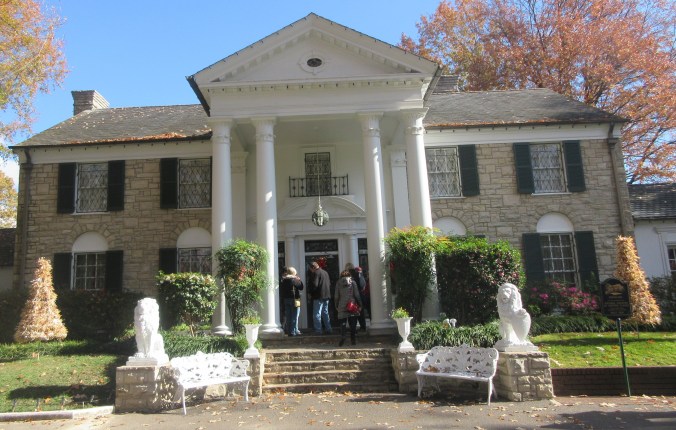
Now a national landmark, Elvis Presley’s Graceland mansion is a must-see on every tourist’s list of things to do in Memphis. No matter that it is an overpriced tourist trap in a somewhat dicey part of town that commercializes the King’s image to the point of sadly comic caricature. It’s the place where Elvis frolicked with his hillbilly friends and relatives and that is enough for fans who come to pay homage, many of whom were not yet born when he made his final face plant.

Graceland is located on Elvis Presley Boulevard, down at the end of lonely street across from an RV Park and the Heartbreak Hotel. The mansion sits across the boulevard from the main commercial enterprise, where visitors pay $10 bucks to park before entering the Elvis shopping mall, from which a shuttle delivers those with tickets to the mansion’s front door.

The caretakers of the King’s image offer the besotted an Elvis experience for every budget—-The Elvis Entourage VIP Tour plus airplanes for $80 ($75 if you skip the airplanes); the Graceland Platinum Tour plus airplanes $47.50 ($42.50 sans airplanes); and the plain old Graceland Mansion Tour ‘for those on a tight schedule’ for the bargain basement price of $38.50.

the house

Nothing says I’ve got money than a couple of Lions guarding your front porch

the lair

Three TV’s in the media room, one for each channel available at the time

christmas dinner

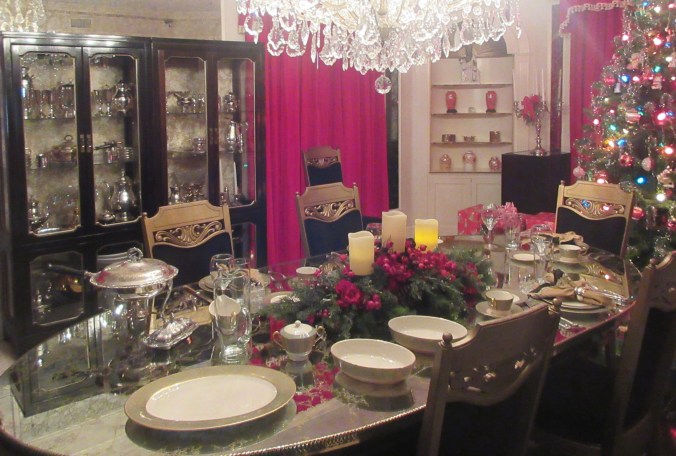
The dining room where Elvis and the Memphis mafia gathered

bowling

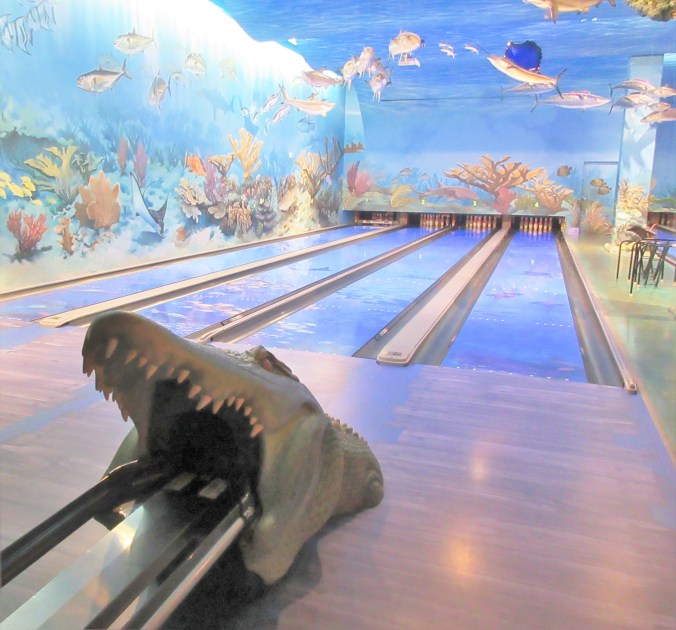
Okay, technically this wasn’t in Graceland but you just know he would have had one

Memphis and Graceland tour 051

The jungle room in all its’ green carpeted over-sized wooden glory

Memphis and Graceland tour 022

This is where the infamous Peanut Butter and banana sandwiches originated

The tour begins in a shuttle line where desultory ticket takers check bags for contraband before handing out I-Pads that guide visitors through the mansion, beginning with a living room/entertaining area with stained glass peacocks and a baby grand piano. Elvis, informs the I-pad, loved music. Gawkers are assured everything is as it was back in the day when the King let his dyed black coif down and put his feet up on the furniture.

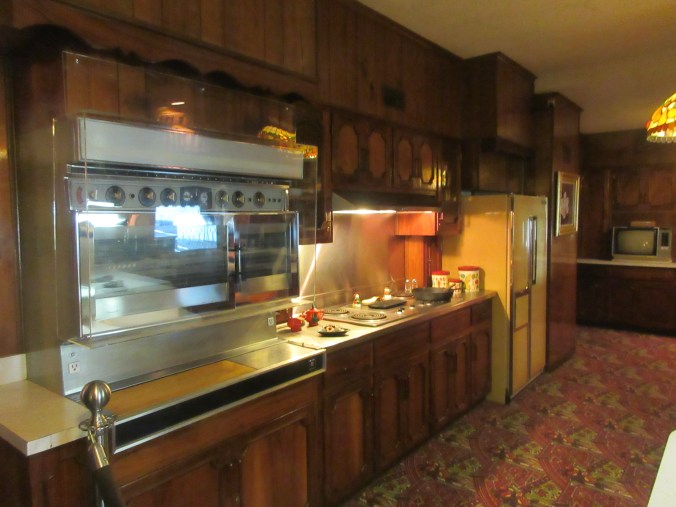
The dining room table, where the King took his sustenance, is set for a meal beneath a giant crystal chandelier. The spacious kitchen next door, where cook prepared Elvis’ famous fried peanut butter and banana sandwiches, is equipped with the modern conveniences of the day, including an antiquated microwave oven and a bulky small screen TV.

But it is the added-on jungle room in back that captures the ambiance of the times. Elvis furnished it with ornate custom cowhide chairs and sofas with fur (do cows have fur?) still in tact. One can’t help but picture a naked female bottom going against the grain, so to speak. If such things happened in the jungle room the I-pad tour does not mention them. The wood panel wall treatments must have cost a lot but they look about the same as the ones in Uncle Herbert’s basement. The room is topped, quite literally, with green shag carpet stapled between wood ceiling beams. The shag matches the floor and is said to have enhanced the acoustics in the room.

Downstairs in the man cave one can feel Hugh Hefner’s influence on the times. A long black couch festooned with white throw pillows provides seating, or perhaps a reclining area, for guests to watch the three tube-style TVs built into the far wall. The room features a yellow wet bar upon which a sign advises tourists that touching is not allowed. The well-worn pool table in the adjoining room bears the torn-felt a trick shot performed less than proficiently by a member of the Memphis mafia.

We are informed by our I-Pad, without any hint of irony, that the tour, out of respect for the King, does not include Graceland’s second floor and the bathroom in which he met his maker with bum cheeks exposed.

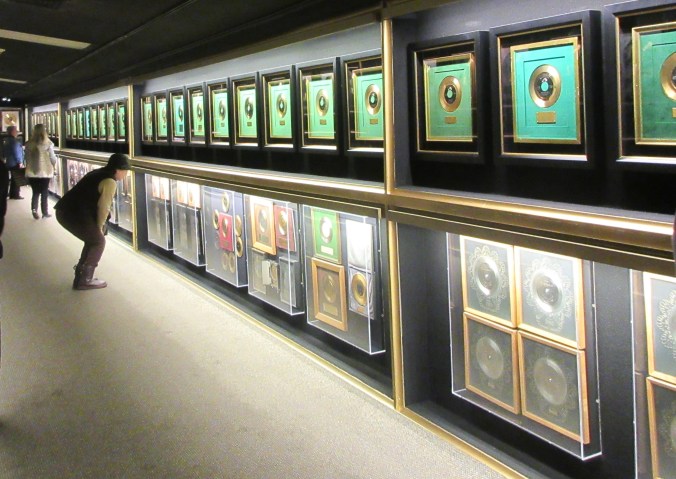
The mansion tour includes a long walk-through trophy room, which showcases Elvis’ incredible career with wall displays of his platinum 45s, albums, costumes, charitable contributions and tributes from record companies and the many charitable causes he supported, all to the musical accompaniment of a string of the King’s hits.

shooting parlour

After a little guitar pickin’ the boys would shoot at things

trophy room

This was just a small portion of the awards from all around the world that filled this building

paddock

The paddock still remains, a peaceful oasis in the sea of commercialism around it

graves

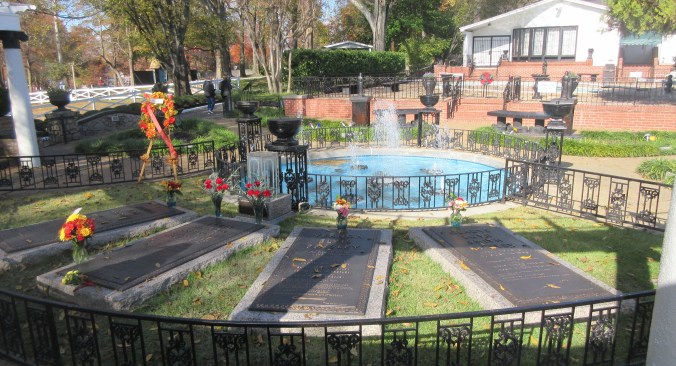
The entire Presley family is laid to rest here including his twin brother

The I-Pad guides us back outside, where the King raced his horses around the 13.8-acre estate’s paddock, next to the two-storey racquetball court/gym/lounge he had built behind the house. A winding stone path takes us past the driveway where he parked his Cadillac’s, motorcycles and the off-road toys he and his Memphis mafia buddies used to tear around the estate and onto the boulevard out front.

The tour takes a more somber turn as we pass the guitar-shaped pool and enter the memorial garden where the King rests in the company of his beloved mother Gladys, father Vernon and a plaque inscribed with the name of his twin brother, who died at birth and is interred elsewhere in the state.

You might think the basic mansion tour covers all the bases for even the most ardent Elvis fan. Not so, Presley piker breath. We splurged for the $47.50 Platinum Tour, which entitles us to experience more of Elvis back across the street at the shopping mall complex. Much more.

The mall features the King’s car museum, which houses his pink Cadillac, black Rolls Royce, fire engine red Corvette, pristine Austin Healy, baby blue T-bird and various and sundry motorized toys, including a dune buggy and motorcycles, all on display around a backdrop playing Elvis-in-cars movies.

The car museum opens onto a gift shop through which visitors pass an array of Elvis memorabilia ranging from T-shirts to ash trays, from guitars to sequined white jump suits, from oversize silver rimmed sunglasses to key chains and shot glasses, all offered at special tacky tourist prices.

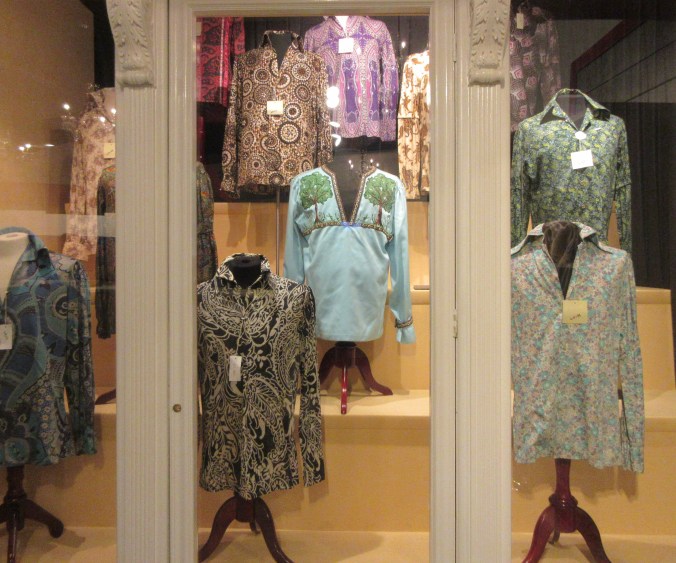
The gift shop leads to the Elvis archives, where never-before-seen (except by the millions of tourists who have traipsed past over the years) photographs of the King are displayed next to outfits he’s wearing in the pictures. Here, a fringed buckskin jacket he wore in the snow, there the bell-bottom velvet trousers that encased his pelvis on stage.

Enough already, you say. Not nearly, King of Rock and Roll lightweight.

There is a movie theatre where you can become engrossed in a stellar Elvis flick set against a backdrop of exotic locales with a string of scantily clad starlets thrown in. So what if the story-line never changes. The Colonel knew a winning formula. No Elvis movie ever lost money. After the picture enjoy a burger and coke in a diner that smells like a vat of grease, or jerk your sequined jumpsuit with a shake at the soda fountain.

You’ll need to fortify yourself for the rest of the gift shops and your continuing quest for that perfect Made-in-China trinket that says I saw Graceland. And don’t forget the airplanes parked on the gift shop tarmac., customized by Elvis to take you into the fantasy world of a rich hillbilly

the shirts

The man loved a loud shirt

who could forget

The Colonel never met a bad movie he wouldn’t put Elvis in

shoe

The good thing about monogrammed shoes is that only a guy named Ed Peterson can steal ’em

really

Sure jumpsuits are comfy, but where do you put your wallet?

elvis enflight eating

The interior of the Lisa Marie, one of two planes the King owned

original pink caddy

This was the model for the Mary Kay empire

jumpsuit era

As if a sequinned jumpsuit wasn’t enough, they added a cape to the one on the left

bricks on gate

Apparently Ray Liotta is a fan, who knew

airplane

Bet they didn’t charge you for a checked bag on this flight

gift shop

No wonder the man is richer dead than alive