The mad fiddler of Halifax – patriotic and a mean fiddle player
I’m ba-a-a-ack. Okay, the Dude had his opportunity to expound (in great length) on the exotic travels and interesting people of a misspent youth in the company of Intrepid, an international Man of Mystery.
I can’t compete. I grew up in the seventies wearing wide-legged jeans while listening to April Wine (with some Van Halen thrown in for street cred.) My biggest claim to using illicit substances was smoking Players Light when I was thirteen and getting drunk on a can-and-a-half of Pilsner beer when I was fourteen.
My first travel experience couldn’t have been less adventurous. It comprised a two-week Hawaiian vacation with my best bud Wendel, complete with flowery lei’s, fruity cocktails, clean white sheets in our hotel and hours of playing pac-man in the lobby. The biggest danger we encountered was the blistering tropical sun that administered a massive burn while we rode rented mopeds around the island, resulting in two days spent in movie theatres wearing dark glasses to hide my swollen forehead and eyes.
History boy leads the tourists in a rousing version of Oh Canada!
Fast forward a few decades and, thankfully, our meandering vacation includes a happy medium, part adventure, part everyday living, just enough of both to keep things relaxed and interesting.
My last missive related our Cape Breton adventures. Leaving behind the comical puffins and what we now know to be an Island, we motor south to mainland Nova Scotia and the capital of Halifax, a city better named “roadwork central.” Halifax takes the Canadian summer road repair ritual to new heights. Literally every main thru-fare in the city has some form of construction going on. Traffic is grid-locked. Throw in a couple of bridges to funnel people to the city of Dartmouth across the bay and things get ugly.
See there’s lots of culture in Halifax
Thankfully Nova Scotians seem too laid-back for road rage. Traffic crawls through city streets without blaring horns, middle-finger salutes or other overt demonstrations of commuter anger. Maybe it’s because Haligonians vent their pent-up frustrations in other more violent ways. Did you know Halifax has the country’s highest per capita murder rate. During our brief stay two high profile cases dominate headlines—a pre-med student is charged with the murder of another student whose body is yet to be found; and a female Truro police officer’s body is discovered in bush beneath a bridge only minutes from the city’s downtown core.
The historic Privateers Wharf – a fancy name for Pirates, but Privateers of the Caribbean didn’t have the same zing
Or maybe it’s because Halifax, despite its traffic woes and murder city rep, is a lovely waterfront city crisscrossed by a mish-mash of historic tree-lined streets and down-at-the-heels neighbourhoods.
We board the Harbour Hopper, a weird-looking boat with wheels first used to transport American troops from ship to shore and from river to jungle during the Vietnam War. I doubt the Americans decorated the amphibious vehicles with bright green and yellow smiling frogs to frighten the Viet Cong (or perhaps they did, which might explain a lot about that war).
A beautiful day on the water on the former troops carrier turned tourist carrier
Our guide is an enthusiastic history major from Dalhousie University (a pint-sized Harvard with brick/sandstone buildings dating back to 1818). It’s always a pleasure to have a tour guide who knows his stuff and can answer obscure questions. Many of these type of tours are guided by summer students who recite the memorized script and are flummoxed if you ask a question outside their comfort zone, like where to find a bathroom.
One of the ceremonial guards on the Citadel looking over Halifax
Before boarding we cruised the waterfront boardwalk with its collection of restaurants, gift shops, buskers, hordes of tourists and… nostalgia alert… a Cows outlet. You remember Cows, they of the kitschy named ice-cream and large plastic bovines outside. Sadly they were out of my favourite Don Cherry flavor. A sea salt caramel cone would have to do. Ice cream on our chins, we stop to watch glass blowers through an open door as they craft crystal beer glasses from a molten blob. The Dude’s eyes light up at the prospect of sipping suds with class but the price and his proclivity towards clumsiness when imbibing discourage a purchase.
What’s with the Dude in the red Hat?
The Harbour Hopper winds its way through the streets of downtown Halifax, past the Citadel, a military fortification built in 1749 to defend Canada against attacks that never came. It overlooks the harbour and until recently bylaws restricted building heights so as not to obstruct the Citadel’s sightlines. Money talks, however, and a building boom has started along the waterfront (see my previous traffic comments).
The Dude in the Red Hat is everywhere it seems
The water portion of the tour is fascinating, we enter the harbour by the Casino Nova Scotia, (gotta’ give it to the province for the snappy naming of entertainment facilities).
Entering the water is relatively smooth, one minute we’re on land, the next we are getting an ocean-side perspective of the boardwalk. Our guide fascinates his captive crew with the history of the explosion of 1917, the largest in Canadian history. A French cargo ship loaded with wartime explosives collided with a Norwegian vessel in fog, the resulting blast killed more than 2,000 people, and injured 9,000 others. The explosion was so large it bared the ocean floor and caused a mini- tsunami.
It’s all smooth sailing on the way in….flash forward an hour
A half-hour later, things get a bit dicey on our return to land. A proliferation of green algae on the exit ramp make it a tad slippery. For a few tense moments it looks like The Dude and I will be swimming with the fishes. Maybe it’s part of the “scare the tourists” shtick for drumming up additional tips.
Prince of Wales Tower in Point Pleasant Park on top of a very steep hill with no water in sight
My favourite memory of Halifax is Point Pleasant Park, a swath of heavily treed paths, 90 per cent of which are off-leash. It’s dog nirvana, a meanderer’s delight, with trails snaking every which way off the main road, the only on-leash portion of the ocean-side park. Paths wind along the water and through canopies of Acadian trees. Hurricane Juan devastated the park in 2003 destroying almost three-quarters of its trees. It’s hard to believe as we walk through it. A massive replanting was undertaken and to my outsider’s eyes the trees seem to have been there for decades.
Devil Dog minus his mud boots emerges from the water
There are no in-park water sources other than the ocean. Savvy pet owners carry water for their fur buddies. Shamefully I have nothing. The Dog, ever-resourceful, sniffs out the only “fresh” water source in the park, a stagnate pond near the entrance. Before I can shout “Oh no you don’t!” he leaps into the pond and sheepishly emerges, legs blackened with thick pond scum. The kind of mud that dries into a thick smelly paste and leaves crusty tracks everywhere. People and their dogs give us a wide berth as we wander the unfamiliar trails looking for a path to the ocean for a vigorous dog-dunking exercise. Minus the mud, but smelling like a seafood factory, we head back to our campground.
Next…Who is Peggy and why’d they name a cove after her
The last time I undertook a trip of this scope and duration was back in the fall of 1970 when I left Edmonton in the day coach of an eastbound train with an intrepid travelling companion who shall remain anonymous except for the sobriquet “Intrepid”.
Which he surely was.
Then, as now, we headed ever eastward, departing Halifax on a cheap flight to Glasgow, crossing the Channel to Ostende and hitchhiking across France and southern Germany to attend the world’s preeminent celebration of our mutually shared life passion. My memories of that event are hazy, not so much from the mists of time as the salubrious nature of the celebration.
Those who have attended Munich’s Octoberfest will recall a collection of huge tents populated by a wild, guzzling, mélange of beer drinkers from around the world. Amidst the chaos of celebratory shouting in multiple languages, buxomy frauleins clutching fistfuls of liter mugs drip froth in their wake as they slake the great thirsts of the multitudes gathered under the big top.
In the centre of each tent, musicians in lederhosen blast out traditional German beer drinking music with a pause at the top of each hour to allow the band leader to exhort the crowd of guzzlers into near frenzy by quaffing a litre mug to the beat of the oom-pa-pa band, with the clear implication the guzzlers follow suit. Keeping up with the band leaders, who change every couple of hours, is a fool’s errand I was happy to undertake.
As the day progressed into darkness, both literally and figuratively, I morphed from a youthful, unilingual Anglophone bumpkin from Edmonton into a seasoned man of the world able to communicate in multiple languages while dancing on a table top. A misstep followed by a tumble that resulted in the ass of my pants being ripped open failed to curb my lusty mood and it was not until late in the celebrations that I realized I no longer remembered the name of the gasthouse we had checked into earlier in the day. With Intrepid no longer in sight, I found myself homeless and gowed to the gunnels in a foreign city with my buttocks exposed to the frigid fall weather. I rolled myself under a car in a nearby ‘auto’ sales lot and slumbered away the night’s remainder.
Waking up with the tailpipe of a Mercedes looming above my vastly expanded head left me with undiagnosed (the condition had not yet been invented) PTSD, which will surface later in the trip to my detriment and befuddle my thought processes for important decisions. After locating my gasthouse in the light of day, I hooked back up with Intrepid, who slept in a gasthouse bed and appeared none the worse for wear and anxious to conduct our important business.
We had come to Munich, not to make ourselves insensible with drink, but instead to purchase a reliable German car, which we planned to drive across Asia in our forever eastward quest to reach Australia overland. What we ended up with was a well-broken-in blue Volkswagen bug. Not the wisest choice for what we’d been told was a journey that required a four-wheel-drive jeep loaded with extra tires and jerry cans of gas.
Nonetheless, we motored through Yugoslavia and Greece like lords of the road, exulting in our newfound mobility, before pulling into Istanbul, the historic Turkish crossroads city where east has merged with west since before Genghis Khan was a marauding cowboy.
Turkey, a meeting place for pudding lovers…..
One of our first stops was The Pudding Shop, a place famous along the hippie trail, not for its pudding, but as a place where backpackers might purchase certain smoke-able products, notwithstanding an official notice on the wall advising possession of marijuana, hashish or keef as punishable by a three-year prison term. If you’ve seen the movie Midnight Express you get the drift of the serious implications for those caught toking.
We posted a note on the Pudding Shop bulletin board, adjacent to the ‘three-year’ notice, seeking two females willing to share close quarters and gas expenses through the rocky barrens of Turkey, Iran, Afghanistan and beyond with two Canadian men of good intention. A bit of a stretch, you may be thinking, a long shot that is nothing more than the naive fantasy of two hopeful Alberta rubes barely out of their teens. Not so, pudding breath.
A reply was posted within a couple of days, and after a brief get-to-know-each-other meeting surrounded by the bleary-eye habitués of the Pudding Shop, we hooked up with two hippie girls, one from Florida, the other from Denmark, international school students who were vegetarians travelling to India to study yoga. The more prescient among you, by that I mean the women, are probably sensing conflict en-route and wondering at the lack of caution on the parts of all parties involved.
Through the multi-coloured prism of youth in the sixties, it seemed a no-brainer. After all, what could possibly go wrong when you cram two hippie girls from an international school into a well-worn Volkswagen Beetle with two meat-eating, beer-drinking bumpkins, and all our combined luggage, on a trip of several thousand kilometres through mostly barren desert?
The first note of discord was sounded in Ankara, eastern Turkey, where we took a cheap hotel frequented by multi-national budget travelers. While we bumpkins were supping in a nearby cafe, eating meat and quaffing glasses of retsina from a bottomless bottle, the hippie girls were socializing with fellow European travelers in their room, partaking of those aforementioned risky products.
By meal’s end I was speaking fluent Turkish with a group of locals at an adjoining table, our retsina-lubricated conversation flowing in direct relation to the drink consumed. Back at the hotel with a snoot-full of retsina working its way through my system, my undiagnosed PTSD kicked in again, and despite Intrepid’s misgivings, I felt an urgent need to bang on the girls’ door while shouting “Police Controle” in my best Turkish accent.
The bang and shout were followed by silence from within, and then a lot of shuffling sounds before the door opened to reveal one of the hippy girls emerge from the smoke with an angelic expression on her face that quickly turned rancorous when she recognized her sodden late-night callers. There were six or seven people in the room, all of them long-haired, white-faced, tense and non-communicative. Our stay in the room was shorter than I had hoped and I detected a first note of coolness from the hippie girls the next morning when we loaded into the Blue Bug for the run through Iran.
Iran, before the Ayatollahs took the fun away
Driving through the Iranian desert presented few challenges beyond dodging the odd 18-wheeler bearing down in the centre of the narrow road and/or ascertaining whether the Bug was actually on a recognized road and not on a side track that might veer us off course and into Syria.
The monotony of the desert was broken only by stops in tiny villages for gas, which we found to be readily available despite the dire, pre-trip warnings about the need for Jerry cans. A typical stop attracted a crowd of swarthy men who would surround the Blue Bug three-deep, their noses against the windows, and stare blankly at the infidel bumpkins and their brazen harlots. While Intrepid and the hippie girls didn’t seem to mind the attention, I found it a tad unnerving being so closely scrutinized by eyes that seemed to indicate there was little activity going on behind them.
Back on the road, with the bug eating up the empty landscape in small bites, there was ample time for chat. Unfortunately, my as-yet-unheard-of PTSD kicked in again and instead of playing it cool I felt compelled to add a distinct chill to the already cool atmosphere by discoursing on the benefits of eating meat. It must be said at this point that Intrepid, while nodding in agreement from time to time as he drove, took no active part in the vegetarian put-down. When I steered the conversation to yoga and questioned the usefulness of studying what amounted to bending and stretching exercises that we Albertans learned in grade school phys-ed, Intrepid checked the rear view mirror for impending violence.
The vibe, if I can use an era-appropriate word, coming from beneath the luggage in the cramped back seat was enough to keep the Blue Bug’s interior frosty despite the searing desert heat. Alas, the atmosphere was not cold enough to keep the air-cooled engine of the overloaded Bug from emitting a loud bang as a piston pushed through a cylinder wall bringing us to an immediate stop.
After days of driving through wasteland, we had ‘thrown a rod’ on the outskirts of the Iranian resort town of Babul-Sar on the Caspian Sea, less than a camel-droppings throw from an automobile repair shop. Praise to Allah. The sight of four westerners in distress, two of them blonde females, hit home for a passing Iranian businessman who pulled his Mercedes over and arranged for the Blue Bug to be pushed into the aforementioned mechanic’s shop.
Though he spoke little English and seemed to believe we had driven to Babul-Sar from Canada, the geographically challenged Iranian was affable enough to secure hotel rooms (women and men separate, of course) and even took us for lunch at the town’s famed White Casino, which gleamed decadently in the desert sun in those pre-Ayatollah days of the Shah. By the time we left town a few days later, our engine completely rebuilt for the equivalent of 40 Canadian dollars, our Iranian benefactor had proposed marriage to the hippie girl from Florida. Her polite refusal did not deter him from wishing us luck on our journey.
Eastward, ever eastward.
Afghanistan, flute music in a haze of black hash
We entered Afghanistan from the southwest, arriving at the unlikely oasis town of Herat, a small city of little note, apart from the ready availability of black hashish, which we purchased in a large lump and fired up in our room at our first opportunity. Smoking hash in Afghanistan is not fraught with the same risks as in Turkey. Beneath our room, in an Afghan version of a beer parlour, respectable men with long beards puffed from hookah pipes, no doubt chatting lasciviously about the infidels who arrived in the Blue Bug and were–all four, men and women–sleeping on mats in one room.
If our lack of respect for local customs bothered them they didn’t let on, nor did the hotel’s proprietor who accepted our cash while cautioning against bringing alcohol into the hotel. In this, the post Alexander the Great, post-British, pre-Russian, pre-Taliban, pre-American/Taliban, local warlord era, we sensed no outward hostility. We did not fear losing our heads, other than to the chunk of potent black hash, and the possibility of being kidnapped and held for ransom seemed remote.
At least until the paranoia kicked in.
I can’t speak for Intrepid, who as I recall slumped onto his mat after exuding a huge plume of smoke and remained motionless, possibly unconscious, for the rest of the night. Or for the hippie girls, who chatted amicably between themselves before seeming to drift off. But I laid on my mat, staring at the visions playing on the ceiling of our sparsely furnished room, the imaginings of a drug-fueled young mind a long way from home, which included, among other sinister possibilities, the hookah smokers creeping up the stairs to deflower us one and all.
We were not in Kansas anymore.
In the early days of our time in-country, Intrepid managed to make contact with a young Afghan who spoke English and wanted to buy the Blue Bug. The plan had always been to sell the Bug at an opportune time and recoup a not inconsiderable investment on Intrepid’s part. The problem being, Intrepid had the car stamped on his visa. Like in Canada, Afghan customs officials expect visitors who drive into the country to drive out in the same car.
“No problem,” advised our new friend, confiding that he learned English while smuggling hash into Europe and returning with coveted German cars, which he sold on the black market at a premium.
“I have a brother who works in customs,” he reassured us, with enough confidence to get Intrepid’s attention.
(It should be noted that it was Intrepid, having more cash at the time, who actually paid for the Bug, and thus had the most concern about its sale.)
When the young Afghan offered as much as he paid many rough desert miles ago, Intrepid took the deal, passport stamp be damned.
The exchange of money and car took place in Kabul, where we secured accommodation in a walled compound in the foreign embassy neighbourhood. The room rate fit our budget—15 cents a night for a mat on the floor, 25 cents for a bed. We splurged and took the beds. The hippie girls took a separate room.
We learned of the compound somewhere along the hippie trail. The rooms were Spartan but clean; hard-boiled eggs could be purchased for pennies and the courtyard garden got full sun. Life in the compound was highlighted by the musical accompaniment of a bearded French flautist wearing a long native dress, who serenaded his French girlfriend daily in the garden, while sitting cross-legged with his genitals exposed to the sun and other courtyard visitors. The scene was not as disconcerting as it may sound in print and we co-habitated amicably in a hashish haze with the hotel’s other foreign denizens while waiting to finalize the car deal.
We learned that doing business in Afghanistan, even selling a used car under questionable circumstances, was subject to a cordiality Canadians would do well to adopt. To finalize the deal, the young Afghan insisted we come to his family home for dinner, and that we bring along the hippie girls, who being foreigners of questionable morals, would be allowed to eat with men. In the interest of international commerce, Intrepid dismissed my hashish-induced paranoiac musings about the possibility of treachery on the young Afghan’s part and accepted the invite. There is a single sacrosanct rule of travel, one that we frequently broke and got away with, that states ‘never willingly put yourself in a dicey situation.’ Having dinner with a self-admitted smuggler and sometime Afghan car-curber seemed dicey to me. But I couldn’t let him go with only the two hippie girls for protection so I reluctantly tagged along.
The home was a typical low-slung adobe-like structure with a solid wood door and a long hallway leading into a room with no furniture but an array of rugs. The Afghan explained that his father had three wives and that the large group of men assembled in the room were his brothers, one of whom we presumed worked in customs. We smiled amiably and the brothers, who ranged in age from teenagers to mid-30s, smiled back as the young Afghan made the introductions before we all sat down on the rugs in a kind of circle.
The evening proceeded with uninhibited singing and dancing by our male hosts, punctuated by the occasional giggle from the direction of several ‘tents with eyes’ peaking around a corner from the kitchen. It’s worth mentioning here that I’ve always been a picky eater. I hated macaroni as a child because it looked like worms and eating rice seemed a lot like chomping down on maggots. I almost gagged at the table once when my dad, scoffing at my fussiness, announced that it all looked the same when it came out the other end.
Hence my extreme discomfort when servers put plates in front of us but no utensils to extract or eat the food from the large bowls placed in the centre of the circle. Everyone dug in with the appropriate hand, whether left or right I can no longer recall, given my tense state of mind and the dessert that was to follow.
At some point after the food was consumed, the family patriarch made his appearance, accepting the respect and deference of all present as his due. Shortly after, a loud knock called one of the brothers to the door and he returned with an aged man with ubiquitous beard and turban but unusually blood shot eyes. In short order a huge hookah pipe was produced, into the bowl of which the wizened man with blood shot eyes began crumbling a chunk of black hash as big as a fist. He huffed on the pipe while applying flame to the bowl until a cloud of grey smoke enveloped the room. Content the hookah was properly lit, he took his leave. No explanation was provided and none asked for as the hookah hose passed around the circle.
Despite my apprehension, the Blue Bug deal, which now included a free meal with entertainment and party favours, went down without a hitch. The only hurdle remaining was getting Intrepid across the border into Pakistan with a passport bearing a vehicle stamp. Our now downwardly mobile foursome travelled to the frontier over the Khyber Pass by bus, at which time we were told to disembark and cross into Pakistan on foot. Not to worry, the young Afghan smuggler/businessman had advised, Intrepid merely had to cover his head and shoulders with a cloth and mingle with the locals as they walk across.
It must be noted here that Intrepid alone shouldered the risk of being caught out as an infidel car smuggler. With his head and shoulders shrouded in cloth, looking as much like an Afghan as an Alberta bumpkin wearing a cape over a sport shirt and jeans could, he joined the crowd and passed the slack Afghan surveillance with aplomb. A lesser man might have given himself away with a show of nerves. Perhaps drawing attention with a trickle of pee sprinkling the dust below his pant leg. As I explained at the beginning of this narrative, it’s not for nothing he’s called Intrepid.
Pakistan, where men are men, women are women and never shall they mix.
Having accomplished the car deal according to plan, we took in the mountainous scenery, feeling not like bumpkins but instead like Men Who Would Be Kings. Seating being tight, we scattered throughout the bus with the hippie girl from Florida occupying a seat next to a Pakistani businessman, who was aboard because his flight had been grounded. Like the Iranian Samaritan before him, he took a liking to her and before leaving the bus at a pre-planned stop for a faster conveyance, promised to pick us all up at the Lahore station.
We left the still considerable chunk of black hash behind in Afghanistan, none of us willing to test the tolerance of this strange new country.( I would discover, on a later train trip, this tolerance did not include men and women sleeping side-by-side, fully clad, on the floor between the seats in a jam-packed coach. The cultural faux pas resulted in a shower of shoes landing upon us, followed by tense negotiations, which involved us sitting upright and, of course, returning the shoes.)
With remnants of the Afghan hash orgy lingering like smoky drapes, I viewed the Pakistan businessman’s appearance at the station as at best unlikely, and at worst fraught with hazard. In the event, he turned up with a car, secured reasonable hotel rooms and invited us over for dinner with his wife and family. The evening passed pleasantly, we ate with utensils, along with female members of his household, at a table. I cannot recall any of the conversation but it puzzles me still why a wealthy businessman would invite four scruffy strangers to his home. The only mar on the evening happened on a Lahore street while the polite, remarkably affable businessman was directing us to our hotel. When a beggar approached his demeanor changed in an instant, as he kicked at the man shouting curses in an indecipherable tongue.
India, land of coolies, monkeys, and a train ride to hell
We took a train to New Delhi, home of the famous Red Fort and the city where monkeys rule the street-side tree-tops, swinging above the throngs like lords of the urban jungle ready to snatch a samosa from any unsuspecting passerby. It was apparent to all that the hippie girls, who were no longer speaking to each other and talking to Intrepid and I only out of necessity, had no further need of car-less Alberta bumpkins. We left them at a New Delhi hotel without saying goodbye and took a rare sight-seeing trip to the Taj Mahal, after which we boarded a train, third-class-student-reduction, for the long trip to Calcutta.
Back in the day, train travel in India was an adventure onto itself. The fun started on the train station’s jam-packed platform. Men wearing turbans and dirty red jackets upon which are pinned shiny badges proclaiming them to be Licensed Coolies, wander the crowd in search of customers, zeroing in on bumpkins like a Delhi monkey to a tourist holding a banana.
With Intrepid and I scanning their badges with a mixture of amusement and trepidation, they explain with gesticulations accompanied by a few key English words, that for a rupee they will shoulder our packs and fight their way through the third-class-student-reduction throng to secure us seats for the journey. We calculate the cost at about 12 cents and thrust a rupee each into outstretched hands.
When the train pulls up to the platform the awaiting throng moves as one, women clutching babies, children and men clutching the family’s belongings, a surging mass of humanity intent on one thing, a coveted seat. Into this fray plunge the Licensed Coolies, our packs upon their backs, motioning us to follow as they barge their way through the crowd pushing and shouting at their irate countrymen. We get facing seats at the end of the car and spend the trip avoiding the dark stares of our less fortunate standing-room-only fellow passengers, including the women and doleful children crunched into the centre aisle of the car.
But even the dust-filled train ride, with its frequent stops at which chai peddlers proffer their products through open windows, hasn’t prepared us for Calcutta. We arrive after dark at an immense covered area that resembles Paddington Station, no doubt a throwback to colonial days. The vast platform beside the tracks dwarfs the platform of our departure, and the luckless human horde assembled upon it seem not to be going anywhere but instead taking advantage of the roof’s shelter and proximity to water.
Unnerved by the squalor, I follow Intrepid out to the street, where brown men wearing turbans sit on horse-drawn stagecoaches, surreal in the faded street lights, and beckon us to hop aboard. The smell is what hits you first, the rancid, putrefaction produced by too many humans occupying too little space, in a climate that is too hot, without a pot to piss or poop in.
Long before Mother Theresa brought the city’s poor to the world’s attention, and long afterwards I suspect, Calcutta has been synonymous with human misery. When we arrived, Calcutta was said to have a street population in excess of one million. Nobody knew within a hundred thousand or so.
People literally lived and died on the street, while marginally more successful residents stepped around or over them on their daily business. When we inquire about a child’s odd deformity, we’re told children’s legs are broken at birth at symmetrical angles so they can flap their feet on the pavement to elicit sympathy from passersby. A man with no lower body whizzes past at knee level, propelling what looks like a garbage can lid on wheels with calloused hands. People squat on the sidewalk, brushing their teeth and washing their faces from taps on the sides of buildings, getting haircuts, or giving them, eating and, yes, relieving themselves.
Did I already say we weren’t in Kansas anymore?
At the time, Calcutta was known to be a dangerous place for backpackers. A city where life was not only cheap but ultimately worthless. A white-skinned bumpkin might as well be walking around with a sign on his back saying ‘I am rich, soft and far from home.” Accordingly, we decided to bunk at a place whose name we could trust—The Salvation Army hostel.
Not long after checking into the Sally Ann, Intrepid was summoned to the front desk by a mysterious phone call. The caller, in a heavily accented Indian voice, indicated that he was a friend of a friend from Edmonton, and that we should all get together at a Calcutta night club later that night. By now you all know Intrepid as a man of his name but that is not to say he was born the day before yesterday. He informed the caller we’d both meet him at the Sally Ann’s barred gate. The caller never showed and we were left to ponder our missed opportunity for a night of clubbing in Calcutta.
Brimming with the confidence of savvy travellers who had avoided the clutches of a shady Calcutta charlatan, we broke that sacrosanct ‘dicey spot’ rule of travel once again. Being normal red-neck… er… red-blooded young men who had long been denied the satisfaction of certain basic needs despite our close quarters with the hippie girls, we thought it a good idea to seek out female companionship.
We did what any bumpkin would do in a strange city and hailed a rickshaw. How poor is Calcutta? It’s the only place I’d ever been where the rickshaw drivers’ couldn’t afford bikes. That’s right. They ran through the hot, dirty city streets, often barefoot, pulling you in their wake for pennies. We bargained hard with the guy, and got him down to a couple of rupees to pull both of us a several miles to the red light district. I know what you’re thinking, curry breath. But you have to negotiate to earn the locals’ respect. Besides, a rupee saved is a rupee earned.
At any rate, he seemed happy with the arrangement and we set off in search of two-dollar hookers who possessed what we hoped were under-priced charms. About 15 minutes into the trip through a maze of narrow streets that all looked the same, Intrepid shifted in his seat throwing the gaunt rickshaw runner slightly off-balance.
“Seen any white faces in the last while?” he asked solemnly, without betraying any of the fear forming in the pit of my stomach.
“Not for a while,” I replied, trying to sound nonchalant.
“Know where we are?” he inquired. The calmness in his voice only amplified my misgivings.
“Somewhere in Calcutta,” I answered weakly.
As if sensing our discomfort, the rickshaw runner turned off the narrow street into an even narrower alley, and pulled us to a stop behind a grungy three-storey building. He motioned us to wait while he went in and selected two suitable ladies. We sat on the rickshaw uneasily, worrying about the rickshaw man’s taste, or possible treachery, and eyeing the decay around us, me experiencing black hash paranoid flashbacks about being deflowered and Intrepid occasionally glancing at his watch.
After what seemed an inordinately long time, the rickshaw runner returned proudly with two shopworn Indian ladies of ill-repute who did not appear overly enthusiastic about the opportunity to couple with two shaggy foreigners for two bucks each. Although no doubt worth every penny, the ladies looked less than alluring to our western eyes, so much so that our libidinous yearnings had fallen to a level of flaccidity that made a transaction impossible. I’d like to think we paid the ladies a buck each for the humiliation of subjecting themselves for appraisal but I can’t recall for sure.
Safely back at the Sally Ann we were reminded again of Calcutta’s grinding poverty. On a given day each week, people lined up outside its walls around the block for a free midday meal of rice and a mystery green topping that might have been curry, served out of a large boiling cauldron. Having neither plate nor bowl to receive this dubious culinary offering, the hungry extended newspapers upon which the rice and mystery concoction were ladled under the menacing eye of a guard holding a bullwhip to discourage anyone from trying for seconds. Seeing the young children scurrying to scoop spillage from the pavement is a sight seared into my memory.
Burma, the land time forgot…..
The time had come to turn our attention east, to the insular country of Burma, now called Myanmar. The former British colony was being run by a military junta that didn’t take to bumpkins wandering about and so was not a regular stop on the hippie trail. Nonetheless, with Canadian passports we were able to secure 24-hour visas and after oconsulting with savvy fellow travellers, we stocked up on whiskey and American cigarettes in the duty free shop.
The short flight from Calcutta to Rangoon was a journey back in time. We cleared customs clutching our brown paper bags of booze and smokes to discover we were on a movie set from the forties. Or so it seemed. After the chaos of Calcutta, Rangoon appeared placid, with wide streets, old cars and wooden hotels with wide verandas. The pace hearkened back to the days of the British Raj and rubber plantations.
Our first order of business involved yet again breaking the sacrosanct rule of travel by seeking out a buyer for our contraband. Naturally, we hailed a rickshaw driver (in Rangoon they had motorized bikes), and while being propelled from the airport laid out our proposition. We would sell our precious commodities for five times what we paid, but only if we were reimbursed in American dollars, which we could then sell on the black market for Burmese currency at seven times the bank rate.
Confident that we had the goods, so to speak, we allowed ourselves to be haggled down to three times what we paid and then made the black market money exchange, American dollars for Burmese currency at seven times the official rate. Only after we’ done the deals did we discover that the Burmese government would not change the money back to dollars at the time of our departure, less than 20 hours hence.
Though Intrepid went on to become a successful money manager we had outsmarted ourselves. Our cunning had left us with a huge schwack of Burmese money that was worthless outside the country and only hours to spend it.
Looking back, I can’t understand why we didn’t take the money to a high class brothel and blow it all, no pun intended, on the best looking hookers in Burma. Instead, we hired an English-speaking guide off the street, a well-dressed guy in his forties, and sauntered about town like Men Who Would Be Kings. For the first time in our lives we had more money that we could spend.
Rather than laying in the arms of Burmese beauties beneath swaying palm fronds, we opted for Rangoon’s best drinking establishment, which provided ties for those gauche enough to arrive without. We slipped the ties over our soiled shirts and wiled away the remainder of our 24 hours drinking cold beer delivered by waiters with white linen draped over one arm. We gave the Burmese money we had left to the guide, who was happy to interrupt whatever business he was about when we met him to drink the day away with foreigners.
Thailand, where Starlight shines its powerful allure
At this point in the narrative you’re probably asking yourself, “When is this guy going to get to something interesting? Isn’t this the sixties? What about all the sex and drugs”
To this I have a simple musical reply, and it goes like this: “One night in Bangkok makes a hard man humble. Not much between despair and ecstac-c-c-y-y.’
That’s right, Pad Thai breath. We flew from Rangoon to Bangkok, Thailand, and immediately departed the airport for the Starlight Hotel, a high-rise establishment known along the hippie trail for its reasonable prices and the plethora of lithesome Thai women who play volleyball in the courtyard while waiting to hook up with a suitable foreigner for the duration of their stay.
The Starlight was not a brothel in that it took no part in the negotiations between its guests and the girls. Rather, it seemed to view them as an added amenity, a little something extra for its colourful clientele’s enjoyment. With his libido recovered from our flaccidness-inducing Calcutta encounter, Intrepid immediately hooked up with a woman who was neatly and modestly attired and displayed none of the attitude one might expect. He would provide her with a spot on his bed, all meals and daily small presents with a lump sum payment at the end, according to his enjoyment of their time together.
I’m proud to say I didn’t take part in such a crass commercial enterprise, though I surely would have if I hadn’t been laid low by a bug I’d picked up somewhere along the way. What I needed most at the Starlight was a bed to rest in and a toilet very nearby. Not one to lay about all day listening to my ass explode, the ever enterprising Intrepid, showing a flash of the money manager he would become later in life, decided to earn a few baht while seeing the countryside.
Apart from being a place where Thai women congregated, the Starlight was a magnet for all kinds of schemers and scammers. The Vietnam war was raging and Bangkok’s proximity to the jungle fighting made it an ideal spot for US troops to enjoy a week’s R&R. Many a young marine succumbed to Bangkok’s allure, deserting what they viewed as a stupid war for the bright lights and fast times of the city ‘with more canals than Venice.’ They made their way by charging things at military-run stores on their no longer valid PX cards, or dabbled in drug smuggling and other nefarious activities while avoiding both the Thai police and the MP’s. The scammer Intrepid hooked up with was neither a deserter nor American but instead a Chinese businessman who made his living selling bogus medicine to gullible villagers.
The scam was a Thai version of the snake oil salesman with Intrepid slotted into the role of snake. The Chinese recruited white westerners to travel by van to the villages, where the Chinese man would slide its doors open to display an array of cure-all tinctures, oils and coloured water. Intrepid’s job was to talk into a bull horn while rubbing his stomach or other ailing area, which hopefully did not extend to his revived libidinous region, while mouthing signs of satisfaction for the gathered crowd. It seems the villagers put inordinate faith in a white endorser. Who knew? For his labour, Intrepid received meals, five dollars a day and a complementary visit to the brothel in whatever village they stopped in for the night. Having sated his lust in Bangkok, Intrepid denied taking advantage of this generous offer.
The circuit took four or five days, leaving me alone in the Starlight to get my mojo back. The guy in the room next to ours was an Englishman named Howard, a grocery clerk who had come to Thailand on holiday and overstayed his visa, effectively trapping him in-country until he was willing to the pay the piper at his departure. His passport photo showed a proper young Brit, clean-shaven in shirt and tie, staring benignly at the camera. I had to look at it several times to be sure it was him.
By the time of our arrival, Howard had gone native. He’d been in Bangkok long enough to eschew western dress in favour of a purple wrap-around sarong. He lived with a lady from the courtyard and lounged away his days, sarong-clad and shirtless, sucking on a huge bong, drinking coke and eating Thai food as visitors came and went. He was a jolly sort and the only time I noted any despair at his plight is when he took his daily dose of VD pills. A dose of the clap had not been in his holiday plans.
One night in Howard’s room, a mysterious American with a southern drawl materialized with an exotic drug procured somewhere in the country’s northern region. He called it Red Rock heroin and laid out lines for those present to sample. Howard took a huge snort and slumped back on his propped pillows, bong in hand, too comfortable to lift it to his lips. Before I could take my turn, a loud commotion erupted in the hallway, with shouted reports that American MP’s were in the building doing a sweep for deserters and other military malcontents.
Before you could say 20 years in Leavenworth, the mysterious American scooped his product from under my nose and dashed down the hallway, where he exited the Starlight from a second-floor window, apparently dropping to the ground unhurt as I heard no later reports of an injured American on the premises. The MP’s did sweep through, knocking on doors and rousting any unfortunate deserter caught slumbering or with his pants down in flagrante delicto. Having no jurisdiction over a Brit or Canadian or Howard’s Thai girlfriend, they left us to reflect on the mysterious American’s close call.
Not wanting to succumb to Bangkok’s charm as Howard had, we departed the Starlight and the city without having spent much time in its many bars and strip clubs. Staying in the Starlight precluded any need we might have otherwise felt to mingle in depravity with wild-eyed American service men fresh from the jungle.
“Oh well,” reasoned Intrepid in his reassuring way. “We’ll have something to do on our next visit.”
Go south, young man. Go south.
Malaysia, murky memories of culinary curiosities
We left Bangkok by train, headed for Singapore by way of an overnight stop in Kuala Lumpur, the Malaysian city adjacent to Penang, a so-called free port where goods could be bought and sold without the added annoyance of paying duty. I don’t remember much about Kuala Lumpur, apart from an all-night market which sold live chickens and all manner of foodstuffs, from whole fish with accusing dead eyes, to cats and rats and elephants (as sure as you’re born) but no unicorns. I blame my memory lapse on Howard and his ever-present bong.
Singapore, Mr. Clean country
Singapore, our last stop in Asia before flying to Darwin on Aussie’s north coast, was as prim and proper as we’d been told. Walking on the street with long hair was to risk arrest and an immediate trip to the barber. Even chewing gum was frowned upon, lest you leave the sticky residue on the city’s pristine streets. After the constant travel and squalor of the previous months, we ate a lot of Chinese food and welcomed the respite while arranging our flight.
Australia–a lonely Yule with stinging jelly fish, schooners of beer, a first romance
I landed in Darwin with 50 bucks in my pocket and the realization I would have to find work immediately to sustain myself back in the western world. Intrepid, always a better money manager, had enough left to pay for a bus ride to Melbourne, on the south coast, a couple thousand miles away. He might have felt a break was needed to ensure our friendship would endure and taken the graceful path. I could not argue the point.
When you conjure an image of Darwin, think Inuvik, with sand instead of snow, water instead of ice and searing temperatures instead of killing cold. In those days, before a typhoon or some such tropical storm removed its houses from their stilts, Darwin was a frontier town, isolated from the rest of Australia by endless miles of desert stretching in every direction but north, where the ocean lapped its shore and the deadly stinging jellyfish floated in wait of prey.
I secured accommodation in a place called Arfura Hostel, which was a huge spread-out collection of buildings much like one might picture in a prisoner of war camp. Think Hogan’s Heroes in short pants and Blundstone boots. No barb wire here, though. Its willing inmates, a collection of tough southern European men with a smattering of ‘fair dinkum’ Aussies in the mix, sported tattoos on their legs as well as their arms. The type of men who would be horrified to see today’s yuppies running around with ink fashion statements. Not for them the ubiquitous blue barbed wire and pithy sayings in a foreign language. They were all about skull and crossbones, inscribed hearts and naked women.
Alone in a strange place for the first time in a long while, still a callow youth of 21, I secured a job my first day, laboring on a drilling rig burrowing into the earth for I know not what. On my first shift, a powerful air hose inserted down the hole snaked out and smacked me above the knee. No compo for me though, instead a quick limping return to the ranks of the unemployed. Luckily I had already paid the Arfura for a week’s room and board.
Darwin is hot year-round but in December it’s scorching, searing hot. How hot is it? Hot enough that newcomers are cautioned to lay in a large supply of salt pills to prevent unseemly fainting spells. Hot enough that men will attack each other in the food line-up with metal trays and eating utensils for any perceived slight. Hot enough that pool games end with the swinging of cues and throwing of balls at heads. The tension is further aggravated by the nearness of the cooling but unapproachable ocean afloat with the aforementioned deadly stinging jelly fish. Locals call it ‘going troppo.’
I got a job in a dairy, where I worked the 4 a.m. Christmas Day shift and walked back to the Arfura in 100 degree heat at noon. I spent the afternoon playing euchre with a hapless Englishman named Frank who was missing his top denture and had been bitten by a poisonous snake the minute he stepped off the plane in a remote camp wearing flip flops to start his new job. He couldn’t win at euchre either.
I decided to leave Darwin after stopping in a local bar to sup a schooner or two. Before I could down my first swallow, a donnybrook broke out in the ladies washroom, eventually extending to the main bar where the hair-pulling, scratching, biting Aboriginal combatants flattened a bamboo partition, knocking my table over and spilling the live-giving cold suds. Enough, I decided on the spot, was enough.
The bus to Sydney ate up the desert miles in considerably bigger bites than the Blue Bug managed, rolling past red anthills towering 30 feet above the scrub and dirt that stretched endlessly on each side. I imagined kangaroos hopping in the vastness, over lizards and around poisonous snakes, chased by packs of dingoes. But nothing moved.
The drivers changed at Mount Ida, a mining town in north central Australia that makes Flin Flon look like a metropolis. Stepping off the air-conditioned bus into the 110-degree dry sauna that Is Ida, I was staggered by the 40-degree temperature change and almost fell into a swoon in front of the tough-looking locals gathered about, seemingly oblivious to the heat, checking out the newcomers, no doubt laughing inwardly at those who might be unlucky enough to be staying.
I re-hydrated myself with as many schooners as I could get down during the stopover before falling into a slobbering slumber back on the bus. When I awakened with an urgent need to pee, the landscape had turned to green. We were near the coast but still a long way from Sydney.
On a world map, Aussie looks like an impressive-sized Island. Crossing it from north to south by bus, leaves the indelible impression of a continent. A large continent. The bus rolled 24/7 for two nights and a day, with only brief stops at far-flung towns, before delivering its bleary-eyed cargo to Sydney, the city that sprawls along the shores of the South Pacific sheltered by one of the world’s best harbours. Its very existence stands as testimony to what a bunch of convicts can accomplish when forced into hard labour, with an ocean in front and a desert at their backs. (Take note, miscreant readers. You know who you are.)
I made my way to Bondi Beach, a surfie neighbourhood that might have been Aussie’s answer to Kitsilano, if it didn’t out-date Lotusland by a hundred years. The sandy beach and roiling waves held no interest for a non-swimming Albertan. The net stretched out at its headlands to prevent sharks from devouring the unsuspecting did nothing to assuage my fear of things that roamed beneath the ocean’s surface. I contented myself with sitting on a bench and marveling at the health and robustness of Aussie women.
On first impression, Sydney appeared a bricklayer’s wet dream, its houses and buildings testimony to the importance of that labour-intensive profession to the former colony. Despite Aussie’s often asserted independence from the ‘pommie bastards’ who treated their malcontent ancestors so harshly, the city’s architecture brings Britain to mind. I took a room in a brick boarding house and hooked up with some wayward Brits who had a shared taste for the drink.
This being a memoir/travelogue, and a blog, not a report on Facebook or twitter, I’ll refrain from inflicting the daily minutiae of an ex-pat Canuck’s life in Sydney, with its frequent visits to men-only drinking establishments, on those readers who’ve stuck it out this far. Instead, I’ll stick to the high points.
I hooked up again with Intrepid, whose stolid presence had been sorely missed, and who true to his name, gave up his mail delivery job in Melbourne for an uncertain future in Sydney. Joined by the wayward Brits, we took up residence in a rambling house in Balgowlah, above Manley Beach on Sydney’s north shore, a ferry ride away from the temptation that lurked across the water in the debauched decadence of King’s Cross.
How we qualified for a house looking over the harbor and through its famous Heads to the ocean beyond I can no longer recall. We took jobs, Intrepid and I, on the assembly line of a Cheezie factory, sweeping up the multi-flavoured spillage under the stern eye of an Irish matron, who came to the door of the coffee room and tapped her watch face if we over-stayed our break by a minute. One hungover morning not long into our Cheezie apprenticeship, we arrived at work unable to face another day of pushing toxic puffballs around the floor.
Our executive decision to quit on the spot was immediately rewarded when I got a higher paying job labouring on a construction site on the walk home. In those golden years of assisted passage from Europe for those who agreed to stay and work for two years, Aussie had a zero unemployment rate. Intrepid secured government work shortly after and we lived bucolically in the house overlooking the Heads while filling its garage with empty cans of Fosters delivered full to our door daily from the nearest bottle shop.
I met the mother of my daughter at a subsequent job in the stores division of a Hanimex camera factory. Tiny, at under five feet, and exotic with striking auburn hair curling down her back, she caught my eye in the after-work crowd’s exodus to the pub. I asked her out and to my great surprise she accepted. Our first date proved difficult as she lived in Avalon Beach, 17 miles from the Balgowlah manse. Having no car, I hitch-hiked to the substantial house where she lived with her separated Dutch-born mother and siblings, including a sister one-year younger who would later take up with Intrepid.
We took the bus back to a party at the manse on that first date, where she showed remarkable tolerance for the antics of the assembled sodden foreigners. She would return to the manse nearly every Friday evening of subsequent weekends with her sister in tow for moral support, returning home by cab on Sunday nights. That her sister took a liking to Intrepid, seemed to cement our relationship and we remained a foursome for the remainder of our stay. The girls’ mother, being of the liberal Dutch persuasion, did not mind her teenage daughters cavorting with hairy young foreigners and always seemed cordial when answering the phone.
Lest you get the impression we spent our entire time in Aussie drinking up the suds and not the sights, I’ll mention our mid-stay expedition up the coast to Brisbane and the sugar cane town of Cairns in a beat-up Holden with right hand drive. A couple of the wayward Brits came along for the ride, which included salubrious stops at Surfers Paradise, the Gold Coast and the Great Barrier Reef. We took a day job along the way in a meat packing plant to pay for gas, sleeping off our night on the town at the plant’s gate to ensure we’d be first in line for work. My job involved manning an assembly line of hanging cow carcasses whose hides were peeled off as they progressed along the line. Not an ideal placement for my woozy condition but I made it through a shift.
We originally planned to get jobs cutting cane in Cairns, but that prospect proved as unattractive as the meat plant, in that it required back-breaking work that ripped even gloved hands to bits. We hung about for a few days downing schooners before retreating back to Balgowlah.
Cruising to Hong Kong with the hard men
Some months into our stay in Aussie, with Intrepid away from Sydney on a government work trip, an itinerant Brit sailed into the port of Brisbane on a Norwegian freighter called the Martin Bakke. An acquaintance Intrepid had met somewhere in his pre overland travels, the sailor made me an offer I couldn’t refuse—paid passage back to Canada as a deck hand on the ship. His first choice, Intrepid, was away on government business. The catch being the ship’s location in Brisbane a day’s bus ride away and its departure three days hence.
There being no time to dither, I caught the bus to Brisbane the next day after a tearful farewell at the bus terminal with my Aussie girlfriend, my first girlfriend of any consequence, who took the news as well as could be expected under the suddenness of the circumstances, and skipped work to see me off. I left Sydney sobbing. (Our daughter would be born a few years later in Canada, but that’s a story for another time.)
To say I viewed the coming sea journey with trepidation would be understatement. A lifelong landlubber who got sick in a car passenger seat, my previous experience on water was limited to a row boat at Alberta Beach. Once in Brisbane, I took a physical before being introduced to the English-speaking Norwegian captain who needed one more crew member to fill his complement. I was assigned the job of deck hand, lowest on the ship’s mast pole, which would involve a lot of painting and scraping. I bunked in with the itinerant trumpet-playing Englishman, who apart from the ship’s officers, was the only other English-speaker aboard.
There’s an old sailor’s joke that goes like this: “What’s the difference between being at sea and being in jail?” Answer: “You can’t drown in jail.”
The most concise way of explaining my sea voyage is for you to imagine being confined for months in close quarters with a bunch of foreign-speaking tattooed bikers, hard men who spent their shore time whoring and fighting and had no time for sea-going dilettantes.
The Martin Bakke was a dry ship, meaning no booze could be consumed at sea, which likely explained the booze-up taking place in one of the motor men’s cabins, down the hall from mine, in the crew-only quarters at the rear of the ship the night before our departure. The motor men, who had stocked up on litre-size glass bottles of Aussie beer for the going away party, did not invite bumpkins to their celebrations. Instead, they welcomed me aboard by throwing the empty beer bottles down the hallway to smash on my cabin door. Although I badly needed rest for the coming travails, I did not think it wise to request quiet.
The journey from Brisbane to Hong Kong went swimmingly, through glass-like seas, past idyllic South Seas islands with the wind generated by the movement of the freighter providing a cooling breeze in the 100-degree temperatures. My shift was noon to four p.m. and from midnight to 4 a.m., four hours on, eight hours off for the duration of our time at sea. The day hours were spent painting and scraping rust, the night hours standing outside the bridge watching for lights in the darkness.
Of Hong Kong hookers, American sailors and handmade boots
When we sailed into Hong Kong, taking several hours to reach the inner harbor from the open sea, I noticed a squadron of sampans making their way to the ship. We anchored in open water and lowered the gangway, up which scampered a collection of hookers, watch salesmen, cobblers and tailors ready to measure you up on the spot and deliver a tailor-made suit within two days. I opted for hand-made boots, the most comfortable pair I ever owned, but eschewed the salacious offers of the scarlet ladies.
As it happened, the American fleet was in from Vietnam, one aircraft carrier alone crewed by thousands of sailors looking to blow off the strain of war and extended confinement. The port-side bars crawled with men in uniform, and with baton-wielding MPS, their white helmets bobbing through the drunken chaos, ready to act as violent arbitrators in case of trouble. I stuck close to my new Norwegian friends, though not close enough to become embroiled in a brawl if the hard men should get into it with the Americans.
Not to worry, the hard men were content with drinking themselves insensible, with which as you know I had some familiarity, before staggering into the night with bar girls of their choosing. They had to work in the morning. Contrary to what most landlubbers believe, merchant seamen do not get a free pass to cause havoc during their time in port. Between their onshore frolics, they work on board, supervising the loading and unloading of cargo, making sure all is sea worthy for the coming voyage.
I spent the night before our departure on shore, drinking with the hard men in a last attempt to get some sailor cred before the long trip across the Pacific. In the late hours of the evening I was persuaded by a silver-tongued mama-san (read madam) that putting out to sea without first seeing to certain male needs would be folly. Her pitch made perfect sense at the time, and I departed with the bar girl she presented, embarking on a cab ride through the streets of Hong Kong to a high-rise apartment.
We took the elevator up several floors and walked down a long hallway to her apartment door, (Okay, beer breath, she walked and I staggered alongside, my libidinous yearnings readily apparent in profile.) She opened the door, not to a sexy boudoir with a bed covered by red silk sheets, but instead to a living room littered with children’s toys. The older Asian couple on the couch watching TV took little notice of our entrance and we went down another hallway to her room, which was equipped with a table and chairs, a bed, a beer fridge and hot plate.
As the bar girl spoke no English, and I no Chinese, I received no explanation as to the living arrangements in the apartment. Suffice to say, the flag pole of my hallway profile was lowered to half-mast and after a bowl of rice and several more beers, we retired to the narrow bed for an unsatisfactory business-like coupling. When I awoke at daybreak, the bar girl was sleeping on the floor and I roused her to provide me with a note in Chinese that would tell a cab driver I wanted to go to the Port.
Go east, young man. Go east.
Crossing the Pacific, woozy and wobbly, but unbowed…
The weather turned during my regretful hours in the high-rise and the stiff breeze helped clear my head as I exited the water taxi and walked up the gangway, feeling less than good about my last night in Hong Kong. I slumped into my bunk, bilious and remorseful, for a few hours’ sleep before my noon shift, only to be awakened by one of the hard men banging on the door. We were heading into rough seas, and despite the language difficulties, there was no mistaking his meaning. All hands were required on deck to further secure the large containers stacked three-high.
Once clear of the harbour, my hope for a smooth passage across the Pacific evaporated into the briny air as the ship ploughed through the rough sea into gale force winds. Intense fear of being tossed overboard and/or the ship’s imminent sinking was all that saved me from depositing my late night rice bowl on the boots of one of the hard men working diligently at tightening cables securing the cargo. Later, on my midnight shift on the bridge, I stood on an outside deck watching the front of the ship disappear into the water before rising at an angle that revealed no water but only the stars overhead. The only experience I can equate it to is standing in an elevator in which an unseen operator directs the car to the top, then to the bottom in rapid succession, back to the top and so on. I stood alone in the gale cursing the trumpet-playing itinerant Brit sailor through teeth clenched, not from the cold, but instead from the effort of trying to prevent green bile from seeping out.
And so it went. Sea sickness, no matter how debilitating, was not an ailment that qualified its green-tinged sufferer from time off his sea duties. “Eat potatoes,” the hard men said by way of sympathy. At one point in the voyage, with land a distant memory, I stood at the ship’s railing, watching schools of flying fish cavort in the ships wake, wishing I could join them and rid myself of my wretchedness.
If memory serves, the crossing lasted 18 queasy days, and by its mid-point I had acclimated myself sufficiently to venture from the to-and-fro of my bunk between shifts for brief periods of comradery with the hard men in the crew lounge in the stern.
On one occasion, while playing chess with a short but bull-like sailor whose attitude toward a sea-going dilettante had somewhat softened when he learned I played the game, rumours surfaced that the beer bottle-throwing motormen of my first night aboard had brewed up a potent concoction and were consuming it with gusto in their below deck quarters. Shortly thereafter, several of them appeared in the lounge ready for some shipboard fun. One of particularly large stature staggered over to our chess match with evil intent and after a few mocking comments in his Norwegian tongue, swept the pieces from the board with a massive grease-stained hand. Before I could say, ‘Excuse me, but we’re playing a serious game here.’ my bull-like chess opponent was on his feet charging the surprised motorman, who was no agile, caped matador, driving him into a wall. No actual punches were thrown, the combatants seemingly content with throwing each other over tables and couches until sober sailors pulled them apart. They blustered, red-faced, at each other before the motorman departed for his below deck debauchery and the bull-like sailor sat back down to start a new game. Never a dull moment aboard ship, only dull hours and days between minutes of intense action.
A day’s sail from the coast of America, I learned a plot was afoot to pilfer the cargo, in what I learned is a rite of ocean-going passage for the hard-working underpaid crew. Lead by the bosun (read foreman), who throughout the voyage had seemed a pillar of this salty community, we slipped below deck and broke into a couple of sealed containers, one filled with electronic equipment, the other with cheesy gold-striped ski jackets and polyester pants. The officers, who unofficially turned a blind eye to this practice as long as things didn’t get out of hand, couldn’t countenance the loss of the expensive electronics and an edict was issued by the captain that the purloined walkie talkies and the other more costly goods be placed on a table in the mess by morning or there would be a cabin search with severe repercussions. An officer came by the mess and collected the items, no questions asked. No mention was made of the ski jackets and polyester pants.
Home at last, by the long way….
We picked up American radio signals long before we could say land-ho, my introduction to Carlos Santana’s Black Magic Woman, a tune forever intertwined with my sea-faring days. After a brief stop in Longview, Washington, to unload cargo, the Martin Bakke sailed into the port of Vancouver, where it docked in close proximity to that city’s infamous Downtown Eastside. When the hard men disembarked for a night of fighting and frivolity in the notorious drinking establishments of East Hastings, most notably the appropriately named Club Fort Boogie, no official notice was taken of the disproportionate number of them wearing cheesy gold-striped ski jackets and polyester pants.
By now a seasoned deck hand with low-brow drinking and ocean-crossing cred, I respectfully declined an offer from the captain to paint and scrape my way back across the Pacific with the hard men, to Japan and points beyond. Instead I continued my ever eastward journey, hitchhiking through the Rockies to Edmonton, ending my circumnavigation of the globe with a mundane taxi ride from the south side of that city to the safety and tranquility of Mom and Dad’s front door.
Intrepid, as stalwart a travelling companion as any bumpkin could hope for, returned from his Aussie work trip to the Balgowlah manse and its garage full of empty Foster’s cans, to learn of my abrupt departure for home, leaving him behind with the younger sister and wayward Brits. If he felt a sense of abandonment, he never let on, returning to Edmonton some months later by way of the Indian Ocean and Britain, a story that is his alone to tell. He remains my oldest friend and frequent golfing partner. Our homes in the South Okanagan desert are a long way in time and place from the barren crossings of our youthful adventure. But the 40-minute drive between them, leaves us ample opportunity in our golden years to enjoy our lifelong passion for the golden amber.
Cape Breton, who knew it was an island, apparently everyone but the Maloneys 😦
Years ago I attended a concert by Rita McNeill at Rama Casino while visiting my stepmother in Ontario. The thing I remember most is how she turned a large concert hall into a homey kitchen party with stories about life in Cape Breton.
And I though playing the recorder in school was hard, try a 60 foot fiddle
In my shameful geographic ignorance, I thought Cape Breton was in Newfoundland, and neither The Dude nor I knew it was an island. Following the no-nonsense voice of GPS Gertrude, with frequent references to our dog-eared atlas, we crossed a nondescript bridge called the Canso Causeway, which in comparison to Confederation Causeway, is like a worm to a snake, leaving mainland Nova Scotia for the magical island of Cape Breton.
Spiritual lighthouses, you’ll find at least one of these in every town
Once arrived, Gertrude directed Big Dodge to the shorter inland route to Sydney, which parallels the shore of Bras d’Ors Lake. During the drive, I’m struck by the forests we pass and by how in each tiny town, even the ones with a smattering of houses, a large roadside church, old but immaculately kept and almost always white, guides the faithful to safe haven like a spiritual lighthouse. Maritimers appear more rooted in religion than we are in Lotusland. Is that why they’re all so friendly? Hmm…
The beautiful cliff of death overlooking our campsite
Our campground in North Sydney is breathtaking at first sight, across a bridge spanning the narrows of a scenic channel stretching out to infinity on the ocean side. A towering red slash of rock overlooks the campground, where dynamite and the hacking of big machinery loosened thousands of tons of material to construct the causeway. A yellow back hoe sits among loose rocks at its base, next to a sign warning about falling rock. It’s like a camping lottery, nice location – chance of death by boulders.
(A quick aside for a pet peeve. Why do campgrounds advertise themselves as close to attractions when in reality they are a half hour’s drive from anything interesting?)
Our campground, though not close to any attractions except for an excellent seafood restaurant back across the bridge, is near the starting point for the Cabot Trail, a two-hundred kilometer-plus scenic drive around the circumference of the island. The road is a winding nightmare for those subject to car-sickness, full of hair-pin turns, breathtaking views, and numerous opportunities to purchase souvenirs.
Yawn, the Cabot Trail, another breath-taking view during our day trip
It seems that every “artist” with a paintbrush, blowtorch or pile of wood has turned his/her home, garage, former outhouse into a quaint little shop with the prerequisite special tourist pricing, meaning expensive and an occasional bout of buyer’s remorse, especially when your Made-In-China, Puffin Clock, stops keeping time the first hour. Perhaps we are jaded at this point in our travels, immune to the vistas that the trail offers, but we are not awed by the drive. It is beautiful and if it had been the first stop on the adventure it may have made a bigger impression.
Something did impress. The humble puffin. Known as ‘clowns of the sea,’ puffins can spend up to five years without touching land. One sighting explains their clown status. Black and white, with plump bodies and thick red, yellow and black beaks, they bring a smile to a cynical travellers face. We replaced the clock in our poor broken puffin with a circular locket of a lighthouse. It resides, not on a great ocean but in a favoured place on our limited counter space.
You know what they say, the more humble the shack the better the experience….here’s hoping they have life-jackets
We got close to the clowns on Donelda’s Puffin boat tour to Bird Island. Bird-watching boat tours are a big draw here. Donelda’s operates out of what vaguely resembles an old smoke shack. Donelda and her husband fish lobster in the area and rise at five in the morning to set and retrieve traps. They switch boats
for the tour, with Donelda as our plain-spoken guide and the taciturn lobster fishermen expertly maneuvering through the ocean. You’d want these two in your corner if the apocalypse hit.
It’s much easier when they are sitting still
Between throwing fish chum out to attract bald eagles for photo-ops, Donelda shares her knowledge of the rocky Island coast. The birds react to her sharp whistle, soaring above the boat before swooping to snatch their prize in flight.
“Follow the fish, not the bird,” Donelda commands.
A boatful of extended cell phones and cameras shift from the sky to the waves, capturing an empty sea or at best eagle tail feathers, as the bird heads for shore. Not to worry. It was a practice run.
“Focus on the fish,” Donelda says, no doubt silently noting that it is easier to train eagles than tourists.
Okay this is my version of the money shot and the only one that worked, the other pics show water, water and more water
Not surprisingly, given my limited photography skills, I miss the ‘money shot’ everyone else seems to be getting.
“There they are!” Donelda shouts, pointing to two soaring eagles off the port side, or maybe it was aft. I’m a bit hazy on my nautical terms. I just hope the boat doesn’t tip as well-fed tourists lean out the windows while everyone else aboard shifts to one side.
A few things I didn’t say about puffins: they are small, shy and incredibly hard to find squinting into your camera window. I felt like a weather-vane turning to and fro as people shouted out sightings of the pudgy little buggers.
Meet Huffin the Puffin
I had better luck with the seals. Forget about cute depictions from childhood that show seals as happy dog-like mammals flapping their fins (arms? legs? wings?) together while balancing a ball on their noses. In the water, with only their doggie heads bobbing above the waves, they are graceful predators. Beached, they are something else.
It can’t be easy lifting those bodies onto the rocks
The bad boys on Bird Island don’t do tricks for tourists. Not when they can heft their immense, bloated bodies onto a rock and lay motionless, like a seal skin sack of fat, and soak up rays. On land, they become sea monsters and I can’t help but wonder at the number of fish consumed by this colony on a daily basis.
Meet Big Eddy, king of the seals
It’s hard to top a day filled with eagles, puffins and sea monsters. Enter Alexander Graham Bell, he of the famous line,”Mr. Watson–come here–I want to see you.” But wasn’t Bell an American or Scotsman? Why is there a museum in his name in the small town of Baddeck, Nova Scotia?
Turns out the prolific inventor moved to Ontario in his twenties for health reasons and in later life vacationed in Baddeck, fell in love with the area, and built a complex with a laboratory to continue studies on a whole range of his passions including aeronautics, hydrofoils, eugenics and an exhausting list of other sciences.
No need to be a snappy dresser when you are as prolific an inventor as Alexander Graham Bell
Way to make the rest of the world feel inadequate Mr. Bell. Plus the guy was a humanitarian. Enough already, maybe he secretly made prank phone calls on his own invention.
Close by, in Sydney, is the ferry terminal for Newfoundland. It offers two choices, an eight-hour ride to Port Aux Basques or a sixteen-hour passage to Argentia. Ultimately The Dog and his unfortunate need to urinate and the ten-hour drive to St. Johns makes the decision for us.
Newfoundland will have to wait for another trip. Cape Breton, with its friendly music loving people and great seafood will have to do for now.
Here’s the real “money shot” the best fries in Cape Breton people, don’t let the Gilligan’s Island exterior fool you
We stop for some sustenance during our search for the Senator’s house
We didn’t start out looking for the portly Senator from PEI. We were on our way to see the green and white clapboard house/tourist trap for the fictional red-haired lass who dominates the tourism landscape in the little province.
AOGG as she’s affectionately called..by me, is everywhere
Yes, I’m referring to dear Anne of Green Gables, she of the tousled red braids and impish freckled face about whom, I confess with deep shame, I know next to nothing about. Caught up in the “we must do, see, experience” frenzy of constant travel I point The Dude towards Cavendish, where author Lucy Maud Montgomery earthly remains rest, and where PEI residents recognized an economic opportunity and turned the modest little town into a tourism mecca.
They really love Maud out in these parts
Fun fact, Avonlea is the town Anne and her adopted parents lived in as portrayed in the 50 million plus books that author Montgomery sold. Fifty million – try and get your head around a Canadian author selling that many books when a best-seller in Canada today means a writer has sold about 10 thousand books. No wonder they’ve got a shrine to old Maud, she’s a Canadian legend.
A sidetrip to the Fox Museum in Summerside, one of the former leading industries in PEI, both disturbing and interesting,
Listening to CBC news expound on the Duffy trial, a tiny kernel of memory forced its way into my travel brain. Those who have been on the road for long periods might recognize travel brain as a mush of thoughts about planning next stops, reading about things to see and do, dog walks and sussing out a laundromat. Anything resembling critical thinking is tucked away where information about work, bill payments etc. etc. reside.
“Isn’t Duffy from Cavendish?”
Having seen pictures of the disgraced ex-broadcaster’s PEI home on the evening news, and given the tiny towns that speckle the countryside, a stranger might expect to find the house and shout out a “How’s it going.” if the Duffster was in the yard pulling weeds or burying cheques, whatever the case might be.
To heck with all those breathtaking vistas, PEI has a Ferris Wheel!!
Turns out, every second house in the widespread area that makes up Cavendish looks like the Duffy abode. In fact we were hard-pressed to find the actual town of Cavendish. Whatever charm there once was has succumbed to a strip mall conglomeration of campgrounds, t-shirt stores, shops flogging Anne of Green Gables baubles and restaurants promising the best “seafood, fish and chips, ice cream” in town. There’s even a Ferris wheel. Not to be outdone by the whirling circle of death, Ripley’s Believe or Not established a franchise here alongside Wax World of the Stars, Jurassic Bart’s Dinosaur Museum and my personal favourite the Fan-Taz-Mag-oric Museum, which is devoted to random interests and, bonus points, has a mini-golf course attached.
A couple of shoppers stroll through Avonlea Village, yet another shopping opportunity when visiting Cavendish
This is not to say that The Dude and I paid admission to any of these fine establishments. In fact, The Dude, who prefers non-fiction to fiction, the show 20/20 to The Walking Dead and a bio-pic to any Bond movie (sacrilege!) wouldn’t go if you paid him. The “Cavendish Boardwalk”, which despite proximity to the sea is on dry land, is the only stop we made in Cavendish.
The Cavendish Boardwalk with it’s disturbing half-shark, bringing back memories of Jaws, damn you Steven Spielberg!!
Okay… except for my unauthorized and clandestine visit to the Anne of Green Gables site for a photo-op. Having little to no knowledge of what the big deal was, and at first intending to take a quick glance into the onsite gift shop (big surprise), I wandered onto the grounds without a ticket. No burly guard yelled stop, you with the camera and shifty eyes. My visit lasted about five minutes, time enough to snap a couple pics, admire the lovely English garden, buy an AOGG t-shirt, (on sale even!) and head back out to the grassy knoll where Dude and Dog were snoozing in the shade.
So this is what all the fuss is about, the revered home of AOGG,
Since I’m confessing, I have one guilty pleasure to share. During a drive back to our breathtaking campsite in Darnley, which encapsulates the beauty of PEI with its red dirt, tall grasses and ocean views, we meandered through the town of Kensington, a small town that was once a railway link between Charlottetown and Summerside, the largest town on this part of the island. Its main claim to fame is… wait for it…The Haunted Mansion.
Gargoyles, even on a sunny day, they are creepy
The local story recounts a British doctor moving to the area and building a Tudor-style home to remind him of the jolly old island he had left. Somehow I convinced The Dude to tour the house with me. Given his aversion to scary movies, which in my family are a rite of passage, he earned big props by agreeing to accompany me. Let the cheese fest begin!
A skull in a microwave, a 10 on the cheese scale
The Haunted House is a warren of dark passages, haunting music, ghostly figures popping up and lots of fake blood everywhere. Bonus points for the microwave with a skull lazily turning inside. There’s even a strange little area that mimics a London street with little shops. The whole house is massive and musty, a giant version of the fun-house at the PNE.
Emerging back into sunlight, we walked through an English garden with ponds, flowers, and odds and sods of what appear to be gargoyles left over from the house. It must have been an idyllic outdoor space before commerce brought in the cheese factor. Got to pay those bills.
If you can get past the peeing kid fountain, the gardens are actually quite lovely
Tourism is the lifeblood of PEI, with its red dirt roads (The Dude bought an authentic, dyed-in-PEI dirt shirt.), fields of spuds, rolling green pastures, historic lighthouses and ocean vistas. The PEI coat of arms states “the small under the protection of the great.” I think it should be changed to “Small, but great”.
For the smallest province in Canada the approach to it is awesome. The Confederation Bridge spans almost 13 kilometres of the Northumberland Strait connecting PEI to the mainland, an impressive start to our visit to the land of my favourite food group, the lowly potato.
I couldn’t have said it better myself
The Dude scoffs at my potato fixation. He dreams of silky bowls of seafood chowder, a staple on the Island, along with breathtaking views, verdant hills and farmland with crops so lush and healthy and perfectly groomed it looks like a movie set for “The Stepford Farm”.
Who knew potato farming could be so pretty
We set our sights on Charlottetown, the birthplace of Canadian Confederation. Oh yah, people, this is where it all began, that meeting that begat what Canada is today; a hockey-loving, Tim Horton’s coffee guzzling, touque-wearing bunch of folks who say ‘Eh’ a lot, who are for the most part polite (with some exceptions, I’m talking about the snotty clerk from Quebec City) and envy some aspects of the USA but are secretly glad we aren’t them.
Charlottetown short summer, long winters equal getting as much patio time as possible
Charlottetown has a happening downtown with busy restaurants, theatres and touristy shops vying for tourist business, which is apparently booming based on the packed dining terraces we pass.
Two things drive the tourism business here, a fictional red-headed heroine and the love of ice cream. Anne of Green Gables trinket shops abound. Apparently the ginger-headed pixie’s legacy includes candy pusher. Her chocolate emporiums can be found everywhere, chocolate-covered potato chips anyone? If you are strolling around PEI and suddenly find a giant bovine in front of you, a Cows franchise won’t be far away. Pumping out pricey cones with cutesy names like Mooey Gooey, Don Cherry (yummy), Fluff n’ Udder (might wanna’ rethink the optics of that name) Cowberry (again people, visuals!) the ice cream empire is moo..ving right along (a cow pun, how unexpected).
You should see the line at the Anne of Green Gables chocolate shop
PEI is the ultimate road-trip province. Highways, little more than country roads, criss-cross the province. The GPS, always looking for the shortest route, constantly chirps instructions to turn left on an unpaved road. These usually end in heart-break with the Grey Ghost, so we’ve learned to ignore her and wait for the “recalculating” to kick in.
Bessie and Martha from Florida throw it down at the COWS ice cream factory
Despite the tourist trappings that are an economic necessity here, PEI feels homey. It’s so damned pretty and peaceful and has such beautiful vistas that we start having The Talk. You know the one– you’re on vacation, you end up at a great spot that feels warm and welcoming, the food is good, people are great… so you start imagining what it would be like to live here, not full-time mind you, but part of the year, real estate is cheap. Yadda, yadda, yadda. I remind The Dude about his boredom threshold and what is involved with potato farming or running a Cow’s outlet.
Lighthouses, you gotta love ’em
Befitting an ocean-locked province, lighthouses oversee every other cape. The Dude feels about lighthouses much like he does about churches, after about the fifth viewing, fatigue takes over. He manages two, persuaded by the promise of a seafood lunch for good behavior.
The blackboard of goodness at the Chowder House
We are cautiously optimistic after the New Brunswick Wonderbread fiasco. We enter the Chowder House to discover good sign #1, a table of weathered locals. If every table is filled with sunburned tourists and the menu has fun names for food items, run, immediately. Good sign #2, the menu is on a blackboard listing items with clever descriptions designed to change your mind at least three times before you order. So descriptive in fact, that I order the curried crab corn chowder. The promise of the homemade buns served with it, definitely influenced the decision. I take the seafood plunge at last. The Dude, bent but not bowed by his last lobster roll encounter, orders one again, he is nothing if not optimistic. Optimism is rewarded, maybe this seafood thing isn’t so bad after all.
Ocean meets farm, so pretty it makes my eyes hurt
Rolling through the small towns that dot PEI feels like being transported back to the 1950’s. There’s something really homey about the province, despite the tourist trappings. They gotta pay the bills after all. Ice-cream, seafood and of course potatoes, so beloved they named their radio station SPUD FM.
New Brunswick has some pretty spectacular parks to Meander through
First of all, bless their little hearts, everyone is bilingual here. New Brunswick advertises itself as the only officially bilingual province. I sense a little self-promotion, but so far so good in our dealings with the Acadians.
Base of operations is Camping Colibri. Fronted by an enormous waterslide, it’s an enormously popular stay-all-summer spot for Acadians. Campgrounds, by and large, are divided into two sections: those who view them as places to stay for a few days and those who park their units, build decks and populate garden areas with gnomes who live amongst an assortment of shiny, fluttery ornaments in a ten-square-foot yard for the entire summer. I imagine their home bases as permanent garage sales, which is unkind because, as previously noted, Acadian homes are meticulously maintained and warmly evocative of pride and culture. But the proximity to next door means you better love thy neighbour.
Acadians are easily spotted, their campsites are festooned with red, white and blue lights, ribbons and other paraphernalia. They are loud and enthusiastic. To my ears the rapid-fire French leaves absolutely no opportunity to eavesdrop by pick out a few words to interpret the conversation. I simply nod and throw out a couple bonjours and bon nuits to fit in. I am tempted to buy a jaunty Acadian baseball cap to solidify my street cred.
The ‘Ole Red White and Blue, Acadian-style
We’ve all been to them. Those historical villages with staff dressed in period-appropriate garb, with the fake gunfights or spontaneous dance-offs with the town-folks. Invariably there will be opportunities to feed your face with ice cream or buy a t-shirt logo’d with a snappy slogan related to the venue.
It looks like the transmission has seized up
We’ve settled for a week at Bertrand a tiny village outside of Caraquet, the heart of Acadian country. One of the main attractions is the Acadian Historic Village which is like experiencing a master’s class in how to showcase historical content in an entertaining way.
Martha whips up another blanket for the church bingo
The site is enormous, surrounded by old growth oaks and pines, the pathways are dirt roads in keeping with the authenticity of the place. No made-in-China costumes and fake old school furniture here. Employees who work here toil for their wages churning butter, baking bread, making shoes, forging horseshoes, tending crops and farm animals, even milling their own wood, all while providing little anecdotes about the history of the Acadians who settled here beginning in 1770.
A shoemaker explains that each pair of the leather moccasins he makes by hand take about eight hours to complete. The price of $35 seems a bargain in relation to the work involved.
Maloney, get the hell out of my face!
Our inner child comes out as we moo at cows, make faces at sheep grazing near the fences and throw out a few cock-a-doodle-doos at the Roosters strutting through the hen house. The animals, used to the asinine antics of humans, largely ignore us.
Even the restaurant remains true to the time period. It serves only food that would have been consumed in the 19th century with ingredients on hand at that time. I am picturing whole pigs roasted on an open fire with a side helping of ‘head cheese.’ (Truly the most disgusting food on earth and a horrific childhood memory, but I digress.)
Finally, I get to use my “Old Western Town” camera option
The menu turns out to be much simpler: beef stew or vegetable soup with freshly baked bread served by a waitress in traditional dress on the wooden deck surrounding the building. We have a clear view of the community church where a group of men in period costume appear to be hosting a town hall debate. We hurry past the crowd gathered around the men as I fear The Dude will jump into the discussion with a few Rene Levecques to stir up the crowd.
Ahh, the good old days when buying gas didn’t empty your bank account
Day-tripping around Caraquet and surrounding area we search for an authentic seafood restaurant without cutesy lobster bibs or names like Lobster Mania or The Crab Crawl. You know the type, tourist traps with a McDonalds line-up of tried and true food that non-locals think are authentic East Coast dishes.
Eeyore retires to New Brunswick, Pooh and Tigger, lacking Canadian passports reside in the Florida Keys
We head towards Miscou Island, a lobster and fishing mecca and the historic Miscou lighthouse built in 1856, one of the oldest in the region. The island is home to around 650 residents and we counted four churches during the drive. The Island, once a hotbed of hallelujahs, is now strangely mute about organized religion. Despite their pristine appearance, many churches appear barely used, their congregations dwindling and with them the ability to maintain them. We suspect many of them function mainly as tourist stops. Some may be turned into condos as we’ve seen in other towns.
One of four churches on Miscou Island
As we drive back, we spot it, perched on the bay, surrounded by working boats, decks piled with lobster traps and fish nets. Terrasse a’ Steve, a veritable shack, surrounded by aged lobster traps, the terrace essentially a sand pile with picnic tables under a thatched roof. It looks so authentic we expect a peg-legged pirate to emerge from the kitchen.
Lobster traps surround Steve’s, a good sign we hope
The Dude is excited, the Dame cautiously optimistic about fish and chips or a non-shelled food item. A childhood where fish dinners were pre-packaged stick-like items has not prepared her for actual seafood. It starts well, a big platter of steamed mussels that The Dude slurps down with enjoyment. With trepidation the Dame opts for mackerel, served with potatoes, reasoning that anything that comes with potatoes can’t be bad. A lobster roll for The Dude, which in these parts is the New Brunswick equivalent of a P&J sandwich.
Funky outdoor eating area, sand floor, weathered beams, what could possibly go wrong!
Steve, you of the cool terrace and funky lobster cage décor, maybe your reviews have gone to your head, maybe undercooked microwaved potatoes, dry fishy tasting mackerel and, horror of horrors, a lobster roll served on what appears to be Wonderbread folded around a mound of mayonnaise and lobster, are what passes for authentic seafood. I gotta hope it gets better than this. Really enjoyed the view though.
I gotta confess, I’m glad to leave Quebec and head into New Brunswick. Don’t get me wrong, Quebec is a beautiful, culturally rich province with great historical significance. Okay, that’s the good stuff; the bad stuff is that it’s also in many cases really, really ethnocentric.
New Brunswick, making it easy to buy booze in either of the official languages
Trois Rivieres, is a prime example. All historical sites, of which there are many, have lengthy placards with descriptions of the historical significance. We would have loved to know what the significance was, but there was none of that namby-pamby French/English translation stuff.
It feels like a big middle finger to any non-francophones who might visit. Where’s the love Quebec?
One bridge, two solitudes
Even our exit from Quebec over the bridge to Campbellton N.B. feels like we’re leaving another country. The Quebec side, Pointe-à-la-Croix, has duty free stores selling 60 packs of beer for a relatively cheap price and a “cheap smokes” hut fronts the entrance to the bridge.
Wysote where the saying is who needs a six-pack when you can have a 60 pack
Okay, on to New Brunswick. Truth be told, I know little about the province, other than it is in the east, New Brunswickers I’ve met are lovely folks, and its coastline encompasses one side of the world famous Bay of Fundy, which operates like the ocean’s washing machine, twice a day.
Wow somebody likes primary colours
Northeast New Brunswick, is Acadian country. A soccer team you say? Perhaps a secret society devoted to the preservation of wooden accordions?
No, they are in fact French speakers descended from the original French settlers in Canada, many of whom have French and Metis blood. If you go down to Louisiana you will find more Acadians, called Cajuns, with their strange mix of pigeon French.
Acadians aren’t like Quebecers in that they have their own flag, culture and a much better sense of humour. They are fiercely patriotic to their Acadian heritage. As we head down the Atlantic coastline we notice the flags, blue and white with a yellow and red star in the top left corner. The image abounds. The flags are often complemented by red, white and blue coloured barrels, garden planters, chairs. The Americans flag-fliers have nothing on these guys.
Pierre hung his Acadian bath sheets on the deck in anticipation of the festivities
We are aiming for Bathurst for no reason other than we’ve heard the name before and believe it will have a movie theatre. We’ve got a hankering for a night in a darkened room with sticky floors and a tub of over-priced greasy popcorn. It gives The Dude an opportunity to vent about the lack of quality films, price of said popcorn and the virtues of Robert DeNiro, an acting god in The Dudes’ opinion. Given her opening, the Dame explains the concept of escapism, profit margins and why DeNiro hasn’t done anything worthwhile in years. All-in-all, an exhilarating and air-clearing night out.
Sometimes your intended destination doesn’t cut it, sometimes the open road feels more appealing than the stop. We move on past Bathhurst, heading south and end up in Beresford, N.B., a one-stop fantasy fun-land RV Park with a massive waterslide and a kabillion munchkins running amuck. In other words hell on earth.
You know a nice walk on a wooden pier is just what The Dog needed after a long day in the truck
But, hey, it’s a happening place. The bingo game is in full swing when we arrive. We resist the temptation to grab a dauber and dive in and instead settle for a plate of Poutine pour moi (Oh, yah baby!) and the traditional hamburger/French fry combo for The Dude. These last-minute, one-night stops play havoc with the good intentions of eating right. Damn you, plate of deep fried potato, gravy and cheese goodness.
With the bingo and fried food stop over, the road takes us down the Acadian trail, and winds along the Atlantic coastline past clapboard houses with multiple additions tacked on to the original two-story structure. They’re like Lego houses, here’s an empty wall, let’s add a room for Grandma.
A standard home in this part of New Brunswick, car lot flags optional of course
Some are so adorable with their tidy gardens, yard adornments and well-kept lawns it makes the viewer yearn for simpler times. A brisk business in miniature windmills, lighthouses and wagon wheels is being done in New Brunswick, I sense a franchise opportunity.
Next…wonder bread and the Full Acadian
Dude’s addendum
What’s the difference between a tree house and a twee house?
But seriously folks, a tree house is made of wood and built for children to have fun in. A twee house is made of wood and built for adult viewing pleasure
A tree house is most often basic, little more than a rectangle in a tree. A twee house is never basic. It has gingerbread and curlicue trim below the eaves, colourful shutters and window treatments, bright paint in primary colours with a contrasting roof and door and immaculate front verandas with chairs places just so.
A tree house is in the backyard. A twee house may have a treehouse in the backyard, along with the aforementioned miniature windmills, lighthouses and wishing wells.
Meet the winner of the life-size gingerbread house, East Coast edition
A treehouse relies on natural leaves and branches for its charm while a twee house is dependent on its riding lawn mower to keep the grass clipped to the standard of a Home and Garden cover.
Let’s hear it for the Acadians, Canada’s original twee huggers.
I think about Willie Nelson whenever we leave a long-stay campsite. “On The Road Again” in his signature twangy nasal voice plays in my head and I am secretly glad to get going again. With Grey Ghost hitched up, The Dog perched on his pile of dog beds in the cab of the truck, The Dude chugs an energy drink and I fiddle with the GPS for our next stop.
Having parked on the wrong side of the pier, John watches forlornly as Popeye’s boat sails away
Au Revoir Quebec City, it’s been a wild ride but we’ve got other roads to travel, like Jacques Cartier who discovered the St. Lawrence, we will meander along the river, minus the boats, scurvy, starvation and armed conflict parts of the journey.
Residents of town have shortened the name and are officially known as the “Po” people of Quebec
We embark on a side-trip to pick up a parcel from home. Our destination, the bustling metropolis of Pahenagamook, population 2,700, which loosely translated means “all the good town names were taken”.
Yet another thunderstorm follows the Meanderers, a sacrifice to the Gods may be in order
A torrential thunderstorm the night before flooded the main street of town and the road was clogged by trucks and workers. I don’t know if this is the norm or the “new norm” for weather, but we have experienced more wild thunderstorms in our brief stay in eastern Canada than my entire 20 plus years in B.C. I await the locusts which are apparently the next sign.
A brief stop while cycling through Trois Pistoles to the St. Lawrence
Trois Pistoles–you know this town gotta’ have some serious gun-slinging history to it. A French settler, a buxom farmers’ daughter and the stable hand who loved her, type of story. Typical of our Canada and our gun laws, it was actually named for a goblet that cost three “pistoles” an old French coin. I prefer my version.
Our campsite is huge, there are bike trails nearby, the St. Lawrence lies below, a perfect place to spend a number of days, except, there is no room at the inn. Apparently Three Pistols is a Quebec hotspot. We see the attraction as we bike through town down the hill toward the ferry landing, where travelers can voyage across to the northern side of Quebec. The river is magnificent, so large that a tide twice a day uncovers the murky brown bottom where people forage for oysters and mussels. Or phlegm in a shell, as I like to refer to them.
We notice something strange as we venture east, a distinct lack of representation by other provinces. We are in a sea of La Belle Province Blue and White. Stops at gas stations and restaurants reveal that we are the only Anglophones. English speakers are non-existent. Where are our fellow adventurers, the hordes of sunburned, map-waving tourists snapping photos of each other?
Pearl a former high school wrestling champ, attempts to get The Dame in a headlock for taking so long to arrive
Just as we feel our tiny stock of French phrases is exhausted, we arrive at Metis Sur Mer and meet Pearl and Bob, finally and rather late it appears, as Pearl’s first words are “It took you long enough.”
Pearl is the feisty, gracious unofficial historian of all that is Metis Sur Mer and the surrounding area. She is mother to one of my dearest friends and has been awaiting our visit since our stop in Ottawa, which by my reckoning is one flat tire, a hospital stay, and five stops behind us.
I blame traffic.
After a cup of tea and some unbelievably good coconut lemon cupcakes (fresh from the church bazaar and made by one of her cousins, we are told) we are whisked out to Pearl and Bob’s car for a tour of the area.
There are dozens of these wind machines in the area, they are over 300 feet tall including the blades
Bob, Pearl’s 95-year-old partner, still golfs, drives like an Indy pro and has the energy and observation powers of a man thirty years younger.
Metis Sur Mer is a tiny historical town of 600 souls founded by Scottish settlers in the early 1800’s. It also had the distinction of having the only Anglophone school in this part of Quebec. Which seems weird given that we are in what appears to be the cottage country of Quebec. Maybe they smuggle in the students.
The Dude, Bob & Pearl contemplate the Pont Belanger covered bridge in use since 1925
Pearl, a walking, talking encyclopedia of fun facts, is apparently related to half the population of the area. She points out homes owned by The Birks and The Molsons. If you don’t know those names you have never owned jewellery or bought beer.
The area is a mix of craftsy cottages and richy-rich mansions surrounded by a rainbow of flowers and impossibly green foliage. It’s gardening on steroids out here.
Just enjoy the view
Metis Gardens, the main tourist draw, is one of those stops The Dude fears. Hordes of tourists, kitschy displays, tacky presentations. He couldn’t have been more wrong. The garden is peaceful, verdant and divided into sections that allow for meandering aimlessly, at which we excel. The piece de resistance is the art garden, a wild puzzle of interactive displays that are reflective of the artist’s vision of nature. I’m certain in some cases, psychedelic drugs or shots of tequila were involved.
The Dude traumatized by a monkey-bars incident in his youth, refuses to come down from theGarden’s spiral display
Thanks Pearl and Bob, and can you get me that recipe for those cupcakes.
Ahh festival time in Quebec City, the Rolling Stones are here, or as I call them “the musical crypt keepers”
Later, if asked about memories of Quebec City, I’ll probably say, “It was great except for…..”
Except for the drive to Quebec City from Sherbrooke, where 50 kilometers from our destination the driver of a semi waved frantically to indicate something was wrong with the Grey Ghost–a flat tire. CAA to the rescue. Between sign language, pointing, muttered French and English, it all worked and we were on the road again in an hour.
Preparing for the weather is like playing roulette, you gotta go with the flow
Except for the weather, which ranged from scorching one day to full-on rain the next. The trailer awning, left out after a day of sun, filled with rain that night as a torrential downpour soaked the campsite. As The Dude poked with our floor mop attempting to drain off the water, a cracking sound occurred as the right arm broke under the weight of the water.
Former banker Monsieur Morin explains to the Dude that duct tape and wire are the rookie RV’ers best friend
Monsieur Morin to the rescue. The ex-banker turned RV repairman spent the afternoon pulling and prying, whistling and occasionally shouting–“Yes.”–as he worked through the problem of reattaching the awning arm so it wouldn’t come loose during our travels, taking out the station wagon next to us.
Except for The Dude’s brief stay in L’Hospital, as blogged previously, which left The Dame with nothing to do but shop at the Laurier Mall across the street, a hardship she somehow endured.
Canada’s own little piece of Europe
Now for the great part of Quebec City, and it is a great city. The campground had a shuttle service taking camera-wielding tourists into the city and dispersing them to other tour buses in town. Having experienced the freeway system surrounding Montreal, let’s just say that Quebec City’s is worse. It involves two bridges one apparently pre-war with such narrow lanes that you were constantly playing chicken with the car beside you.
Once you get to old Quebec, all is forgiven. Sure, there are plenty of tourist honey traps full of Fleur-de-lis t-shirts and moose bric-a-brac to take home with you. But the impressive part is the respect given to the heritage of the place. It is a living museum within the walls that surround it.
The shopping district, no big box stores here
This is as close to Europe as you can get in Canada, minus the security pat-down and lack of leg room. Tiny epicuries line the narrow streets, alongside cafes with tables outside under over-sized awnings and musicians playing violins hustling for tourist coins. Massive bronze statues of French heroes we’ve never heard of abound, tourists with selfie-sticks race from one spot to another, confirming with their IPhones that the moment existed.
Going old school in Quebec
We explore the city the first time on a double-decker tour bus, sweltering in the muggy heat. The second time is by foot, hoods pulled up over our heads against the sporadic rainfall. Walking through the old town over the uneven sidewalks, we have a hankering for crepes. Food cravings are weird, and constant in the Maloney household. When you are on a craving mission nothing but the object of your desire will do.
The object of our desire is found
We crisscross the city looking for the elusive object of our desire. Plenty of restaurants offer Poisson, charcuterie, baguettes, crème glacee (I’ll let y’all google up those words) but after an hour of wandering and constant stops to admire a building or peer into a shop we find the Creperie at L’Hotel Chateau Frontenac.
The Chateau Frontenac or as we call it “the temple of all things we cannot afford”
The Chateau Frontenac is one of those hotels that make me wish I was wearing Chanel and carrying a little dog in my purse. Doormen guard the entrance and it has marble flooring and exotic wood paneling and an art gallery and a beautiful old bar where rich people casually toss off a glass of forty dollar brandy and discuss the problems of getting good help. The Dude and I, wearing scuffed Skechers and baseball caps, stand out like Paris Hilton at a church social.
Montmorency Falls the lesser known but taller cousin of Niagara Falls
Another great thing is Montmorency Falls which, fun fact here, are the highest falls in North America at 275 feet. Aha you say, ‘wrong grasshopper’, Niagara has the highest. Non, monsieur, Quebec’s are higher but Ontario’s are bigger and thus more well known. See, size does matter.
Riding up to the Falls, hoping Quebec’s tram record is better than their bridge record
A view of the Three er, Two Rivers that surround Trois Riviere
Using Shawinigan as our base camp (sort of like Everest climbers but without the mountain and fear) we set out to visit Trois Rivieres, our original destination where we were unceremoniously sent packing along with our request for a pull-through site. Even banishment sounds better in French.
Trois Rivieres is a perky city perched on the side of the St. Lawrence. It doesn’t actually have three rivers running through it, in fact the name has nothing to do with three rivers, I guess Trois sounded better than Deux, n’est pas?
These type of apartments abound in Quebec, old school fire escapes
The city is through and through Francophone. Beautiful heritage buildings including monasteries, stone churches and government buildings are scattered through the historic downtown area and include inscribed plaques detailing the history of said building without a single word of English. It became a game of picking out the few French words we know to piece together what it was we were looking at.
Our bilingual guide kindly points to the non-bucket washrooms during the Prison tour
Number one tourist attraction in Trois Rivieres is the jail. Not just any jail mind you but a jail dating back to 1822. In operation until 1986, it’s a fully-operational crowbar hotel with NO BATHROOMS. I kid you not, each cell had a slop bucket, or in the case of numerous inmates, a couple of slop buckets to do your business in. I don’t know about you but given those circumstances my colon wouldn’t work for a year.
The Dude is sentenced to the Big House for tourist infraction #3, wearing sunglasses indoors at all times
We booked the English-speaking tour for four o’clock, which it turns out was the only English-speaking tour. The museum has a tour holding room where we sat along with about ten other jail junkies waiting to visit the Big House. It became clear why there are no English translations anywhere. It turns out we were the Anglos on tour.
The cells and other areas are kept in their original state and reinforces the “I am never going to jail, ever” mantra I’ve subscribed to all my life (thanks Mom).
Yikes, this is definitely a step down from a room at the Four Seasons, note the lack of bucket. Ahem, wear shoes on this tour
Creepiest moment of the tour was the jail cellar and the solitary confinement cell, a room with a dirt floor and no lights, where inmates who misbehaved were kept, sometimes for days at a time. The guide shut off his flashlight and let us absorb the absolute quiet and darkness that the inmates were subjected to. No slop buckets here, the inmates had to do their business in a corner. I would have been crying for my mama after five minutes, The Dude in about three.
Beautiful Heritage buildings are the norm in Trois Riviere, this one is slowly being devoured by the local foliage
Our plans to visit Quebec City next were delayed, our chosen campsite was full until after the weekend. This was our first experience with “no room at the Inn”. The siren call of summer brings with it the exodus of suburban familys leaving their comfortable homes and bathrooms for a visit to a campground, where they will eat tubular meat products, sit huddled around a roaring fire and shower in a public washroom where young children wander about peeing on the floor.
Plan B, assuming we had a Plan A, needed to be put into action. Bring out map, point finger at map — Sherbrooke here we come.
This campsite bridge is one cracked 2’x4′ away from a lawsuit
Sherbrooke has that feeling of an old favourite toy. A little tattered around the edges, operates fine but it’s seen better days. The campground was massive, situated on a little island that had a bridge that resembled something your Uncle Henry slapped together on the weekend. It has the look of something that will be in the news sometime in the future “disaster at Quebec campsite as bridge collapses”.
Tall or short, clown-like performers will always be creepy to me
Summer is festival season; people love to get their groove on in the few warm months here. Driving through town, we notice barricades being set up and what looks like a stage and a number of establishments offering sustenance to weary travelers. Thanks goodness the menu has pictures of both liquid and food products and beer appears to be a universally understood word. Down the lane from our chosen establishment a large stage is being set up, along with a beer table.
It turns out we’ve arrived for one of the free Concerts de la Cite that occur throughout the summer with live music and elements of cirque du soleil thrown in. Above the street lithe acrobats frolic and hang from a wire crisscrossing the road. The wire appears to be attached to an apartment building window. Court jesters on stilts walk by. This must be what being on acid feels like.
The bass player wards off an attack by an irate fan
We sit in an outdoor patio enjoying the live street show, watching crowds of Sherbrooke citizens, young, old, Gen X, Gen Y, hippy, yuppy, you name it, every clichéd generational group was represented, including a contingent of the Man-bun crowd with a respectable showing by the side-part guys. A duo sets up inside the patio and plays great renditions of classic 70’s rock and blues.

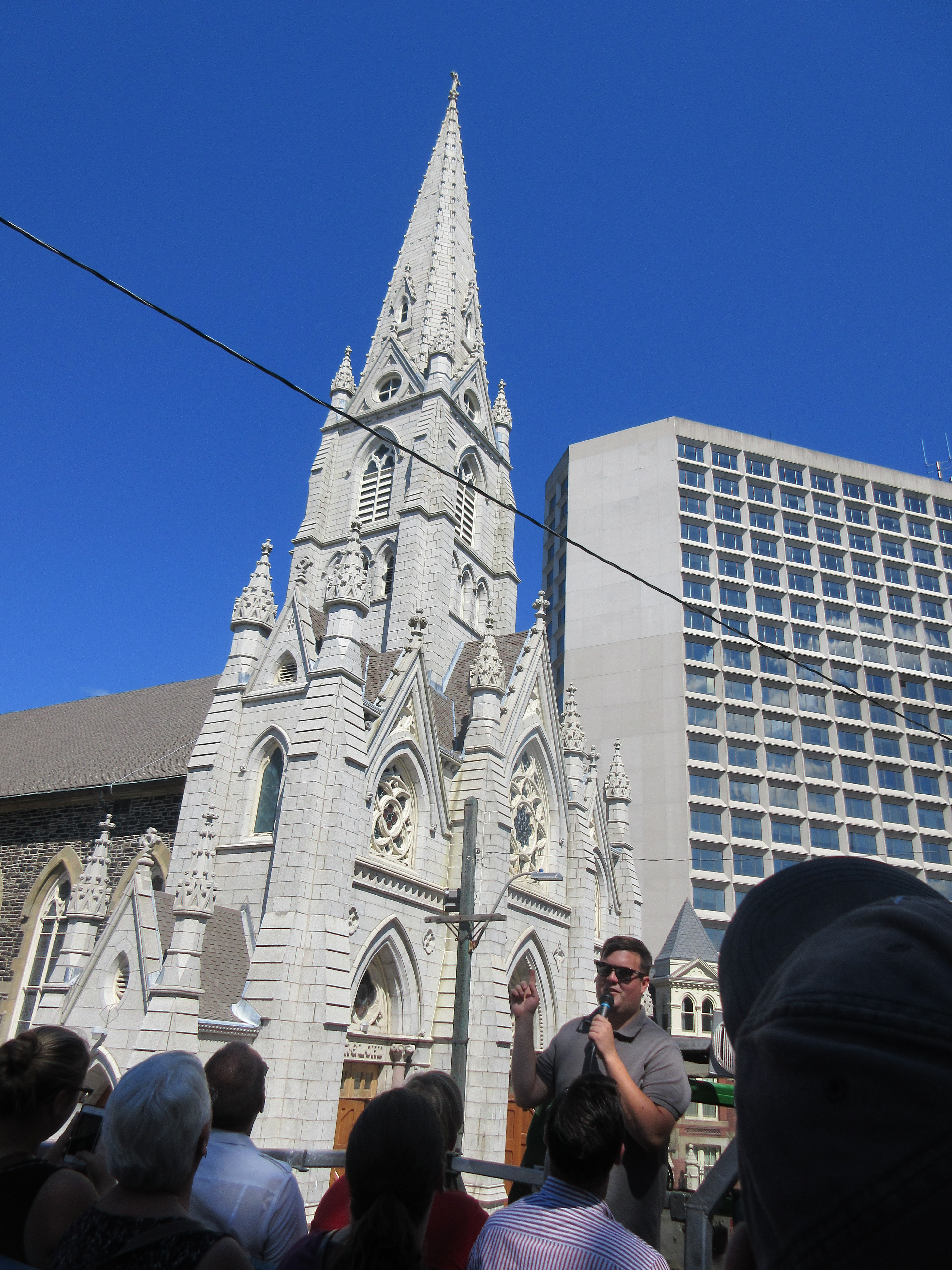
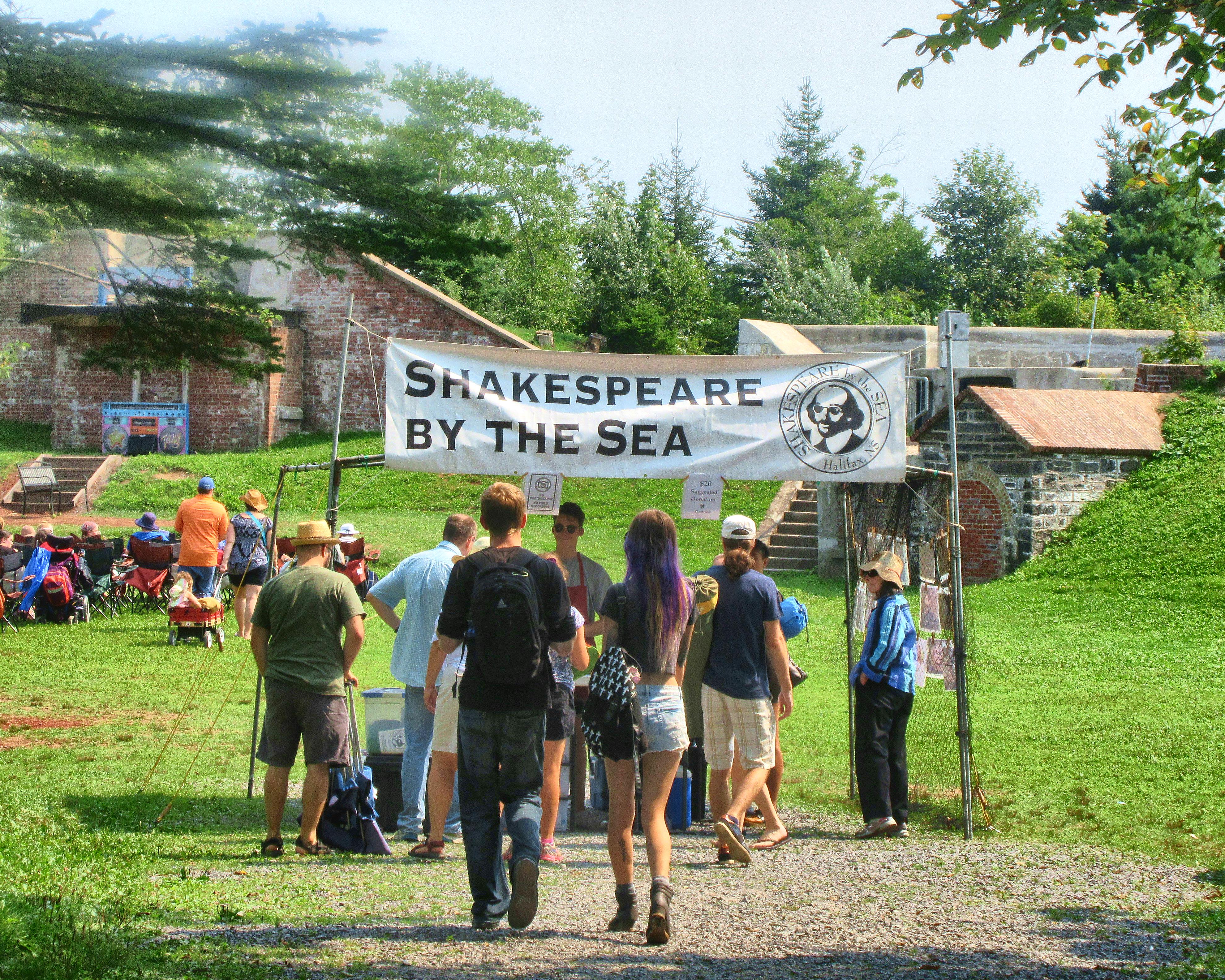
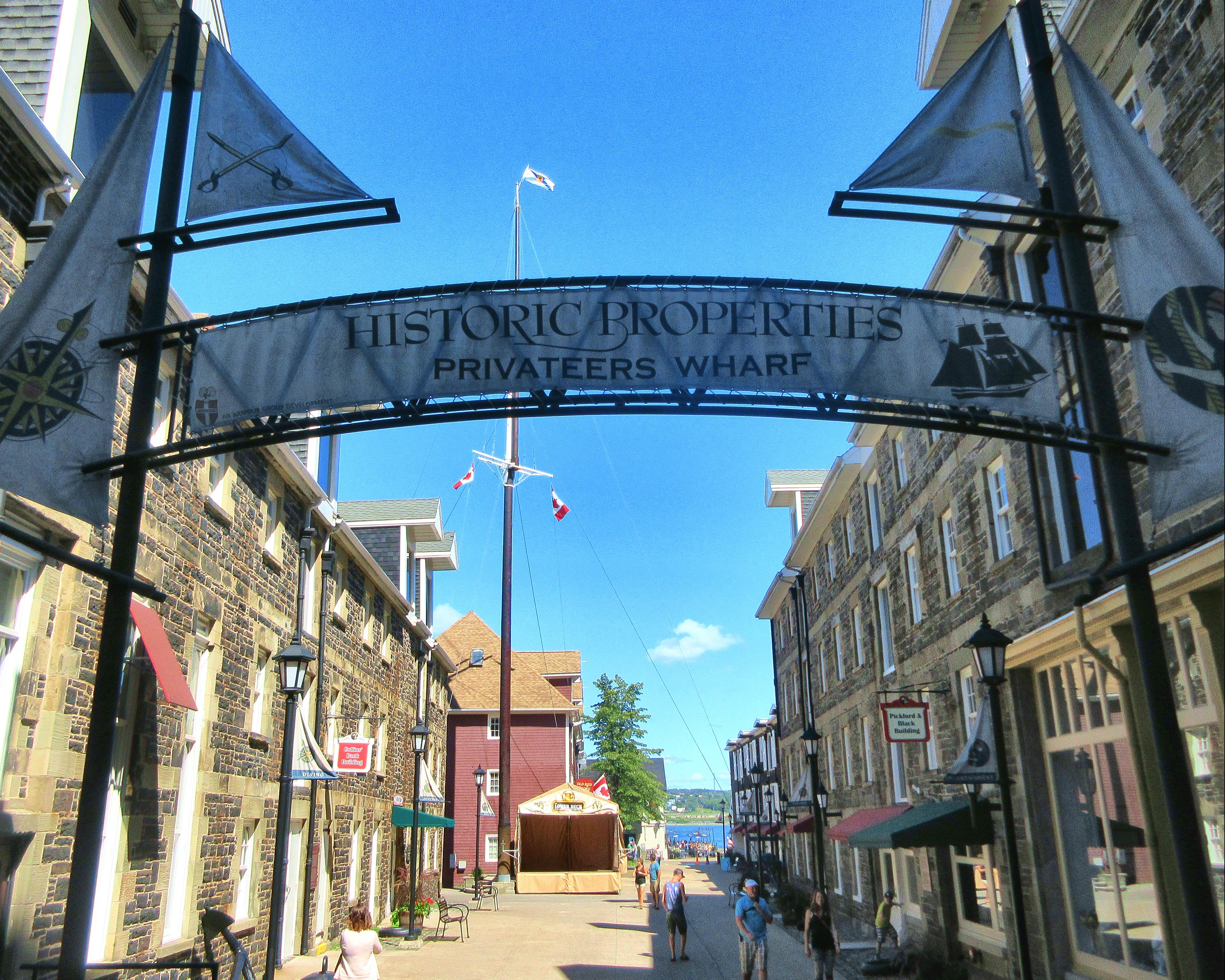


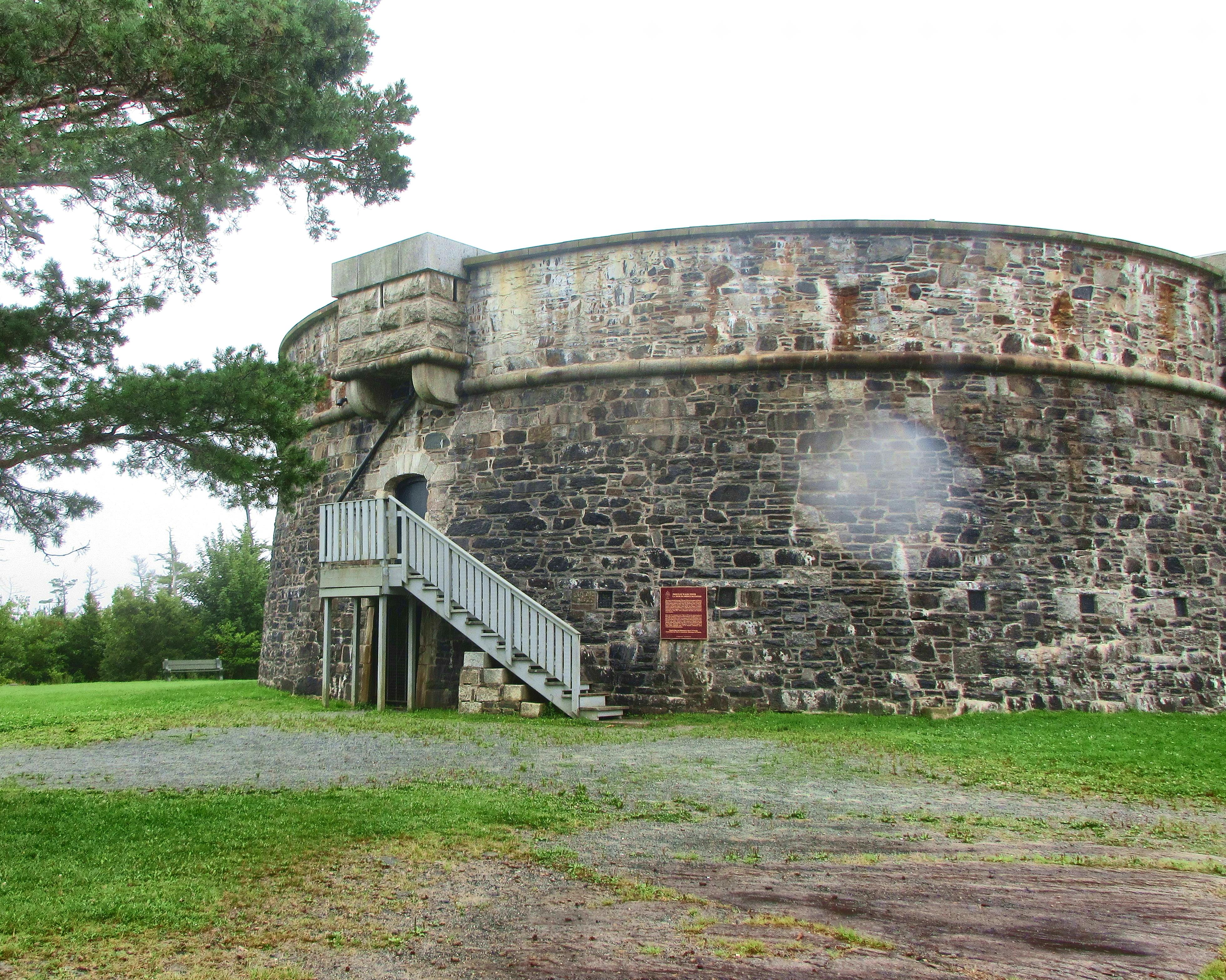

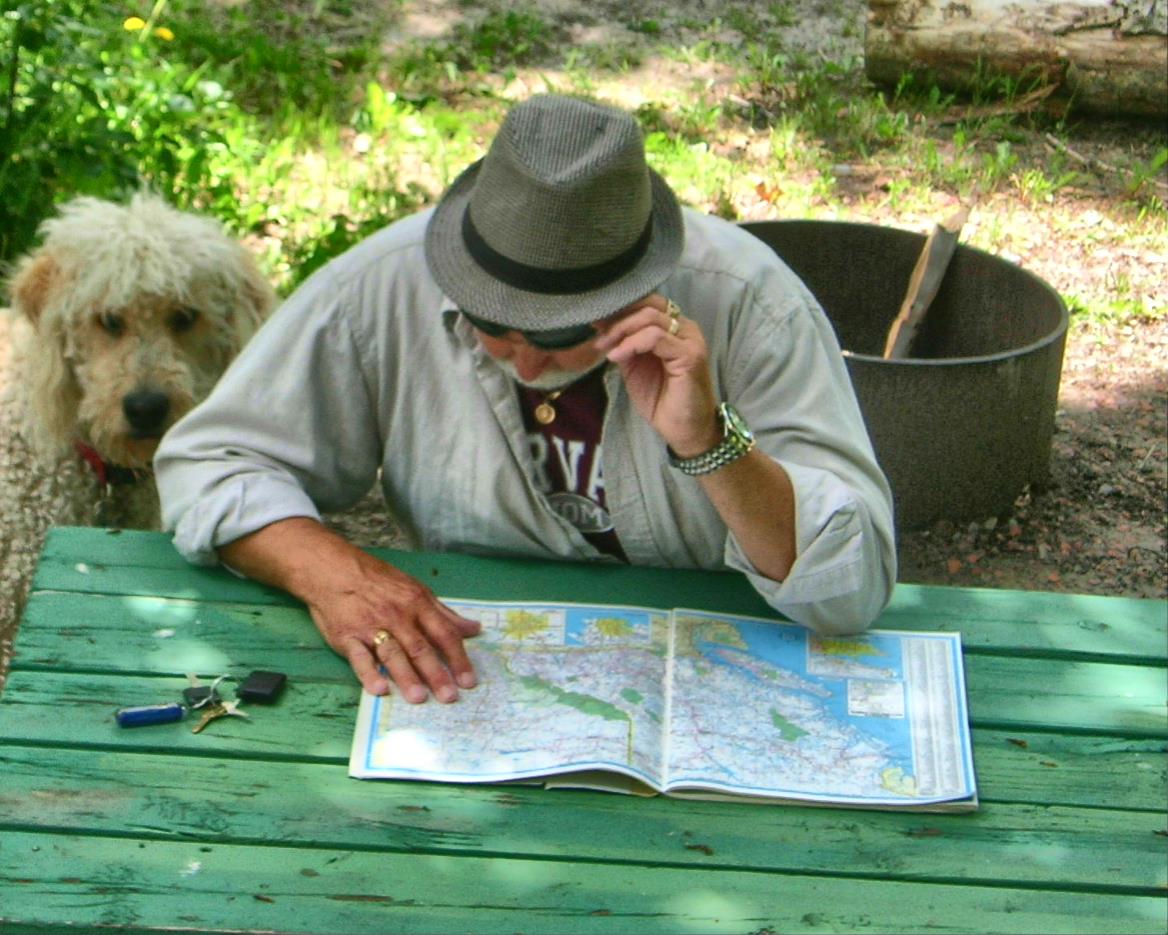

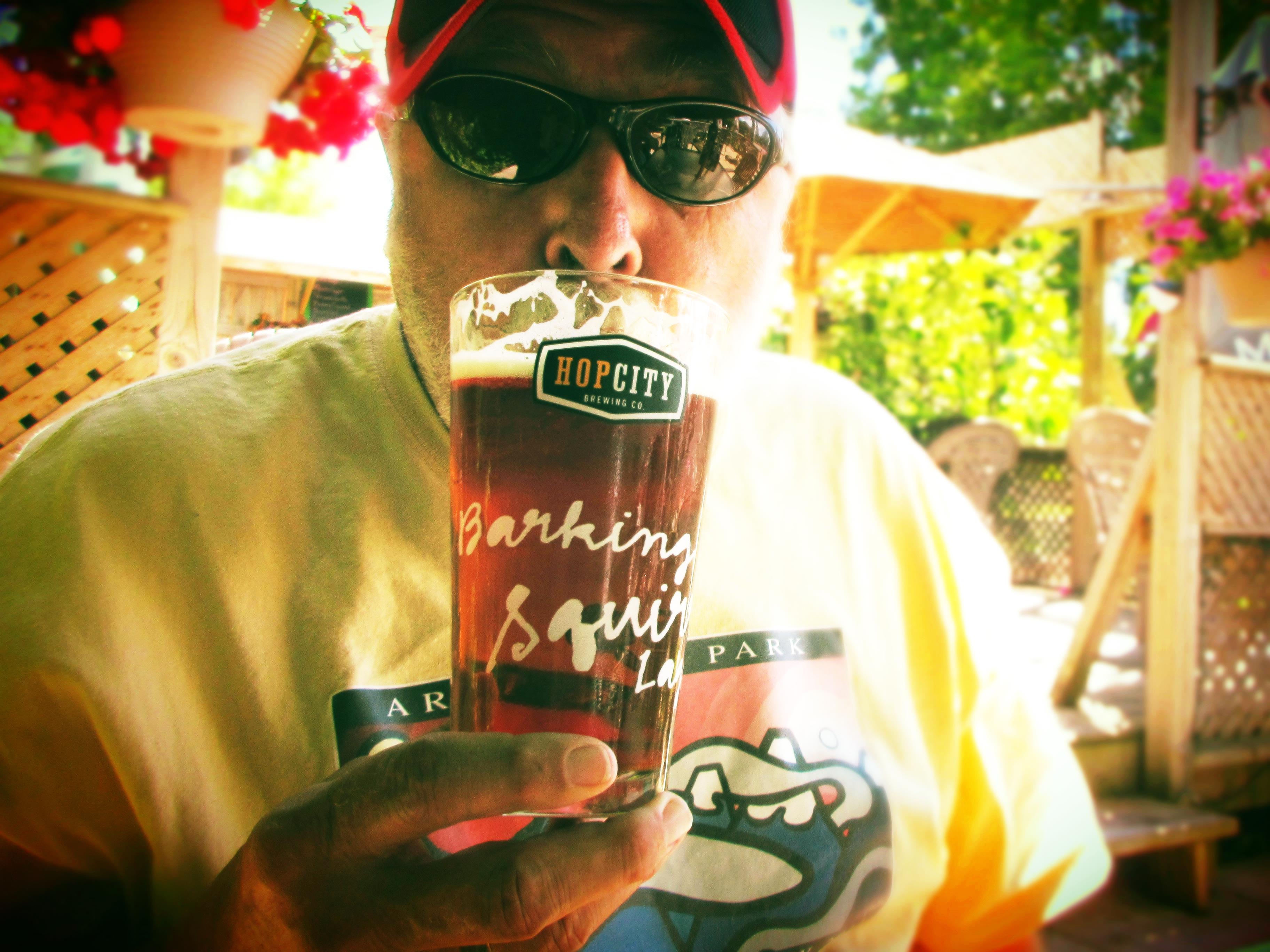

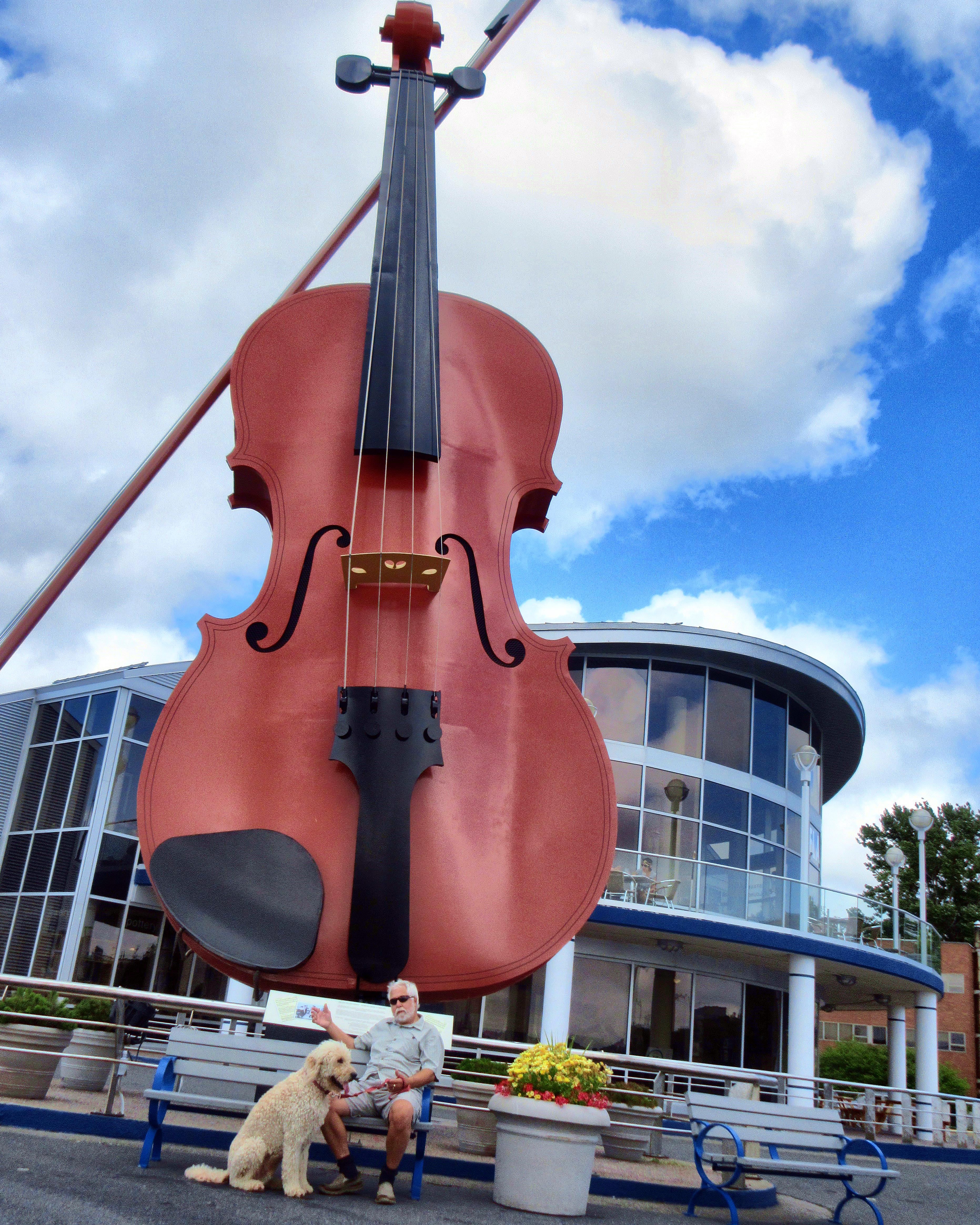

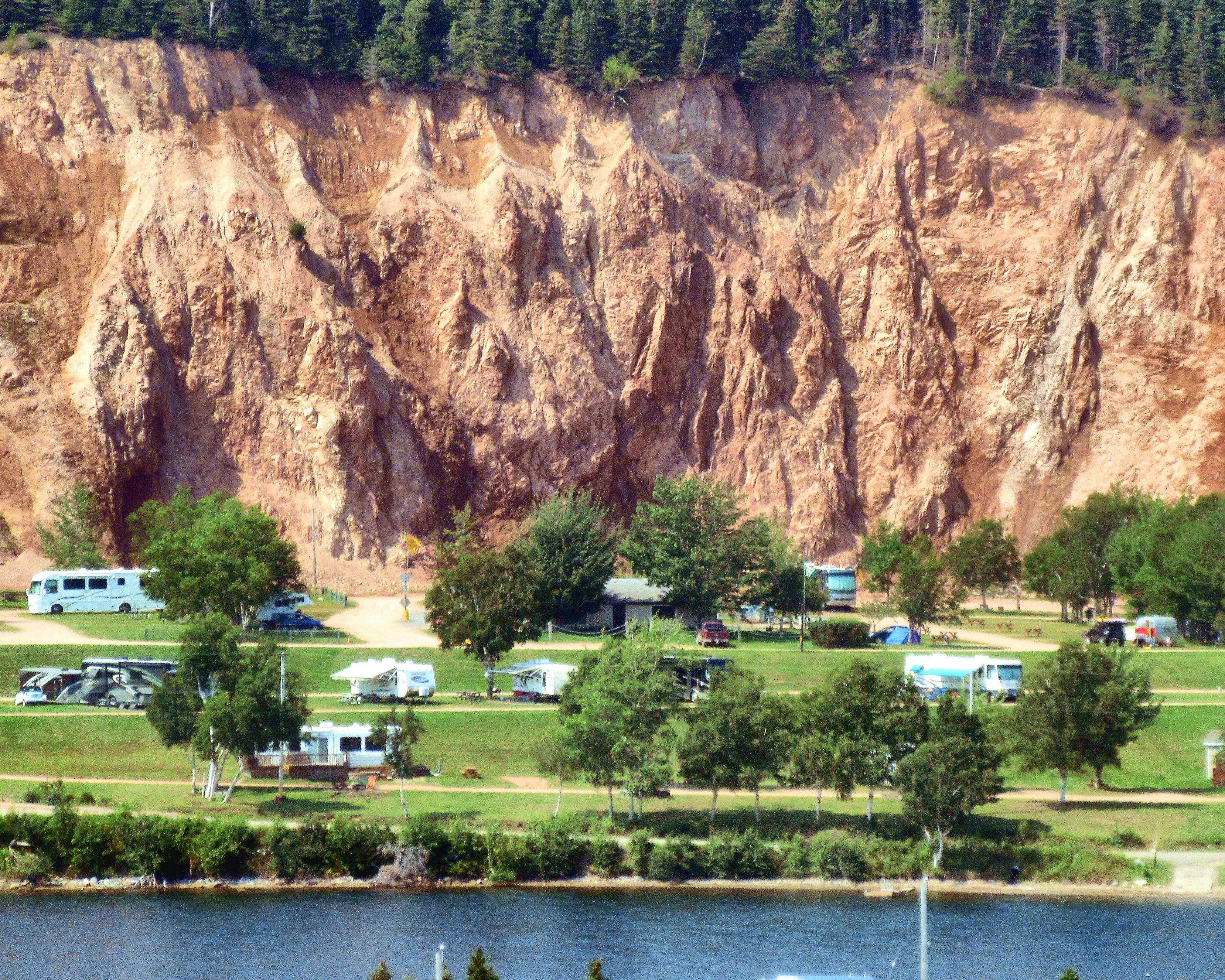


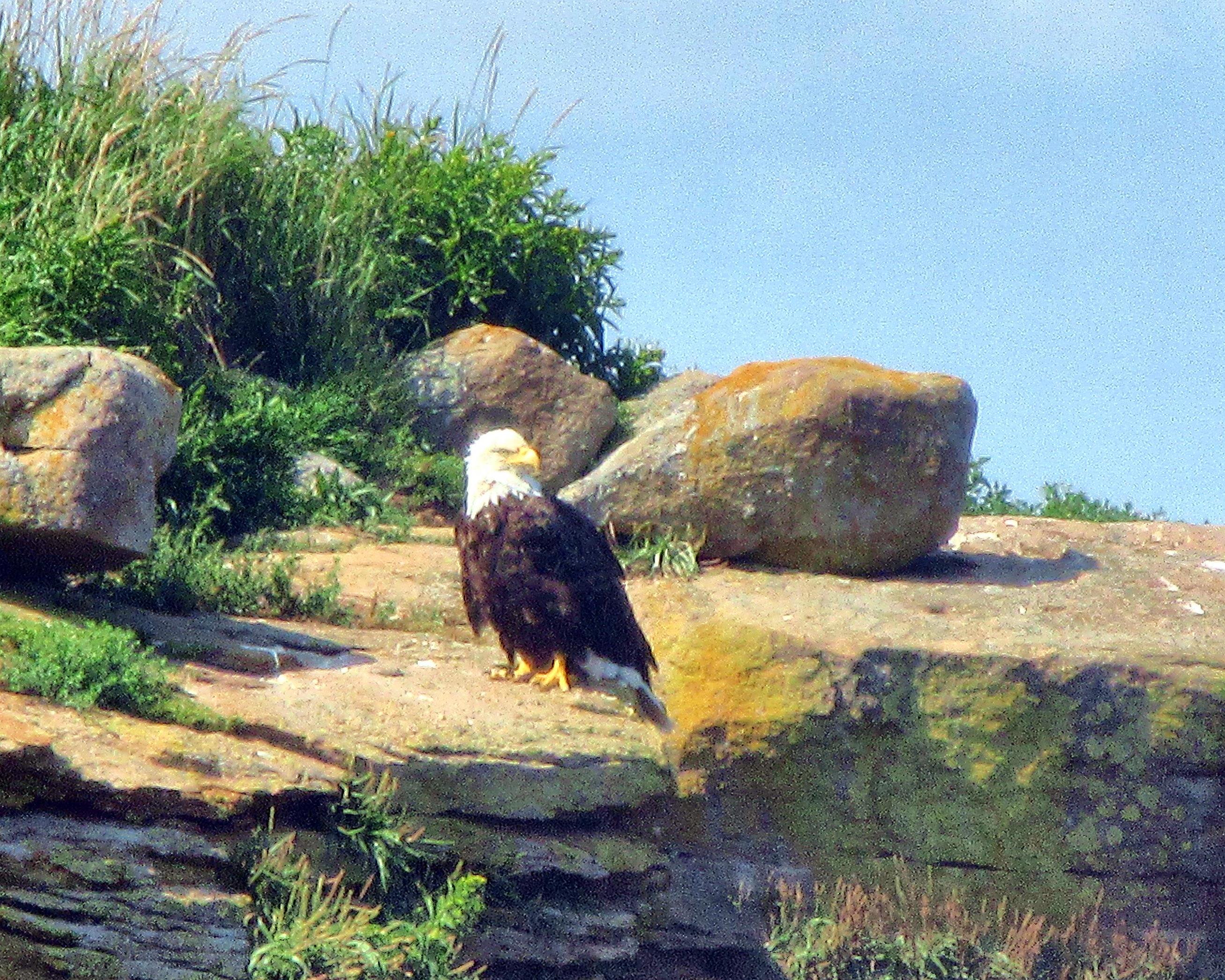
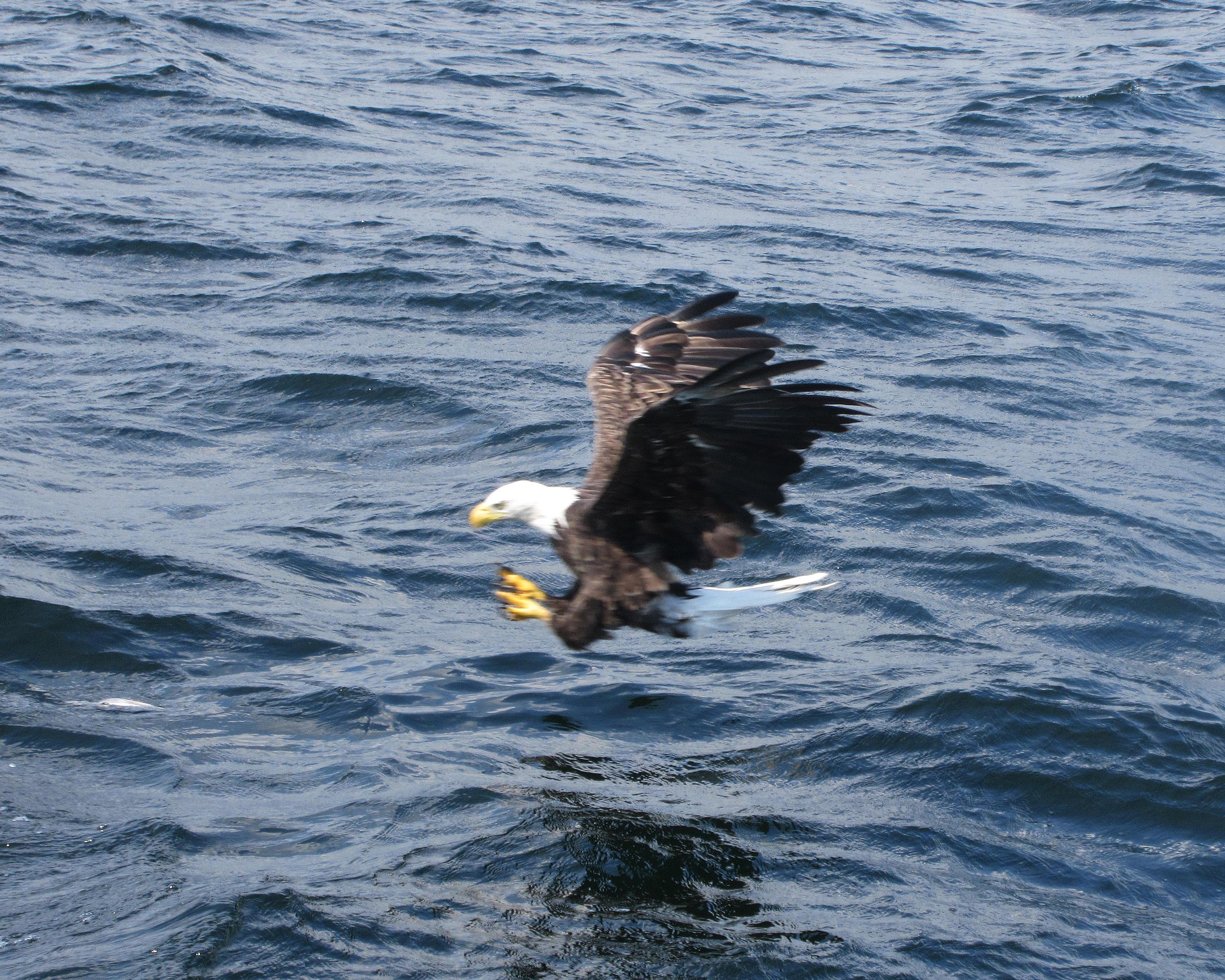


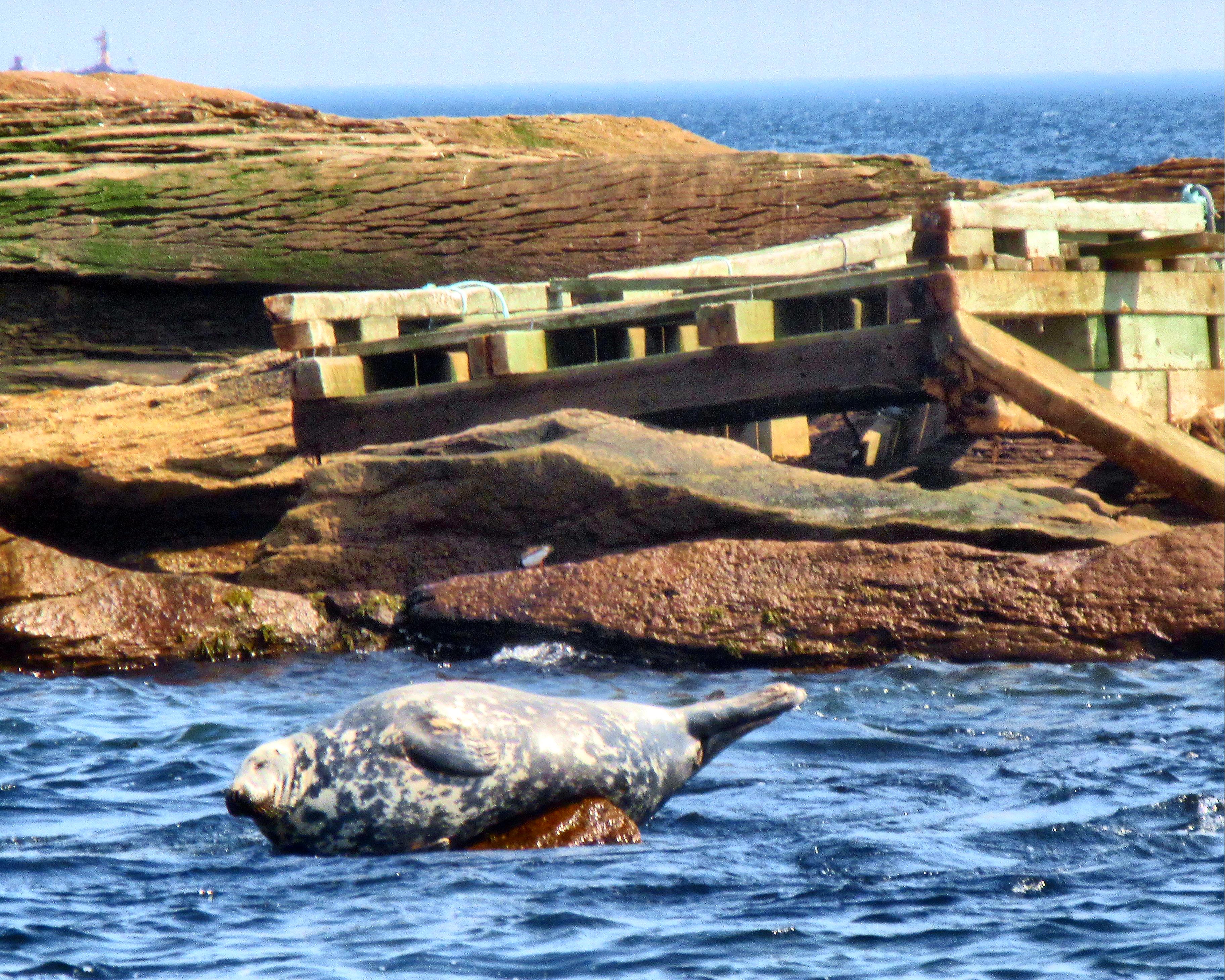


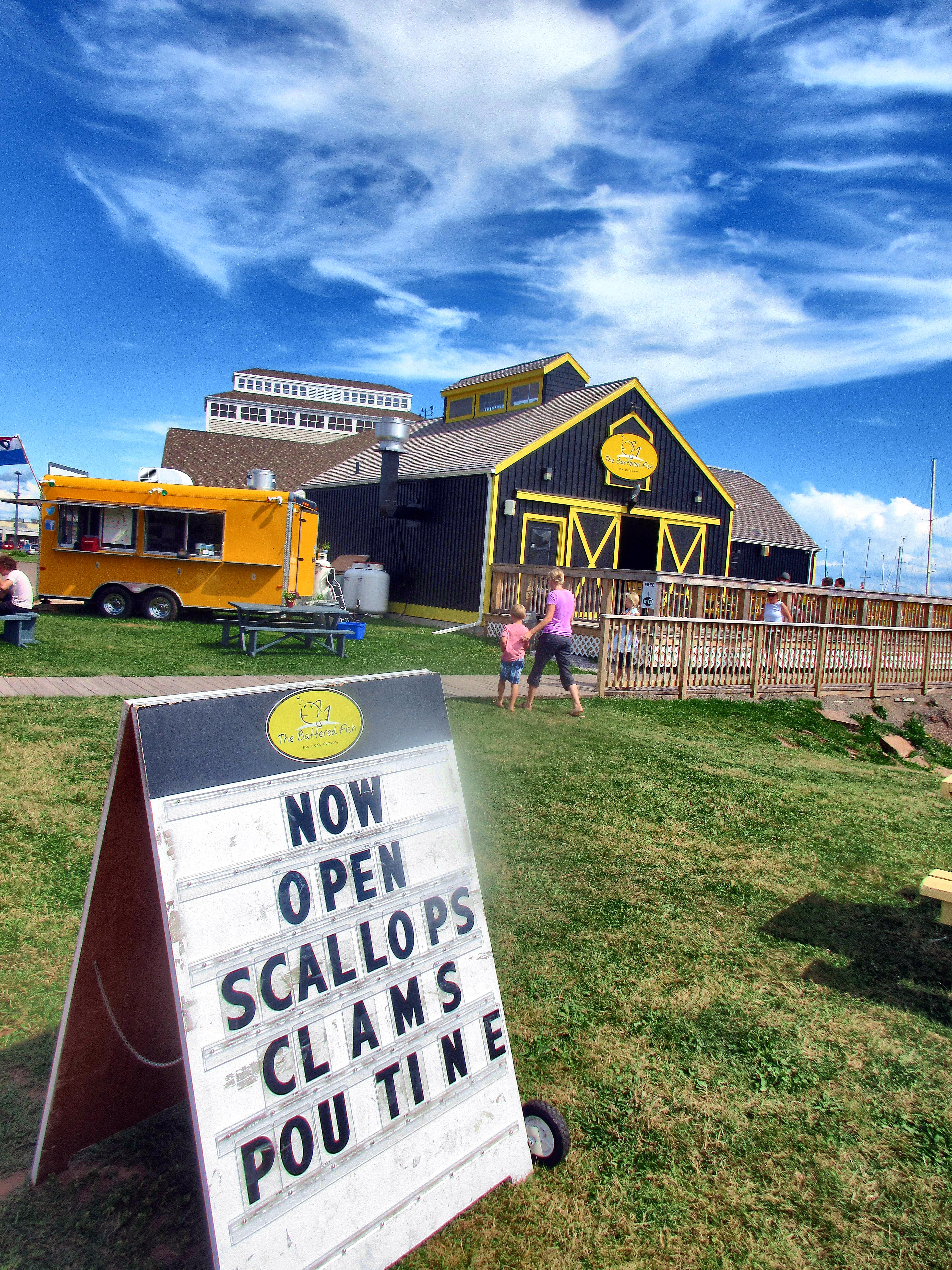

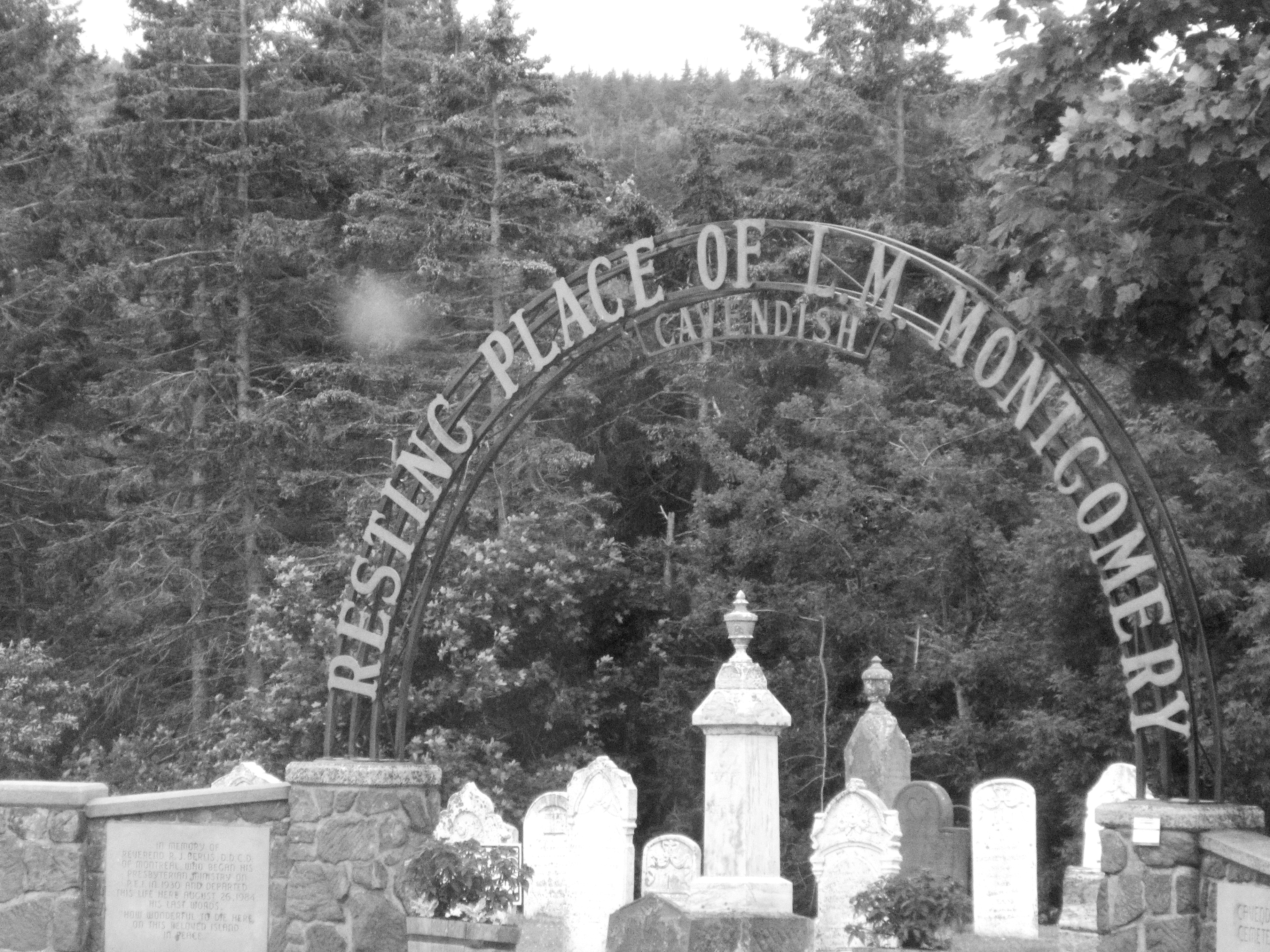


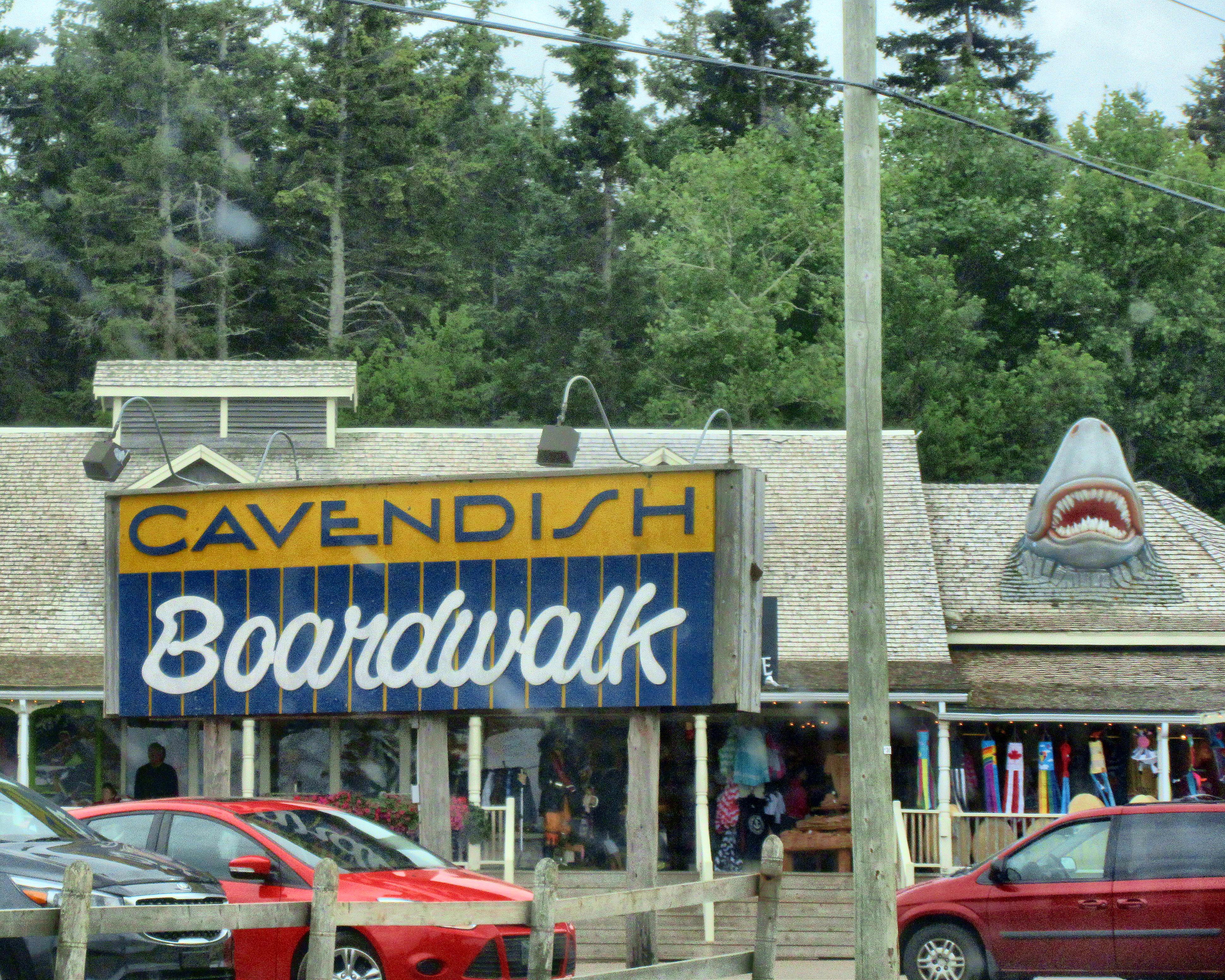
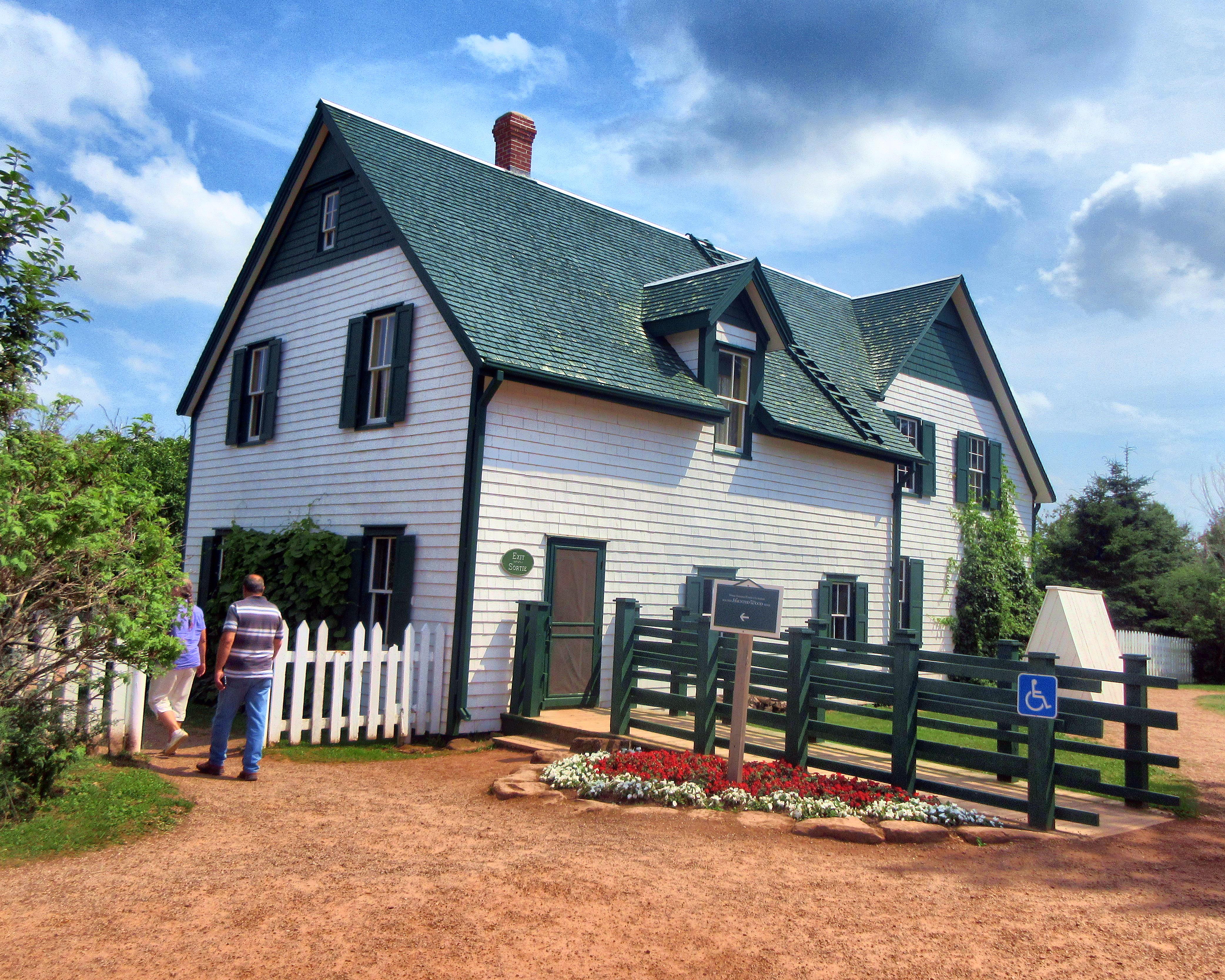

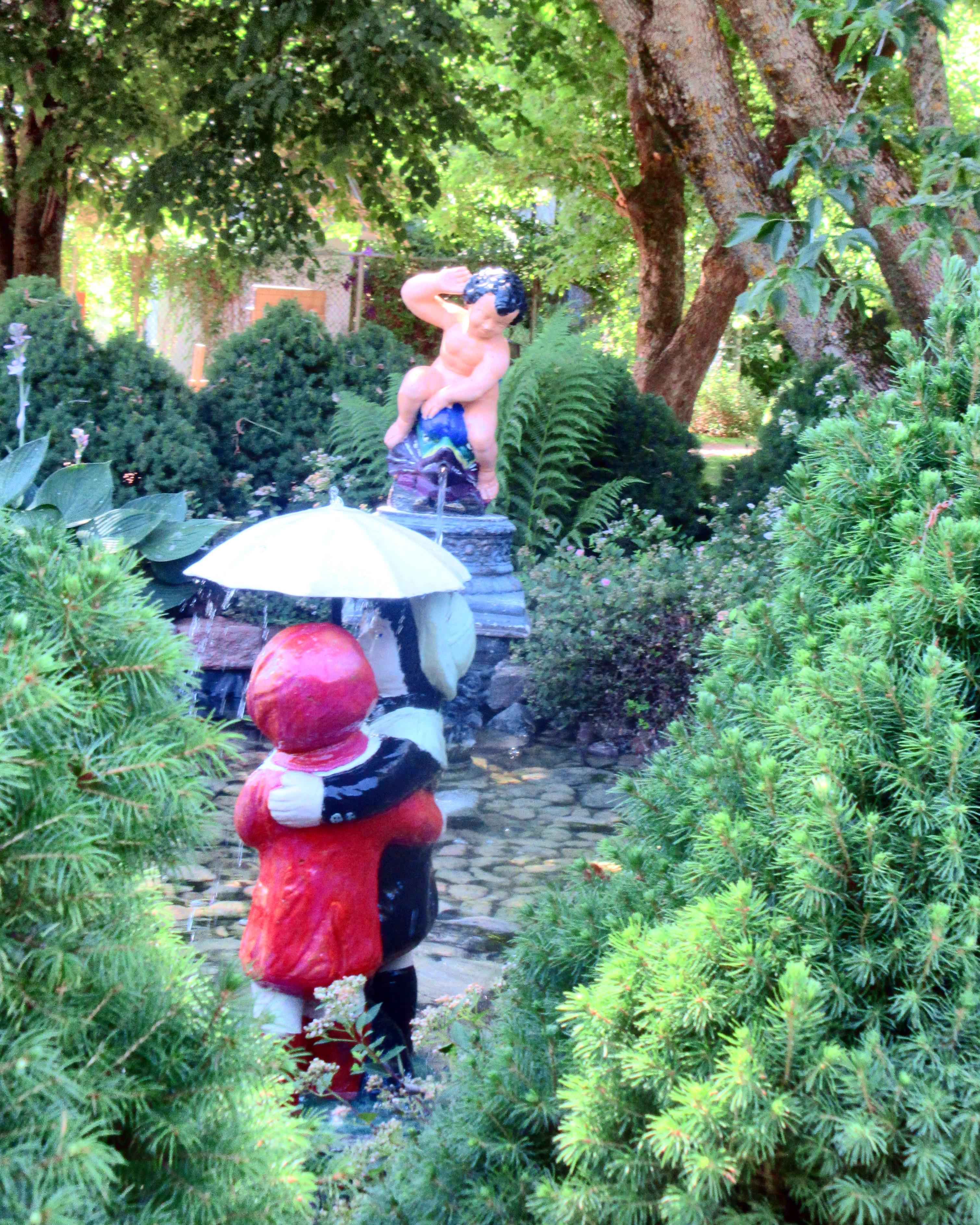


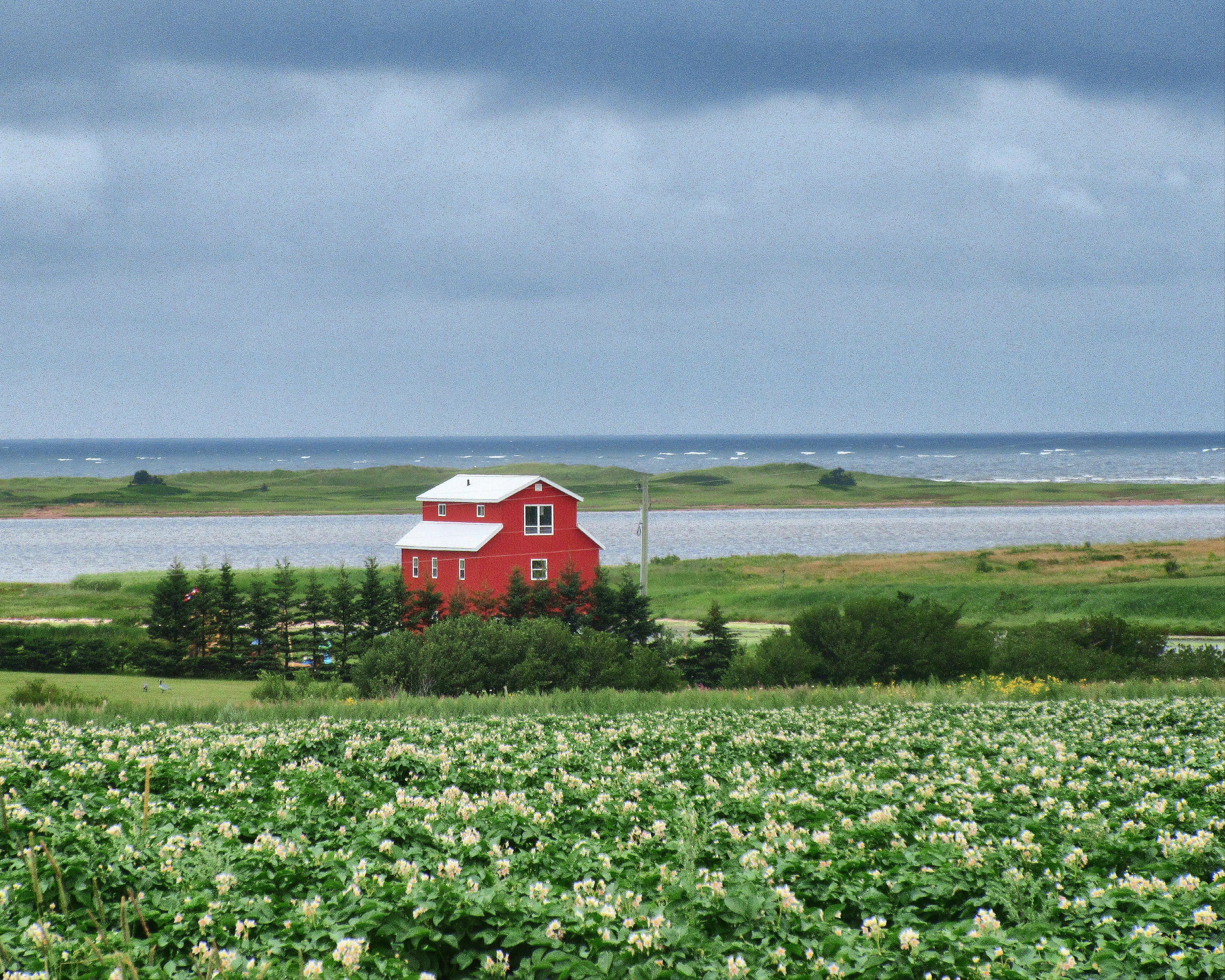

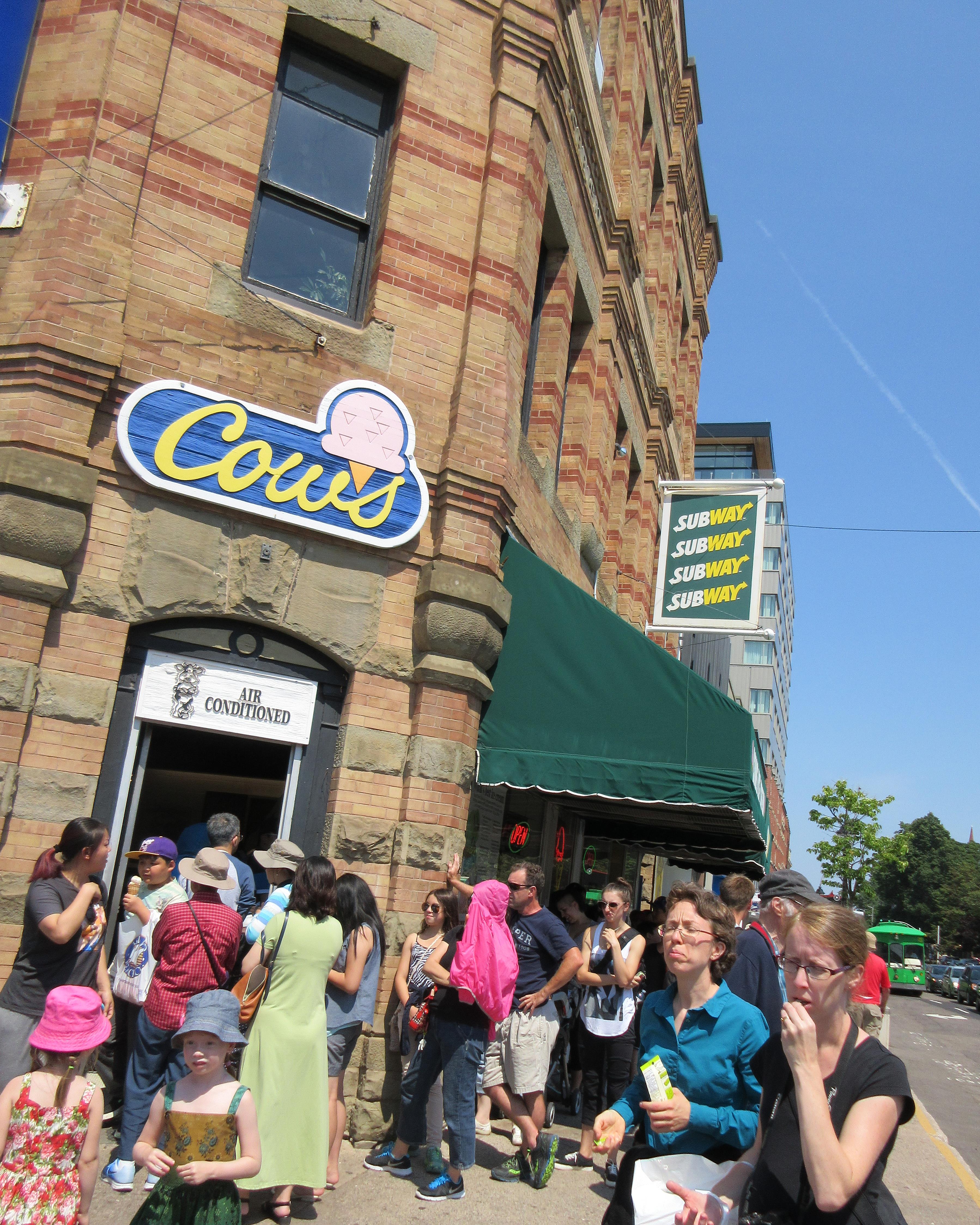


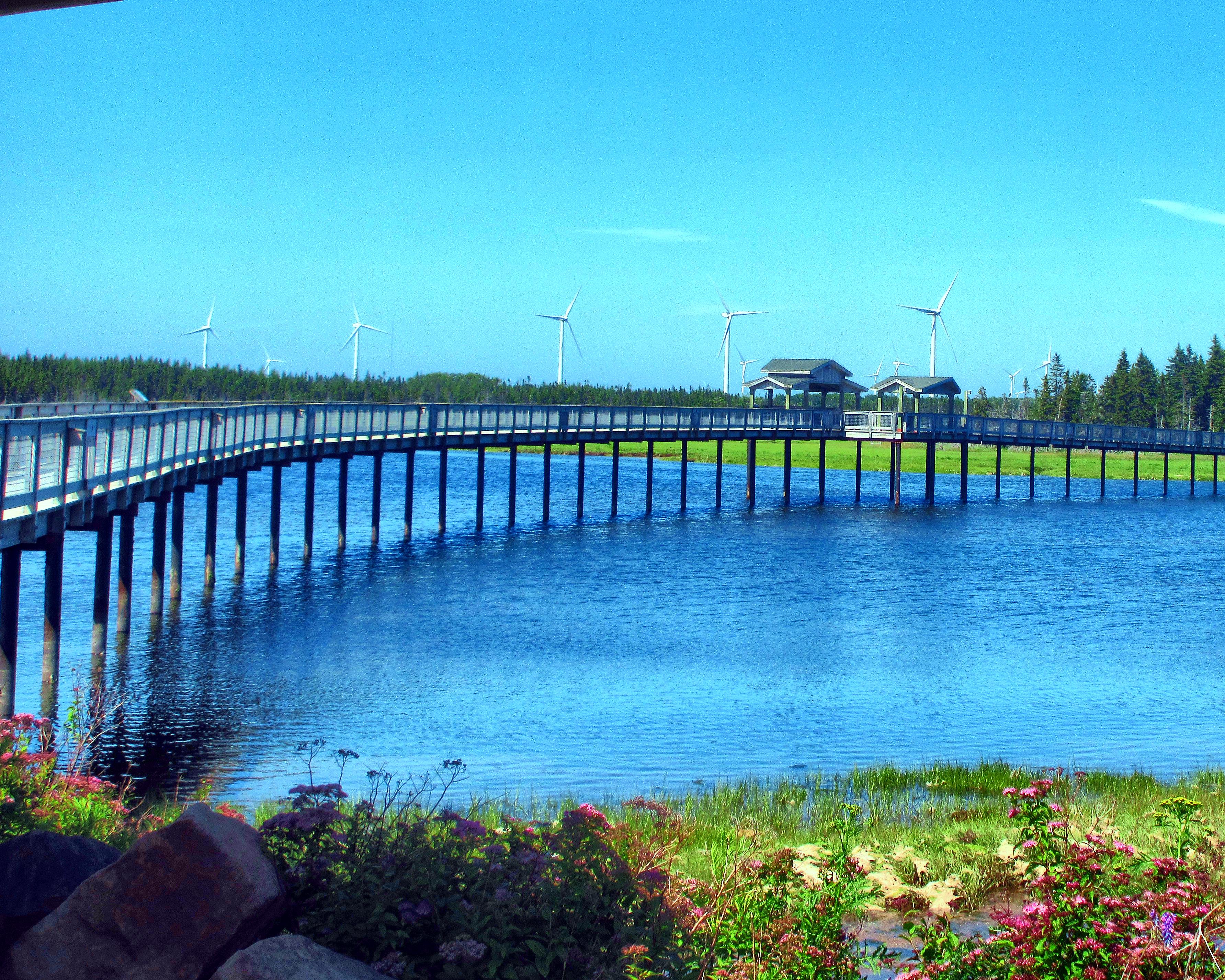
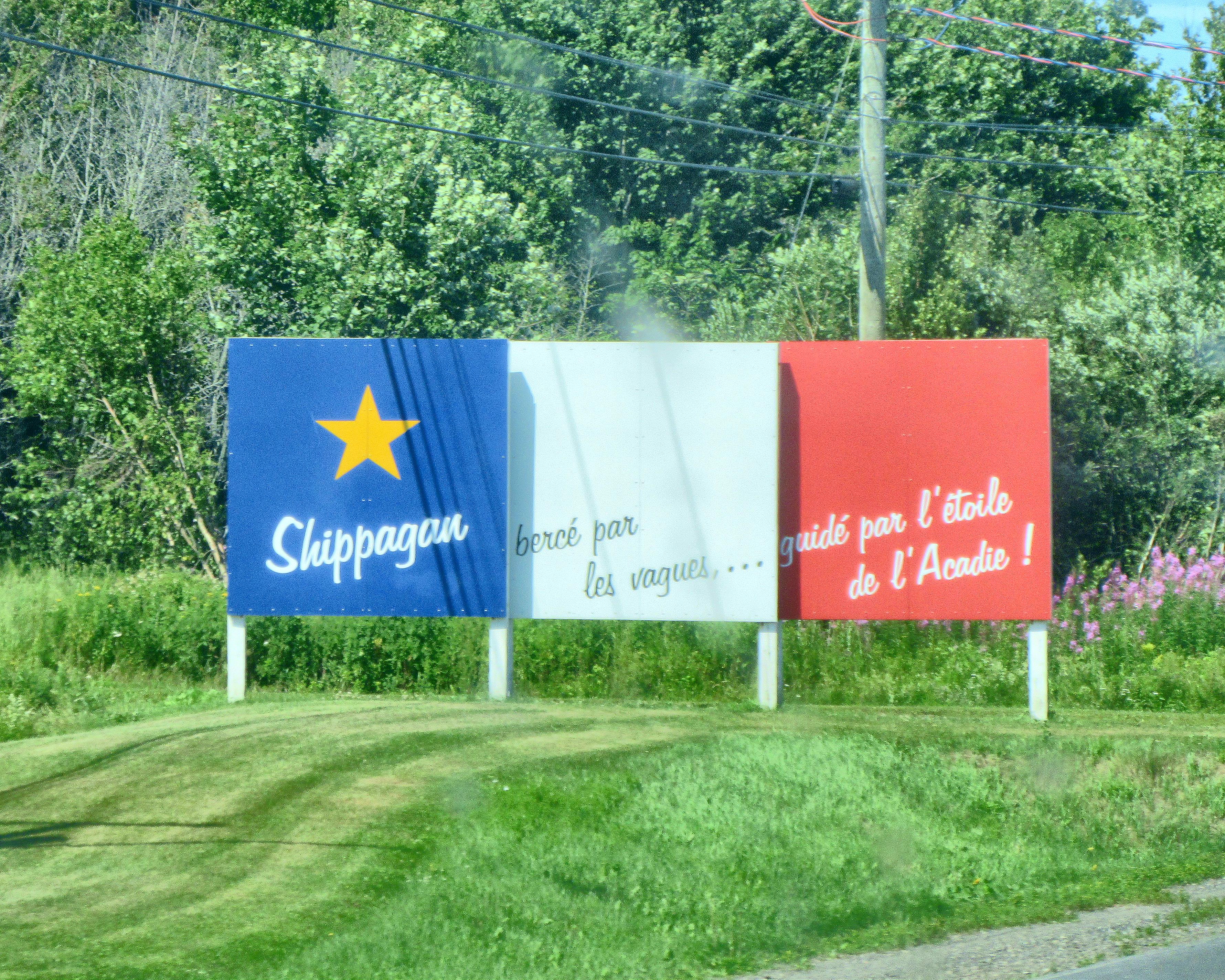


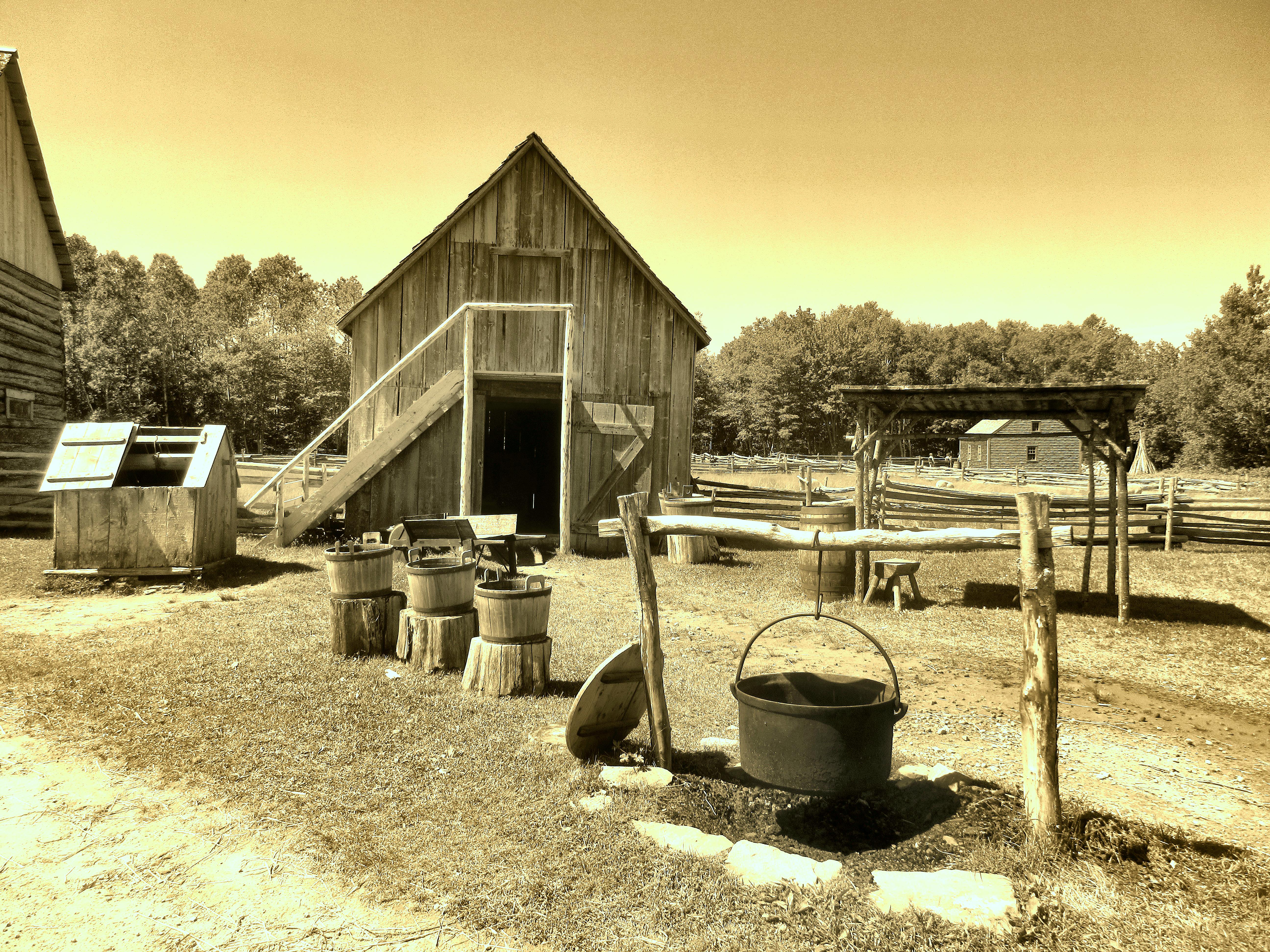


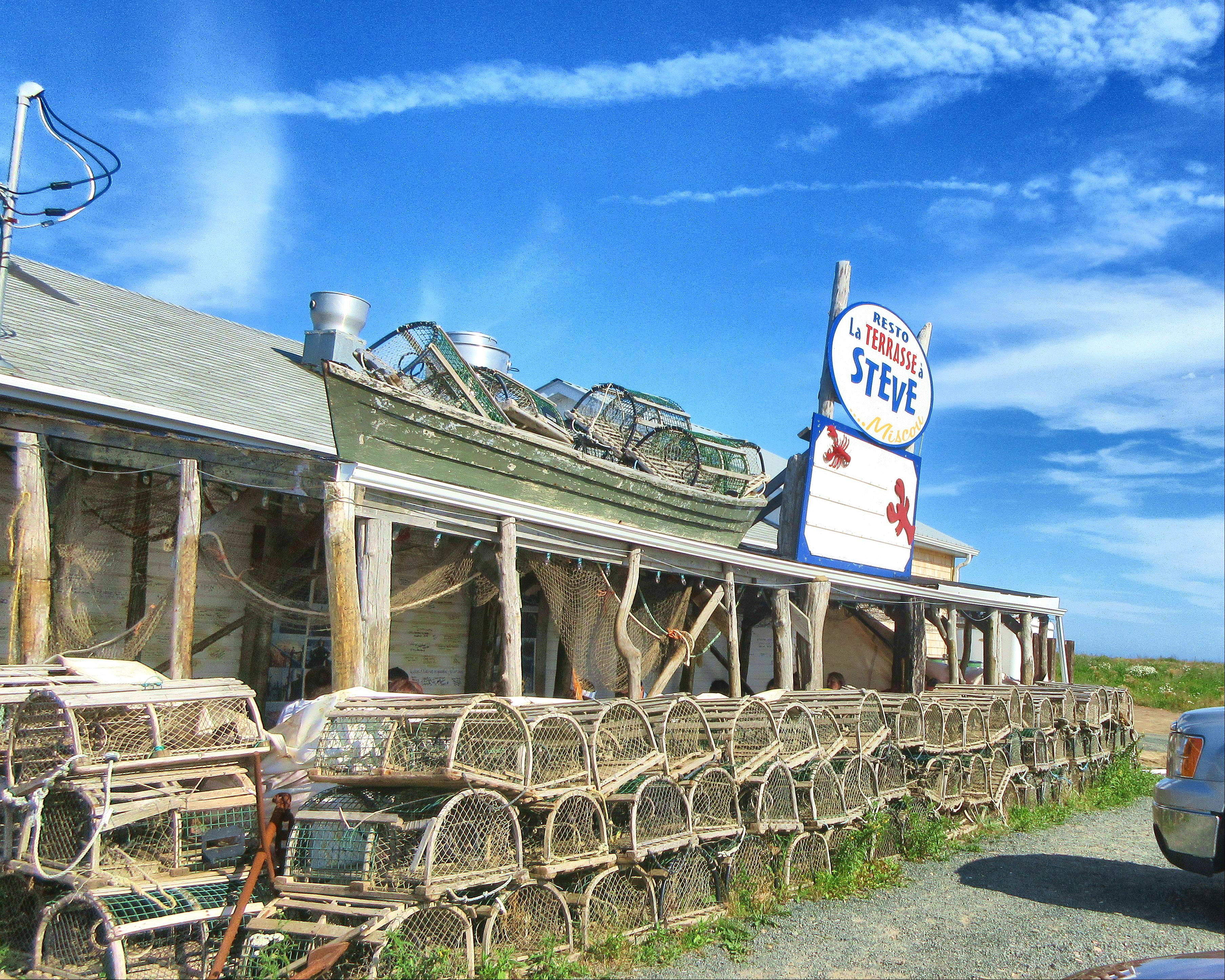
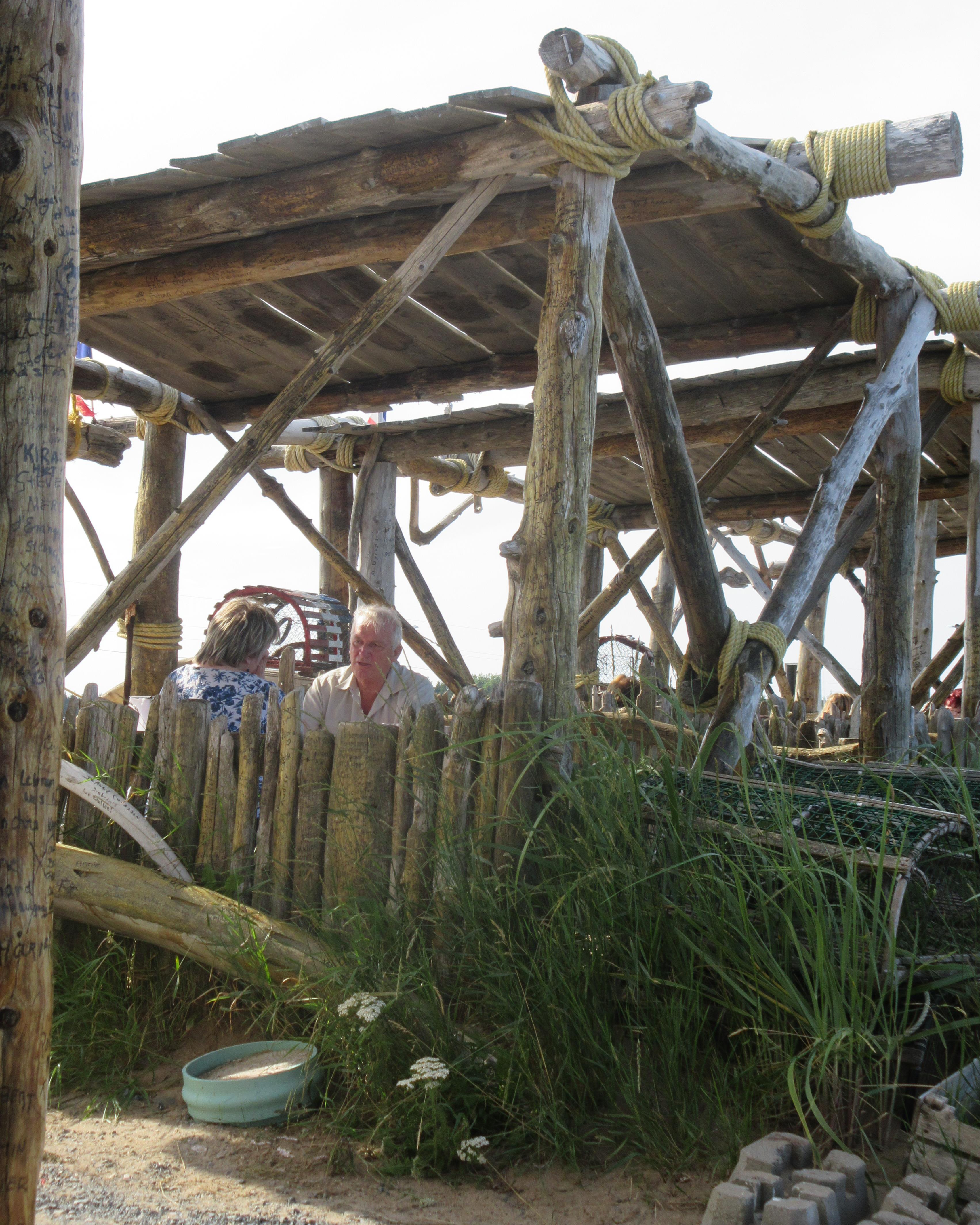
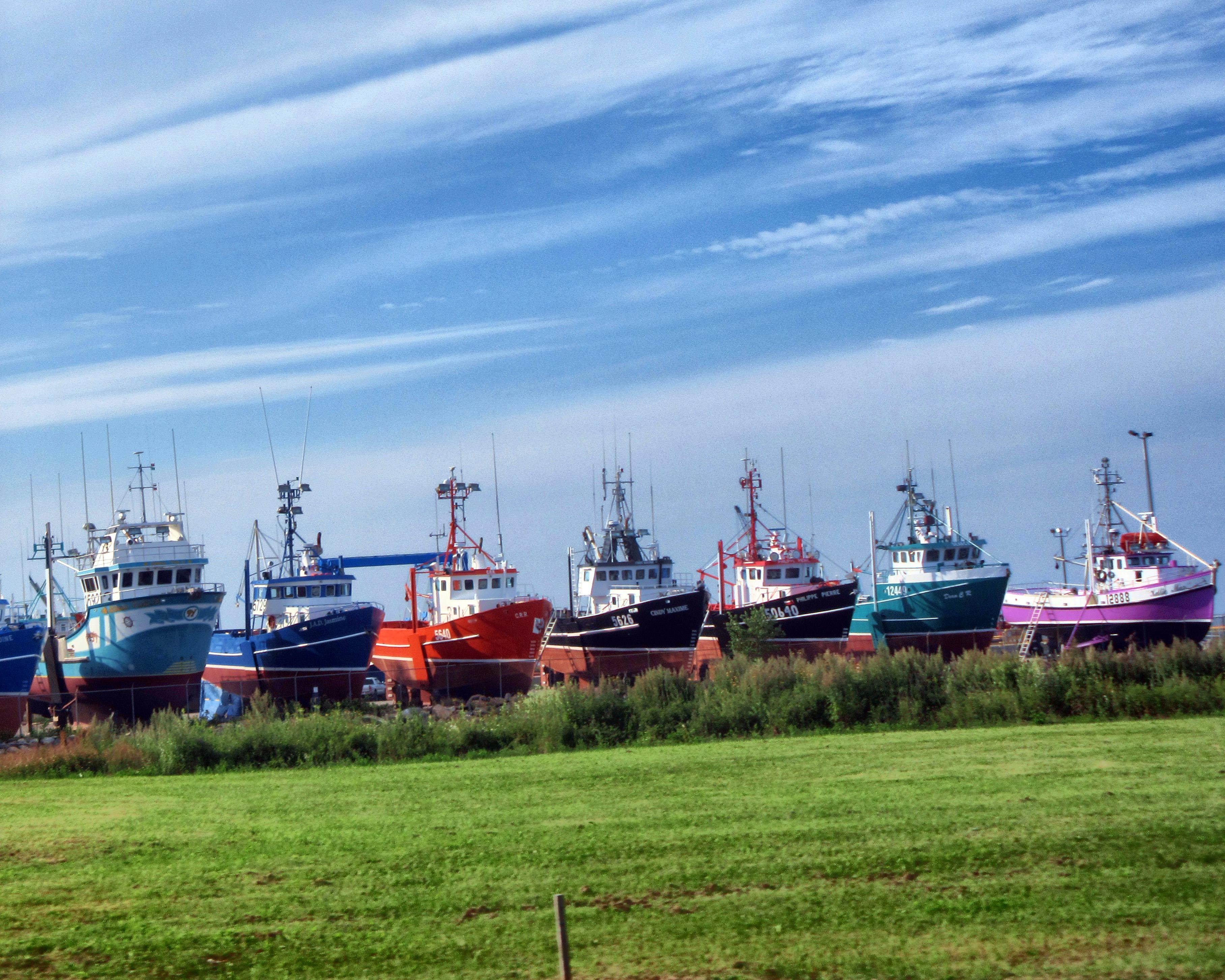
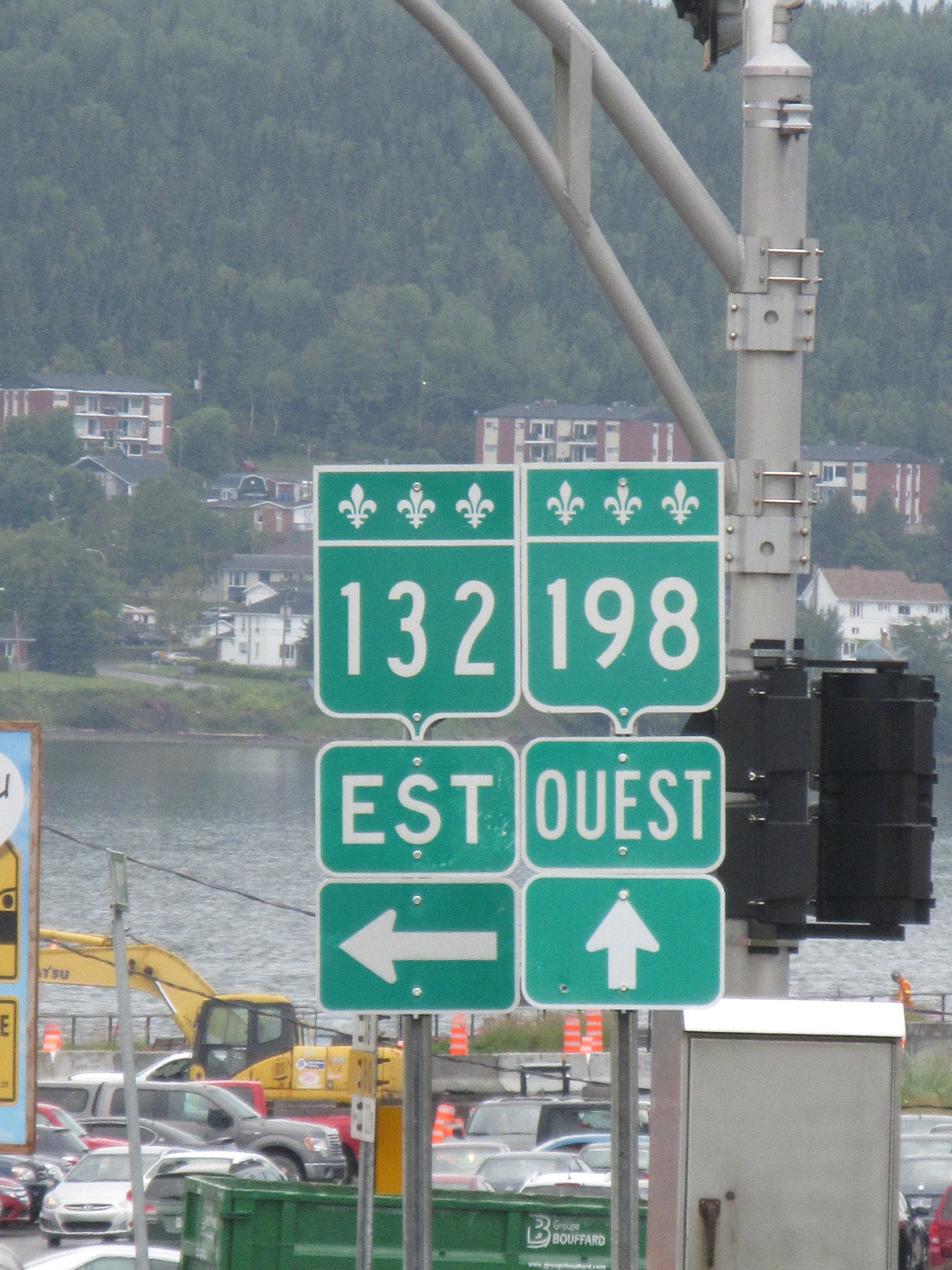


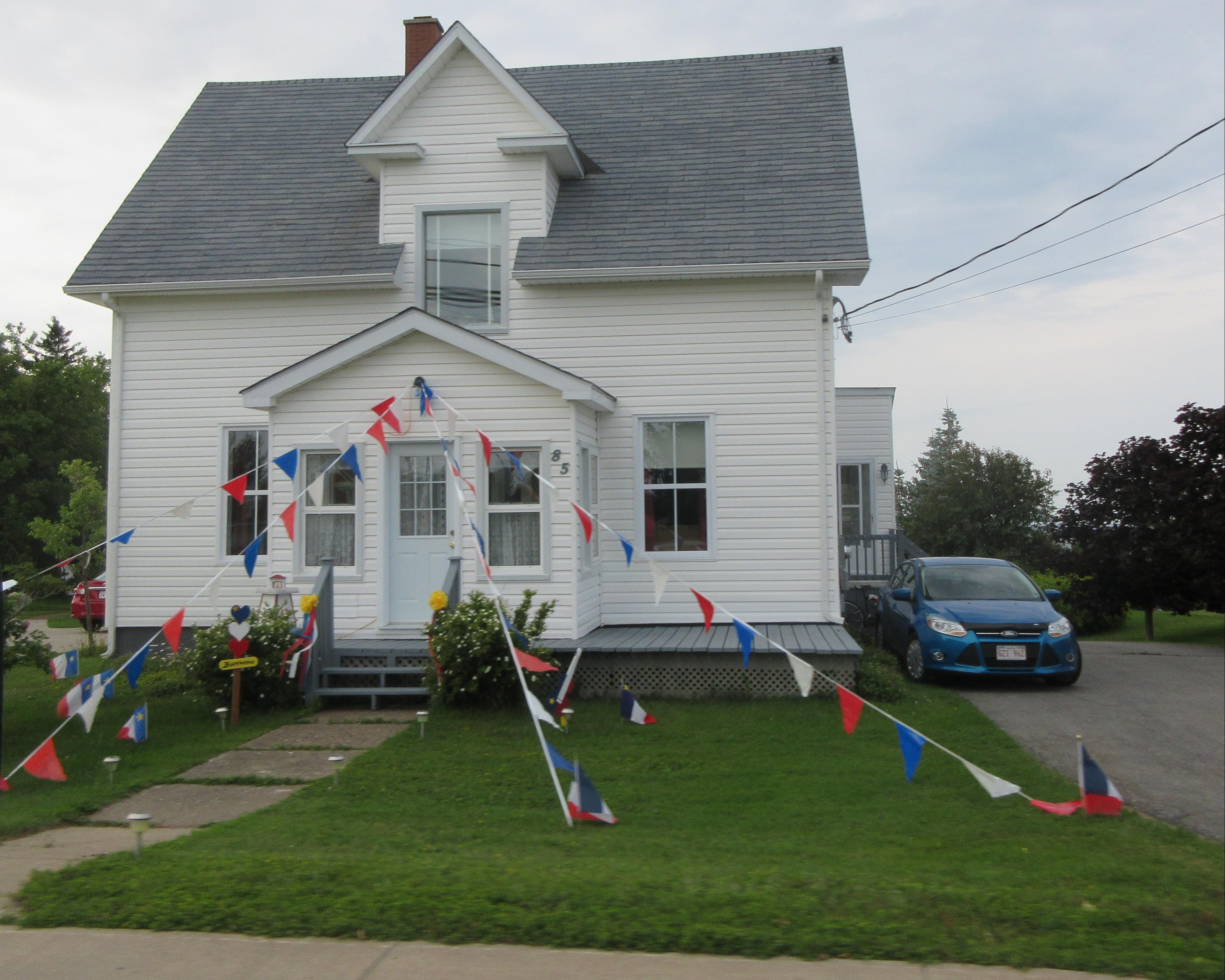
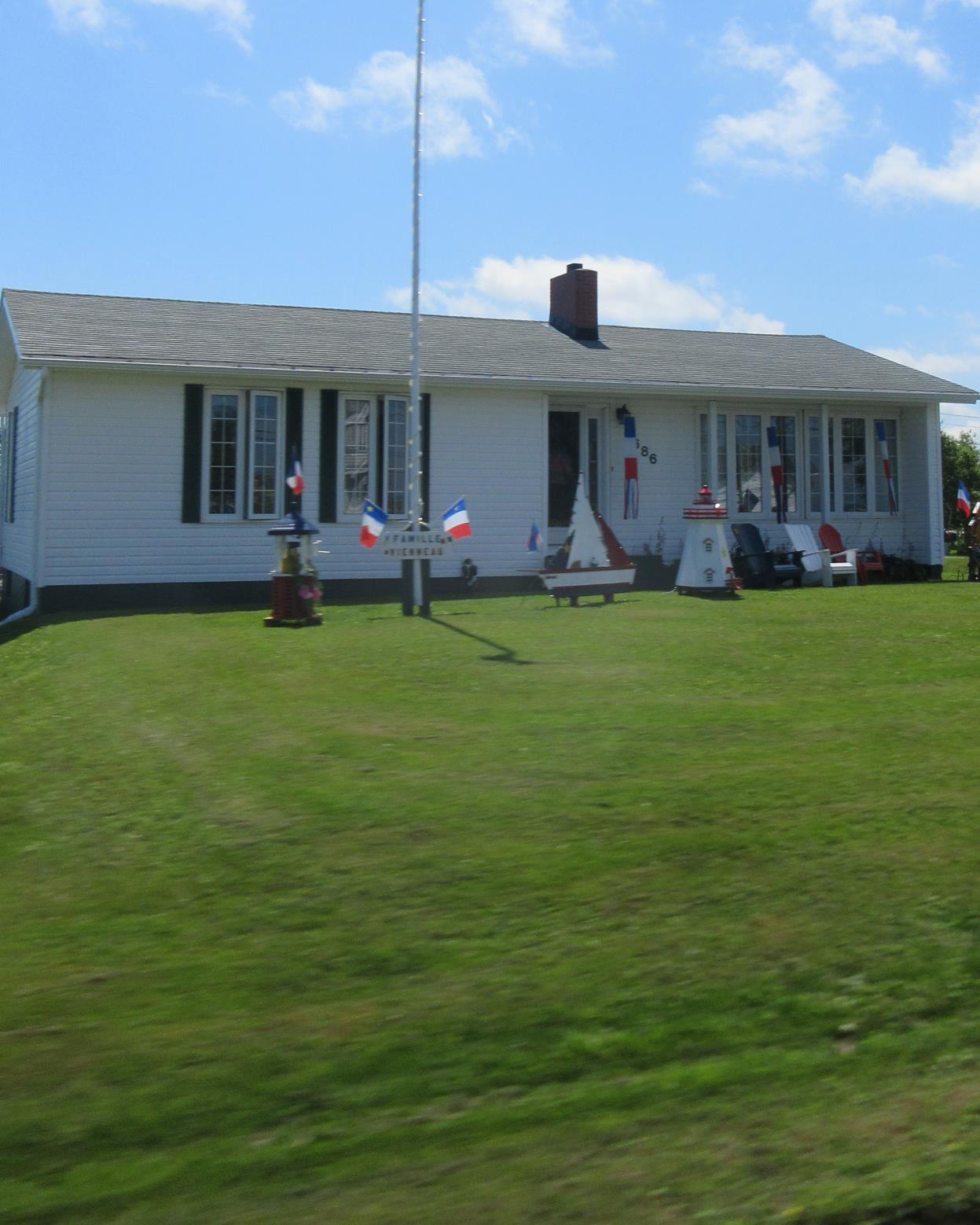
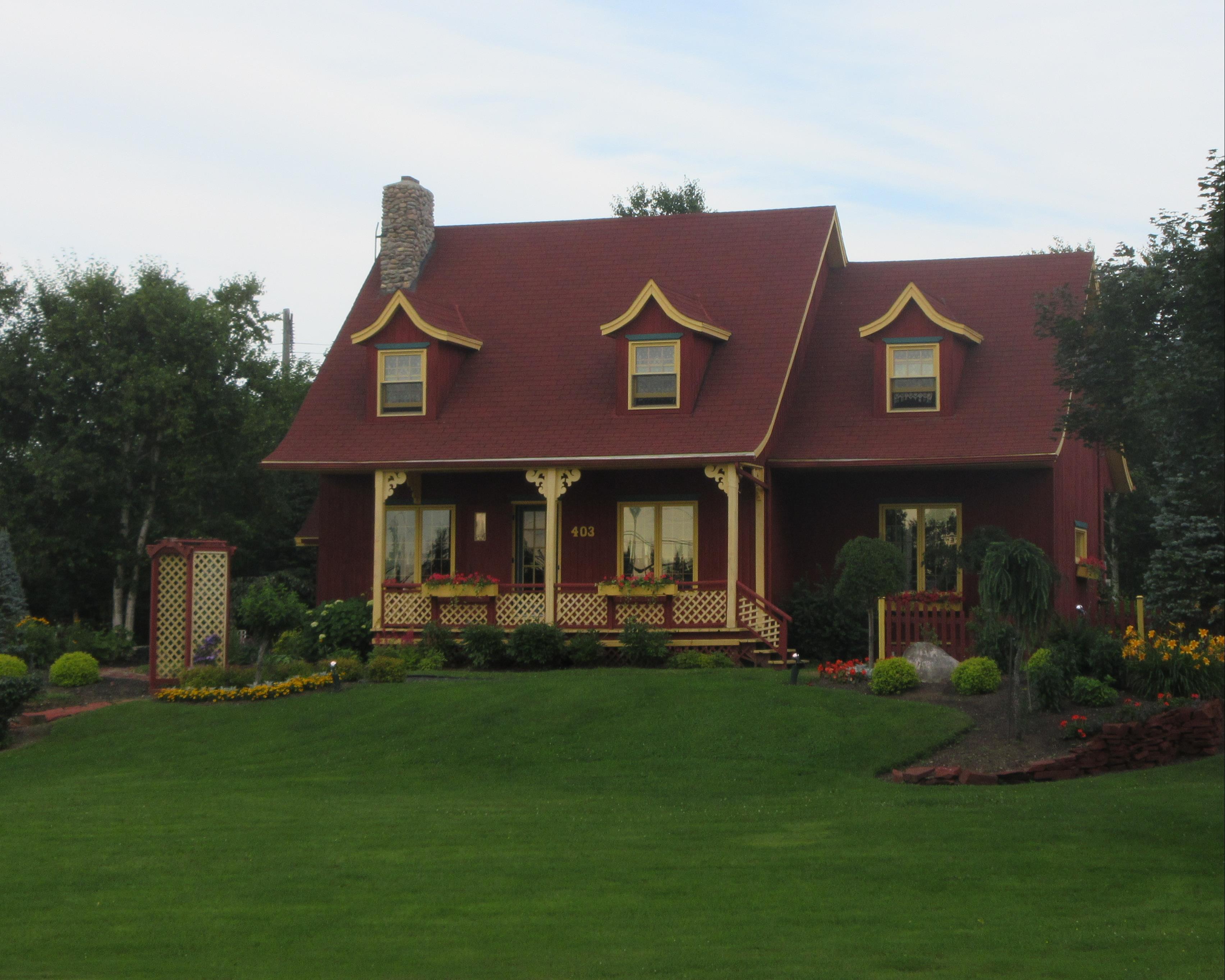

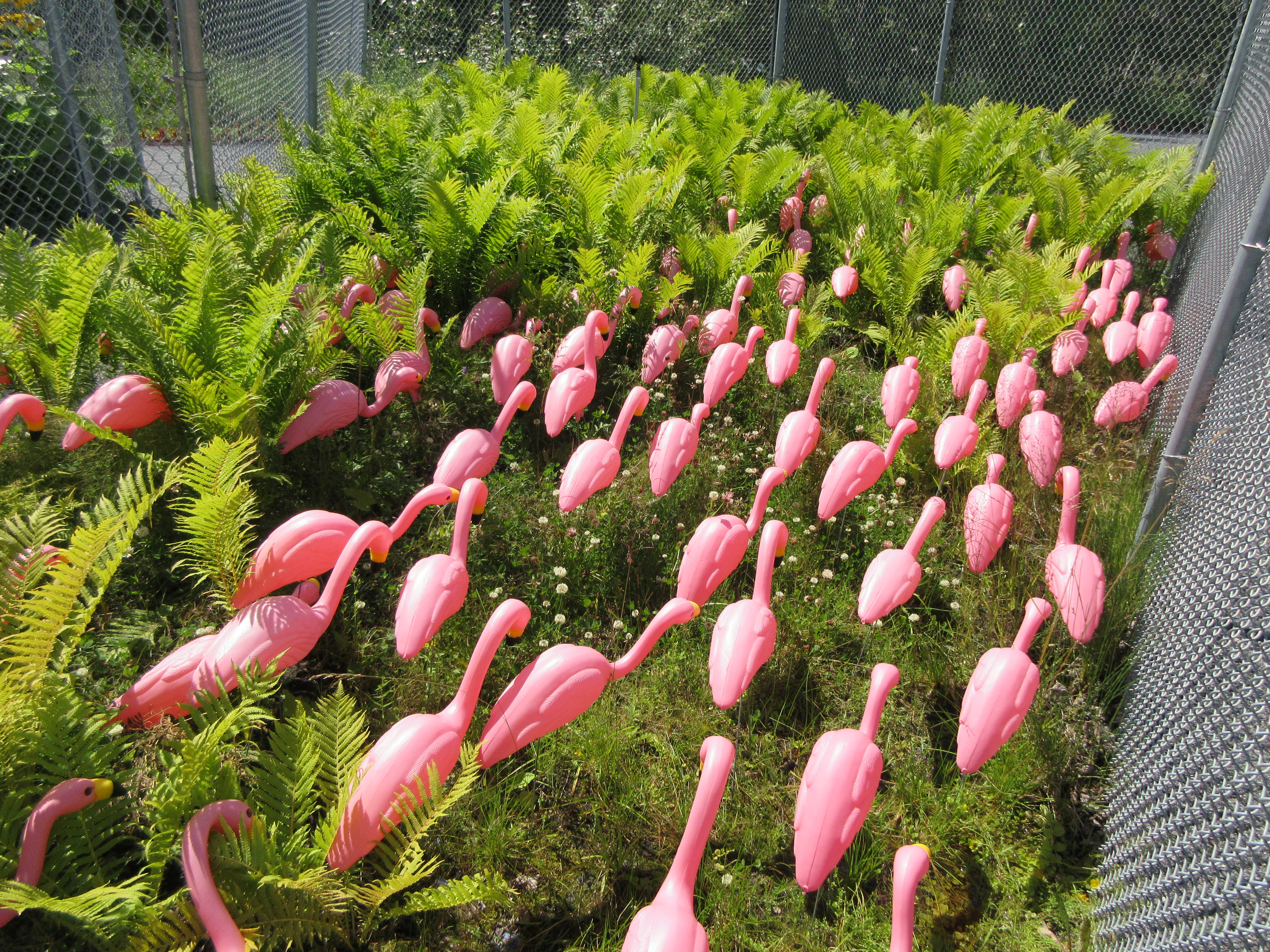











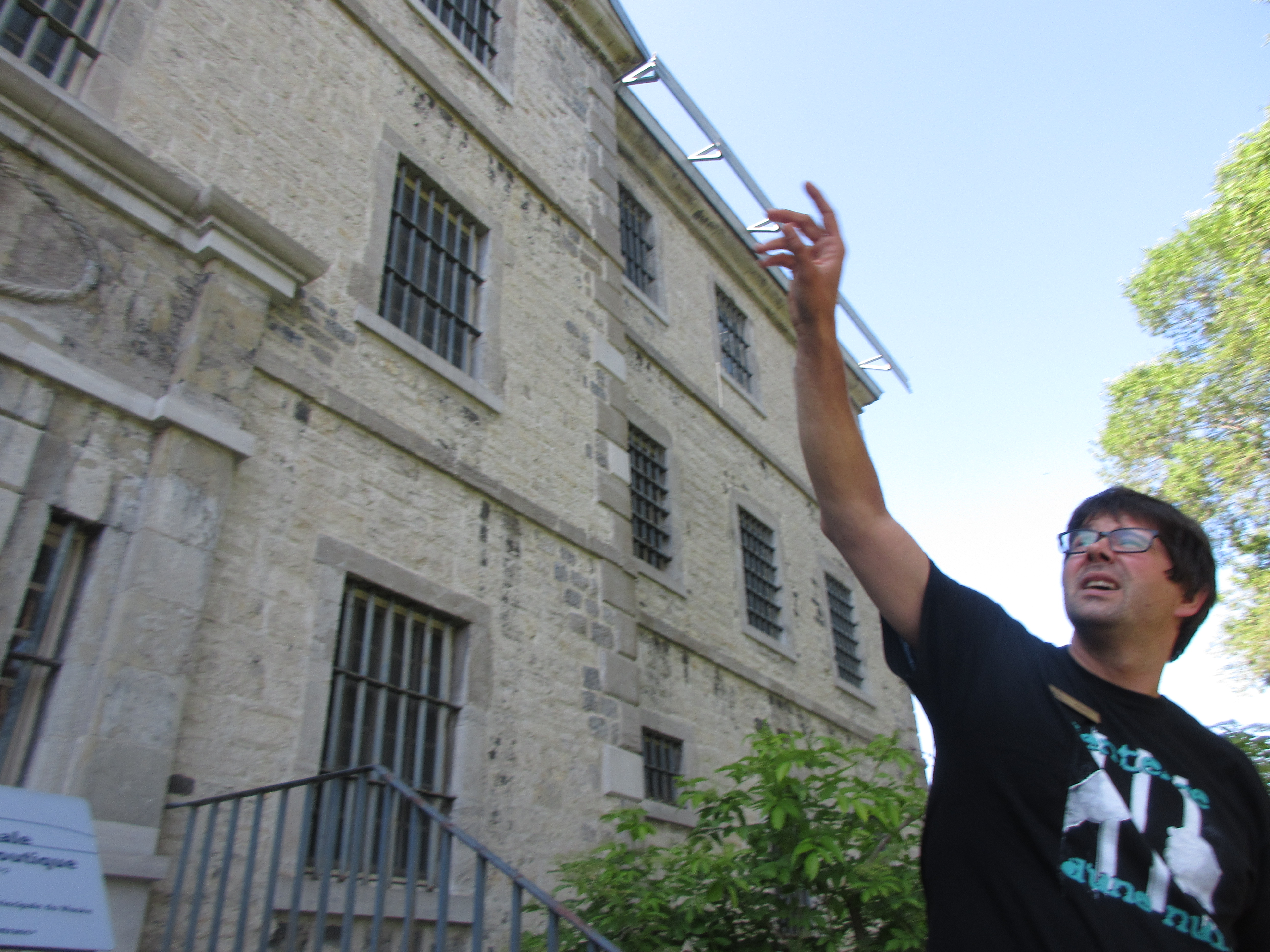



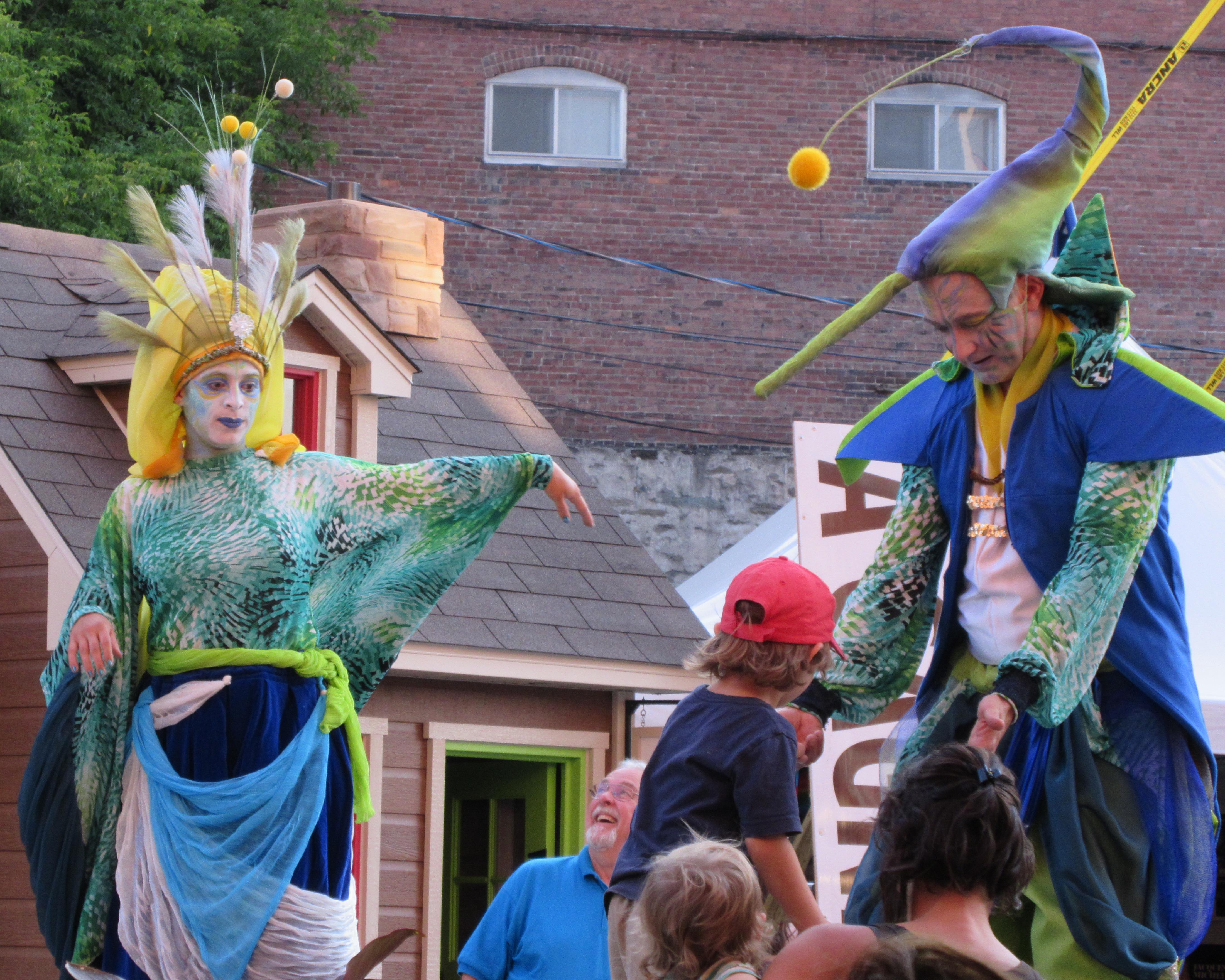


 The Meandering Maloneys